
Inflation Expectations Hold Steady as Oil Crisis Tests Long-Term Outlook
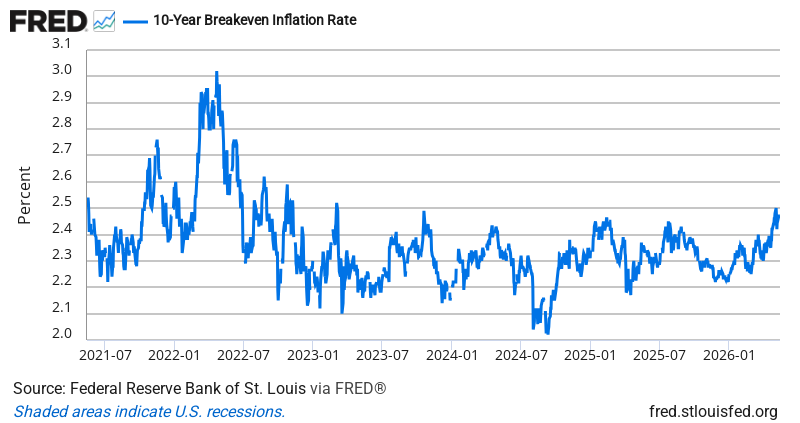
Bond markets are telling a surprisingly calm story. Despite oil prices sitting near $95 and an active military crisis choking off 20% of global energy supplies, the 10-year breakeven inflation rate held flat at 2.47% this week — barely budging from the 2.45% reading before the Strait of Hormuz closure.
Here’s the puzzle: every sustained 10% oil premium typically adds 0.6% to headline inflation, yet long-term expectations remain anchored just below the Fed’s 2.5% comfort zone. Either bond traders believe this energy shock will fade quickly, or they’re betting the Fed will act aggressively enough to keep inflation psychology from unraveling. The stability is remarkable given that monthly CPI could soon print with a 1-handle.
The market’s restraint makes more sense when you consider the structural picture. The US is now a net energy exporter — higher oil prices hurt consumers but benefit producers. More importantly, productivity gains have been running hot enough to absorb some price pressures without triggering a wage-price spiral. Bond investors seem to be betting on asset price moderation rather than runaway inflation, even with the Fed’s rate-cutting plans now shelved.
Historically, when breakevens stay anchored during energy shocks, it signals that professional investors expect central banks to prioritize price stability over growth. Many institutional portfolios are rotating toward energy producers and inflation-protected securities while maintaining core equity exposure, reflecting confidence that this crisis creates winners and losers rather than systematic breakdown.
Bottom Line: The bond market’s calm suggests investors see this as a redistribution shock, not an inflation regime change. The real test comes if oil stays elevated past summer — that’s when expectations could finally crack.
Source: Federal Reserve Economic Data (FRED)
ON1010.com provides economic education for investors. Nothing here is investment advice. Always consult a qualified financial advisor before making investment decisions.
Free Research
The economy moves fast. We make sure you move faster.
Economic data, policy shifts, and market signals — delivered to your inbox.
Subscribe Free