
Job Growth Hits the Brakes as Labor Market Searches for Direction
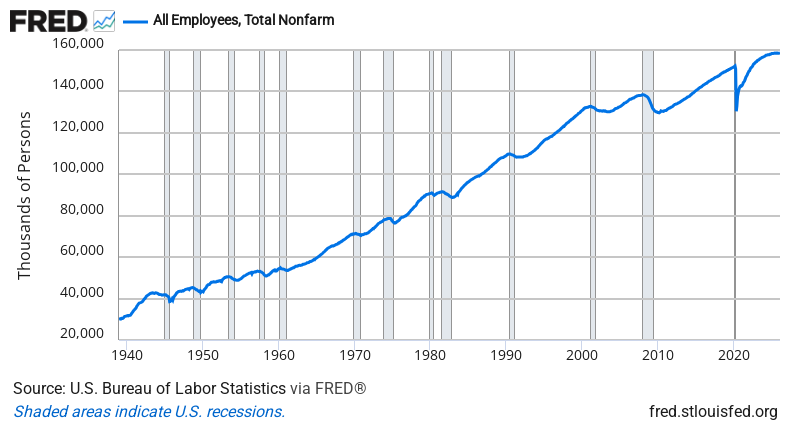
The U.S. economy added just 130,000 jobs in December, down from 148,000 in November and marking the weakest pace of hiring since August. More telling: job growth over the past year has slowed to just 0.16% — the kind of deceleration that typically signals either a maturing expansion or an economy losing steam.
This isn’t just a monthly blip. The three-month average job growth has been trending lower since September, when payrolls actually declined before rebounding. We’re seeing the classic late-cycle pattern: employers becoming more selective about hiring as profit margins face pressure from higher wages and uncertain demand. When businesses pause their hiring plans, it’s usually because they’re seeing something in their forward order books that makes them cautious.
The historical parallel that comes to mind is 2006-2007, when job growth similarly downshifted before the broader economy followed. That doesn’t mean recession is inevitable — productivity gains from AI and reshoring could be masking underlying strength. But it does mean the labor market is no longer the reliable growth engine it was in 2023-2024.
For investors, this type of cooling typically puts the spotlight on quality over growth. Many professional managers start rotating toward defensive sectors and companies with strong balance sheets when job growth consistently underperforms. Historically, bond investors have used periods like this to lock in yields before potential Fed cuts, while equity investors focus on businesses that can maintain margins even as consumer spending moderates.
Bottom Line: The job market is sending mixed signals — not collapsing, but clearly downshifting. The question isn’t whether this trend continues, but whether corporate earnings can stay resilient enough to keep the broader expansion intact.
Source: Federal Reserve Economic Data (FRED)
ON1010.com provides economic education for investors. Nothing here is investment advice. Always consult a qualified financial advisor before making investment decisions.
Free Research
The economy moves fast. We make sure you move faster.
Economic data, policy shifts, and market signals — delivered to your inbox.
Subscribe Free