
Job Growth Stumbles to Anemic 115K in April
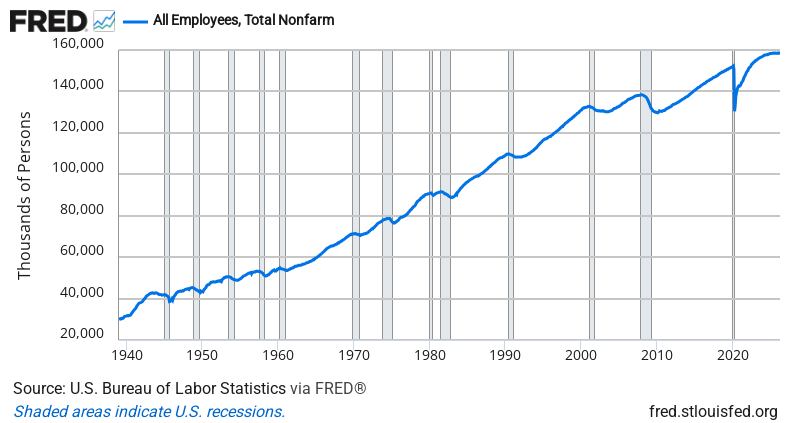
The US economy added just 115,000 jobs in April — the weakest pace since December and a concerning deceleration from March’s 185,000 gain. That’s barely half the 200,000+ monthly average needed to keep up with population growth, suggesting the labor market is losing steam just as energy-driven inflation threatens to derail the recovery.
The trajectory tells a worrying story. After job growth rebounded from December’s soft 16,000 print, the past four months show a clear pattern of volatility and weakening momentum. We’re averaging just 140,000 jobs per month in 2026 — down sharply from last year’s pace. With the Strait of Hormuz crisis pushing oil from $66 to $95 since February, employers are likely pulling back on hiring as they brace for margin compression from higher energy costs.
This is exactly the kind of environment where corporate profits start to matter more than economic theory. Energy-intensive sectors are facing real cost pressures, while companies competing against Chinese manufacturers are getting squeezed as China’s energy advantage widens during this crisis. When margins compress, hiring freezes follow — and we may be seeing the early stages of that playbook.
Many professional investors view slowing job growth alongside energy shocks as a yellow flag for risk assets. Historically, this combination has led portfolios toward defensive positioning — utilities, consumer staples, and shorter-duration bonds tend to outperform when employment momentum weakens amid inflation pressures. The current sector rotation shows money still flowing to growth, but that could shift quickly if job growth continues to disappoint.
Bottom Line: Job creation is cooling at the worst possible time — just as energy costs spike and corporate margins face pressure. The labor market’s resilience is being tested, and April’s weak print suggests employers are already adjusting expectations downward.
Source: Federal Reserve Economic Data (FRED)
ON1010.com provides economic education for investors. Nothing here is investment advice. Always consult a qualified financial advisor before making investment decisions.
Free Research
The economy moves fast. We make sure you move faster.
Economic data, policy shifts, and market signals — delivered to your inbox.
Subscribe Free