
Jobless Claims Jump 10,000, But the Labor Market Puzzle Gets More Confusing
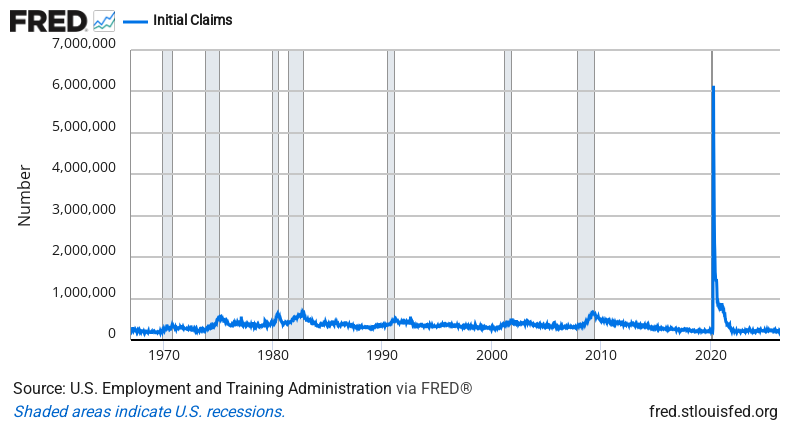
Jobless claims rose to 200,000 last week from 190,000 the week prior — a 10,000 increase that breaks a brief downtrend but keeps layoffs well below recession levels. Here’s the puzzle: this is happening while the Strait of Hormuz crisis pushes oil near $95 and creates margin pressure across energy-intensive industries. Either the labor market hasn’t felt the full impact yet, or it’s proving more resilient than the typical oil shock playbook suggests.
The 200,000 reading sits comfortably in the range we’ve seen since March, when claims bounced between 203,000 and 218,000. What’s interesting is the timing — we’re now 10 weeks into an active military crisis that’s driven energy costs up 44%, yet weekly layoffs remain historically low. In previous oil shocks, claims typically spike within 6-8 weeks as companies cut costs. The delay suggests either a lagged response is coming, or the U.S. net energy exporter status is providing more insulation than expected. With corporate margins already under pressure from higher input costs, the labor market may be the last domino to fall.
Many professional investors are watching claims data more closely during oil shocks, since employment often lags other indicators. Historically, sustained oil price increases eventually show up in service sector layoffs as consumers pull back spending. In this environment, bond investors have been positioning for higher-for-longer Fed policy, while equity allocators are rotating toward sectors less exposed to energy costs — which explains why tech has outperformed energy-intensive industrials by 16 percentage points recently.
Bottom Line: Claims remain low, but we’re still early in an oil shock that typically takes months to fully impact employment. The real test comes in the next 4-6 weeks.
Source: Federal Reserve Economic Data (FRED)
ON1010.com provides economic education for investors. Nothing here is investment advice. Always consult a qualified financial advisor before making investment decisions.
Free Research
The economy moves fast. We make sure you move faster.
Economic data, policy shifts, and market signals — delivered to your inbox.
Subscribe Free