
Labor Market Delivers Big Upside Surprise as Unemployment Holds Steady
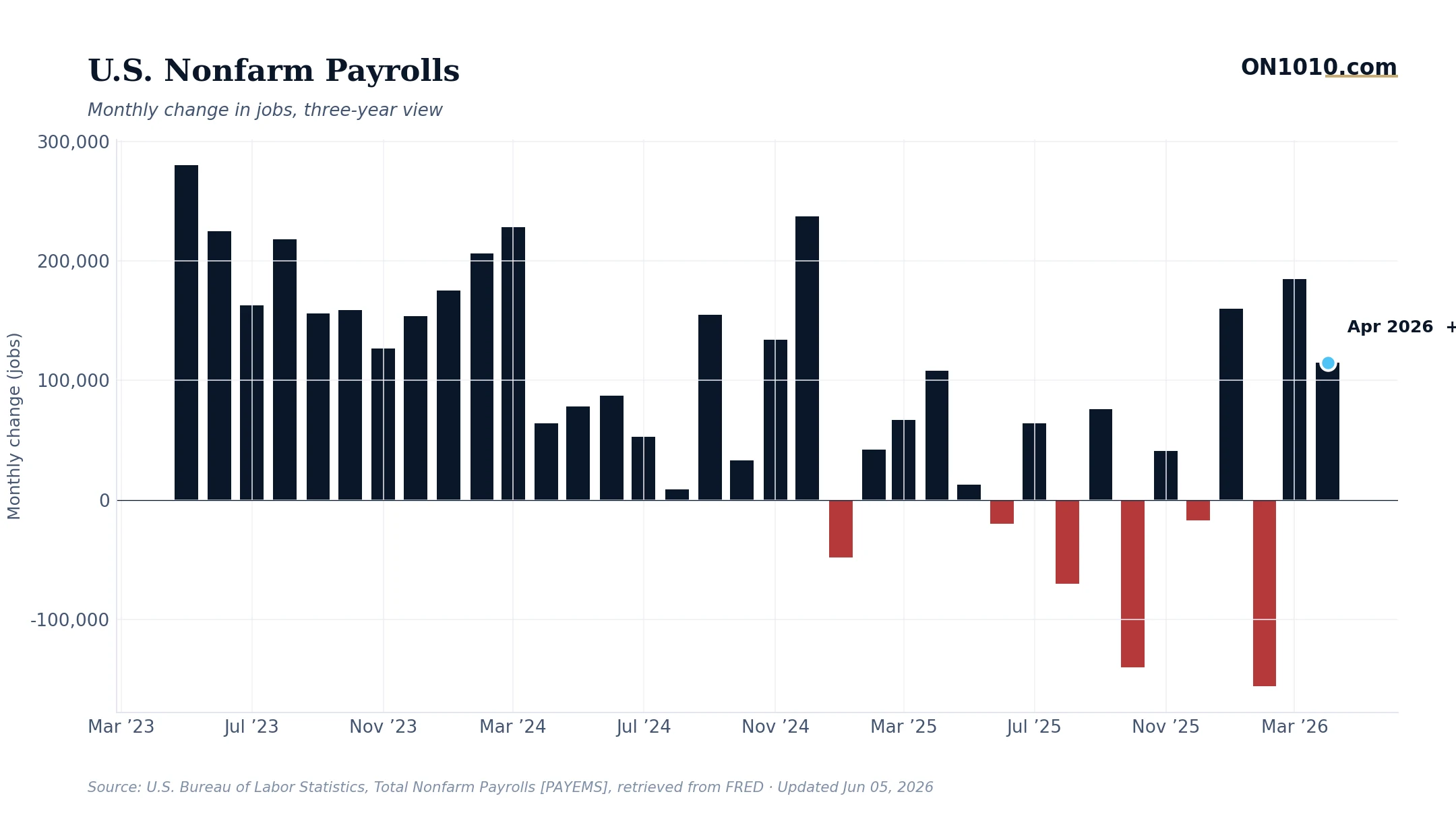
According to CNBC, nonfarm payrolls surged 172,000 in May, more than double the expected 80,000, while unemployment held at 4.3%. That’s the kind of beat that makes economists rethink their models and investors recalibrate their positioning.
The surprise hiring surge comes as businesses navigate the dual pressures of the Strait of Hormuz crisis and surprisingly resilient domestic demand. Companies are still adding workers despite energy costs that have jumped from $66 to $95 per barrel since the crisis began. This suggests profit margins remain healthy enough to absorb higher input costs while continuing to expand capacity, a sign that the productivity gains of recent quarters are proving durable even under stress.
What’s particularly striking is the timing. Most analysts expected businesses to pause hiring as they absorbed the energy shock, but the opposite happened. This points to either genuine labor shortages forcing continued recruitment, or companies betting that current disruptions are temporary and positioning for the recovery. The steady unemployment rate at 4.3% supports the first theory, when jobs are this scarce, businesses have to keep competing for workers regardless of short-term cost pressures.
Historically, investors have viewed employment surprises of this magnitude as confirmation that the economy has more momentum than surface indicators suggest. The question now is whether this strength translates into sustained wage pressure that keeps inflation elevated, or whether rising productivity can accommodate both job growth and stable prices as energy markets eventually normalize.
Bottom Line: When payrolls beat expectations by more than 100% during an energy crisis, it signals an economy with deeper resilience than most forecasters assumed.
Read more: CNBC Top News
ON1010 Research is an independent publisher of economic education and is not a registered investment adviser, broker-dealer, or investment company. This content is for educational and informational purposes only and is not investment advice or a recommendation to buy, sell, or hold any security. Published under the publisher exemption recognized by Section 202(a)(11)(D) of the Investment Advisers Act of 1940 (Lowe v. SEC). Always consult a qualified financial professional before making any financial decision.
Free Research
The economy moves fast. We make sure you move faster.
Economic data, policy shifts, and market signals — delivered to your inbox.
Subscribe Free