
Mortgage Rates Edge Higher as Housing Market Stalls Between Two Forces
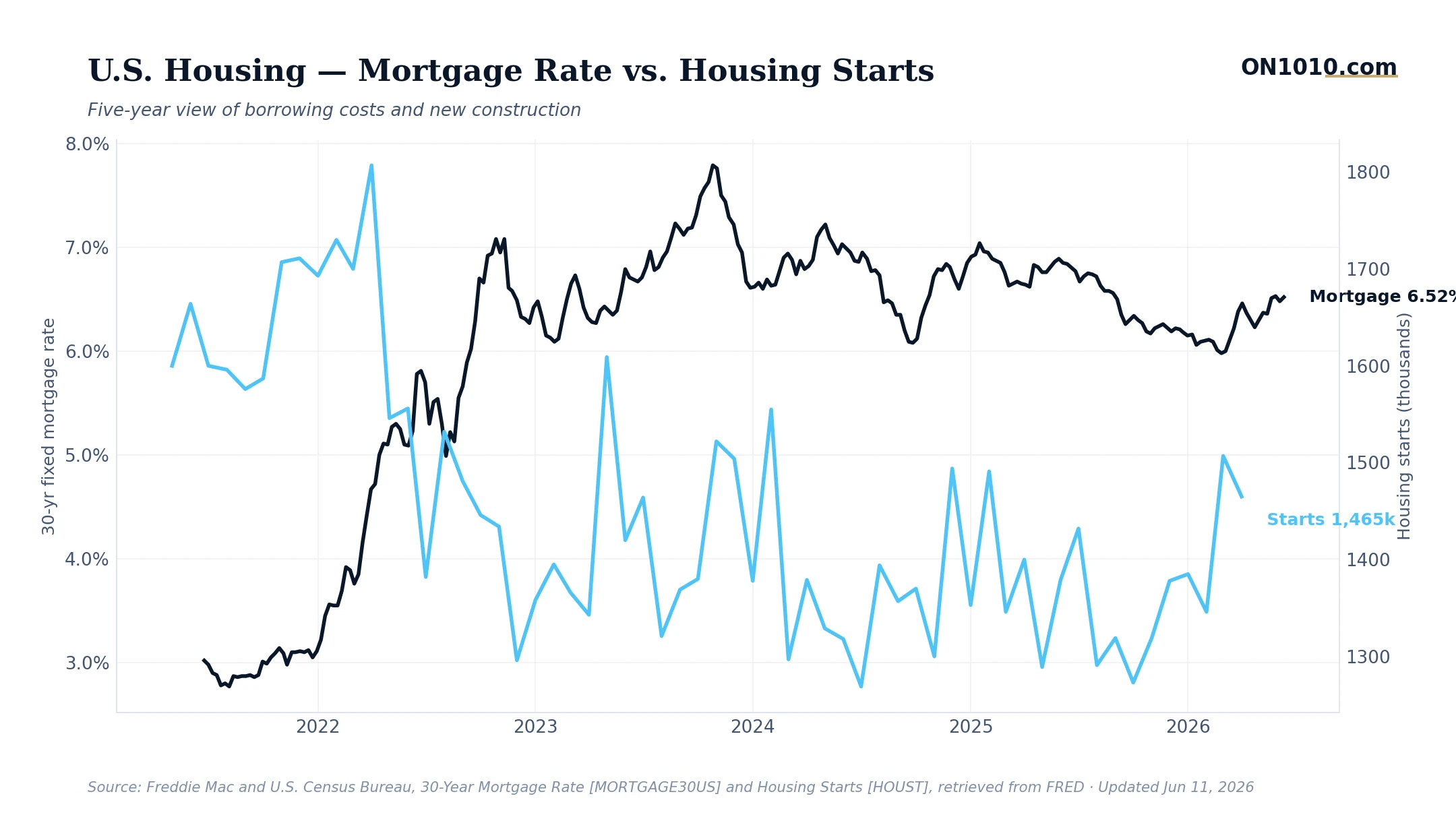
30-year mortgage rates ticked up to 6.52% this week, the third increase in four weeks. That puts rates right back where they were in late May after a brief dip earlier in the month. The move higher isn’t dramatic, but it shows how sensitive housing has become to every shift in the interest rate environment.
This is a market caught between two opposing forces. On one side, the Federal Reserve has paused rate cuts indefinitely as oil prices near $95 keep inflation elevated well above target. On the other, home prices remain stubbornly high and inventory tight in most markets. Rising mortgage rates make an already stretched affordability picture even worse. The average monthly payment on a median-priced home is now roughly 40% higher than it was two years ago.
The housing sector is effectively frozen. Existing homeowners with sub-4% mortgages won’t move. New buyers can’t afford current prices at current rates. Builders are scaling back starts because demand has evaporated. Historically, when mortgage rates rise above 6.5% and stay there, housing activity drops 15-20% within six months. We’re testing that threshold now.
In past cycles, sustained mortgage rates above 6.5% have meant one of two things: either home prices eventually adjust downward to restore affordability, or the broader economy weakens enough to force rates back down. Both paths involve significant economic disruption. Business leaders in construction, real estate, and consumer goods tied to housing are already seeing the demand destruction in real time.
Bottom Line: Housing is becoming the economy’s pressure valve. Something has to give, either rates, prices, or economic growth itself.
Source: Federal Reserve Economic Data (FRED)
ON1010 Research is an independent publisher of economic education and is not a registered investment adviser, broker-dealer, or investment company. This content is for educational and informational purposes only and is not investment advice or a recommendation to buy, sell, or hold any security. Published under the publisher exemption recognized by Section 202(a)(11)(D) of the Investment Advisers Act of 1940 (Lowe v. SEC). Always consult a qualified financial professional before making any financial decision.
Free Research
The economy moves fast. We make sure you move faster.
Economic data, policy shifts, and market signals — delivered to your inbox.
Subscribe Free