
Mortgage Rates Hit Six-Week High as Bond Market Tests the Fed
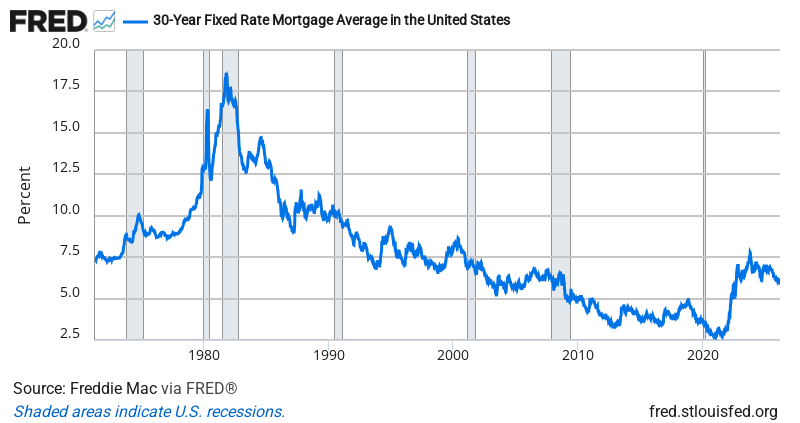
The 30-year mortgage rate jumped to 6.22% this week, up from 6.11% last week and marking the highest level since early February. That’s an 11 basis point move in seven days, which might not sound like much until you run the math: for a $400,000 home loan, that translates to an extra $26 per month in payments.
What makes this move interesting isn’t the size but the timing. Mortgage rates have been grinding higher for three straight weeks despite no major change in Fed policy or economic data that would justify the increase. This suggests bond investors are repricing risk ahead of the curve, not reacting to news that’s already happened.
The pattern looks familiar to anyone who remembers early 2022, when mortgage rates started climbing months before the Fed began its hiking cycle. Bond markets are forward-looking animals. When traders start demanding higher yields on long-term debt, they’re usually pricing in either higher inflation expectations or increased uncertainty about Fed policy down the road.
Here’s the capital allocation angle that matters: housing is the largest purchase most Americans make, and every basis point increase in mortgage rates shrinks the pool of qualified buyers. Higher rates don’t just affect home sales, they ripple through the entire construction ecosystem. Builders pull back on new projects, suppliers cut orders, and local economies that depend on housing activity start to cool.
The recent uptick also coincides with elevated market volatility (VIX above 26) and some defensive rotation in equity markets. Professional investors seem to be positioning for uncertainty, even as the underlying economic data remains solid.
Historically, sustained moves above 6% have marked inflection points for housing activity. The question isn’t whether this affects home sales, it’s how quickly and by how much.
Bottom Line: When mortgage rates climb without clear fundamental drivers, it’s usually the bond market telling you something about future Fed policy that hasn’t happened yet. Are we seeing early signs of inflation expectations shifting, or just temporary volatility?
Source: Federal Reserve Economic Data (FRED)
ON1010.com provides economic education for investors. Nothing here is investment advice. Always consult a qualified financial advisor before making investment decisions.
Free Research
The economy moves fast. We make sure you move faster.
Economic data, policy shifts, and market signals — delivered to your inbox.
Subscribe Free