
The 10-Year Just Hit 4.15% — And That’s Starting to Matter
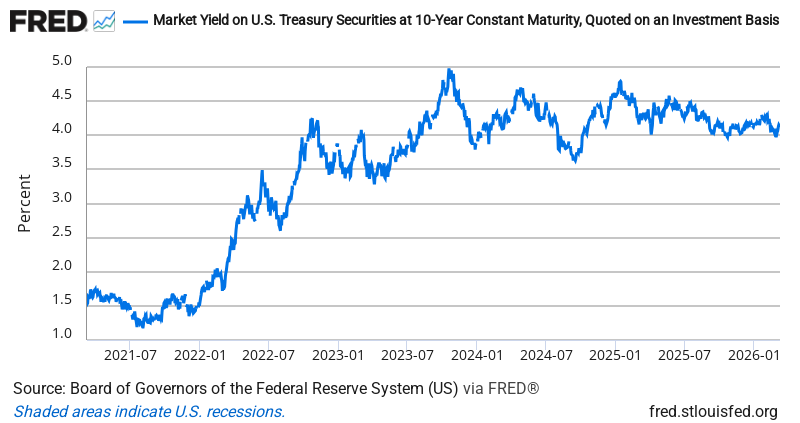
The 10-year Treasury yield climbed to 4.15% yesterday, up from 4.12% the day before and continuing a steady march higher over the past week. What started as a gentle drift from 4.06% last Monday is beginning to look like something more deliberate.
This isn’t dramatic by historical standards, but it’s happening at a crucial moment. When the benchmark rate that prices everything from mortgages to corporate debt starts moving consistently in one direction, it’s usually telling us something about where investors think the economy is headed. The steady climb suggests bond traders are either expecting stronger growth, higher inflation, or both — and they’re demanding to be compensated accordingly.
Here’s why the direction matters more than the level: at 4.15%, the 10-year is offering real competition to stocks for the first time in years. Corporate earnings yields (the inverse of P/E ratios) for many companies now look less attractive compared to risk-free government bonds. This shift in relative value tends to make investors pickier about which stocks they’re willing to own — especially growth companies that rely on future cash flows to justify today’s prices.
Historically, when the 10-year moves above 4% and stays there, many professional investors start rotating toward value stocks and sectors that can handle higher rates better. Banks typically benefit from rising rates, while real estate and utilities often struggle. Bond investors may want to consider shorter-duration strategies to reduce sensitivity to further rate increases.
Bottom Line: The 10-year’s quiet climb above 4.15% is reshaping the investment landscape — when bonds start paying real yields again, everything else has to work harder to justify its price.
Source: Federal Reserve Economic Data (FRED)
ON1010.com provides economic education for investors. Nothing here is investment advice. Always consult a qualified financial advisor before making investment decisions.
Free Research
The economy moves fast. We make sure you move faster.
Economic data, policy shifts, and market signals — delivered to your inbox.
Subscribe Free