
The Fed Is on Pause. The Market Is Nervous. Those Two Things Aren’t Contradictions.
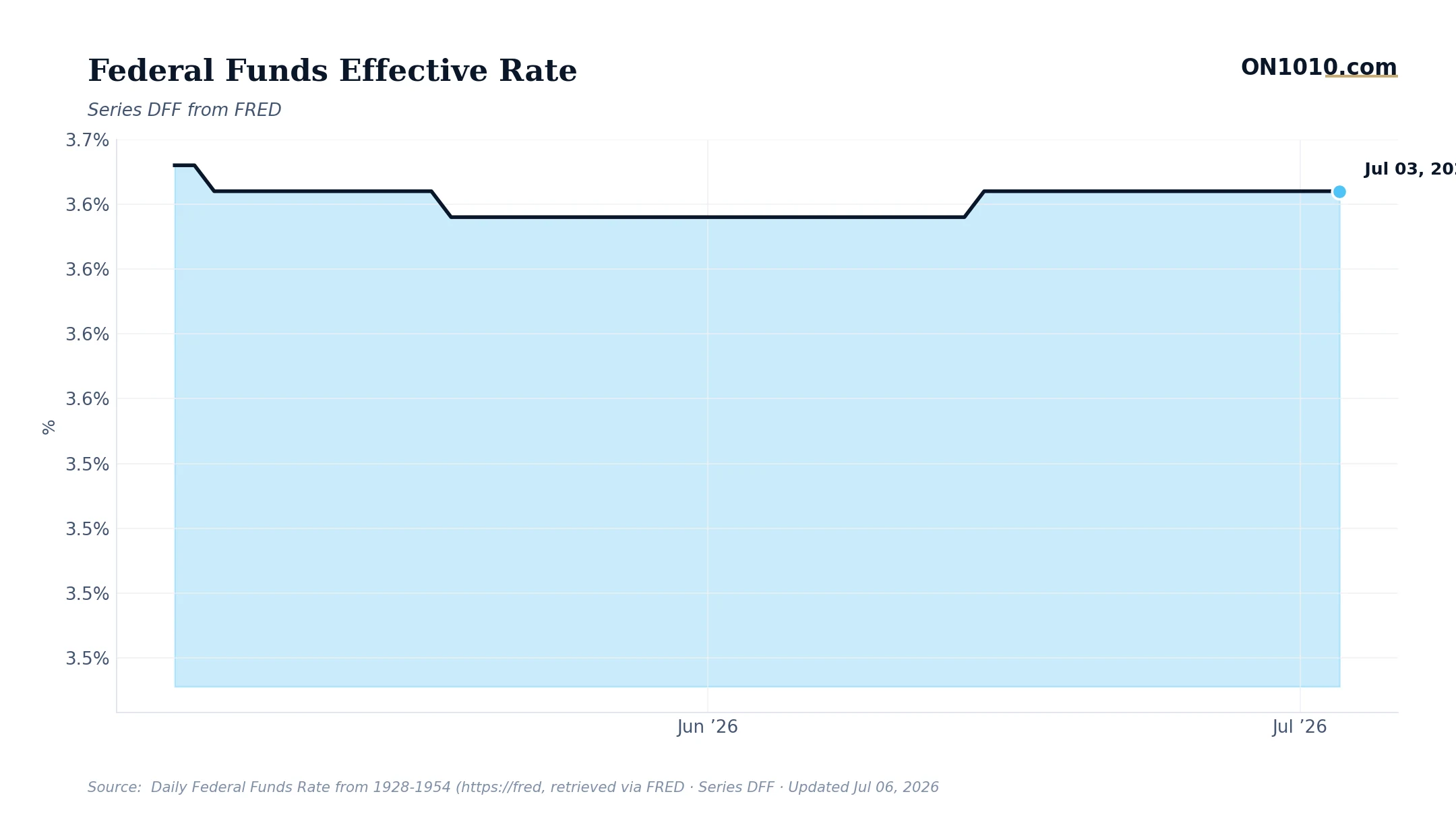
The effective federal funds rate has sat at 3.63% for six consecutive trading days, unwavering. No drift, no signal. The Fed isn’t moving, and the market knows it.
That steadiness is actually the story. When the effective rate holds this tight to its target, it means the plumbing of the banking system is working exactly as designed. Banks are lending to each other at the rate the Fed intends. There’s no stress in overnight funding markets, no sign of liquidity strain, no hidden cracks in the financial system’s foundation. In isolation, that’s good news.
But zoom out and the picture gets more interesting. Even as the overnight rate stays locked in place, institutional investors are rotating aggressively into defensive sectors. Health care is outperforming SPY by 14 percentage points over the past month. Consumer staples, utilities, and real estate are all beating the broader market too. Technology is lagging by more than 7 points. That’s not a trivial divergence. It suggests professional money managers are looking past the calm in short-term rates and positioning for something bumpier ahead.
Historically, this kind of setup, where the Fed holds rates steady while equity markets quietly shift defensive, has been worth paying attention to. In past cycles, the gap between a calm rate environment and a nervous equity market has sometimes been a leading indicator of slowing growth expectations. The question isn’t whether the Fed is doing its job today. The question is what the Fed does next, and whether the economy gives it room to cut.
The VIX at 16.32, below its 20-day average of 18.15, suggests the fear itself isn’t acute. But the rotation is real.
Bottom Line: The overnight rate is steady, the system is functioning, and the market’s plumbing is quiet. So why is smart money moving toward safety? That’s the question this data alone can’t answer.
Source: Federal Reserve Economic Data (FRED)
ON1010 Research is an independent publisher of economic education and is not a registered investment adviser, broker-dealer, or investment company. This content is for educational and informational purposes only and is not investment advice or a recommendation to buy, sell, or hold any security. Published under the publisher exemption recognized by Section 202(a)(11)(D) of the Investment Advisers Act of 1940 (Lowe v. SEC). Always consult a qualified financial professional before making any financial decision.
Free Research
The economy moves fast. We make sure you move faster.
Economic data, policy shifts, and market signals — delivered to your inbox.
Subscribe Free