
The Fed Rate That Isn’t Moving (And Why That’s the Story)
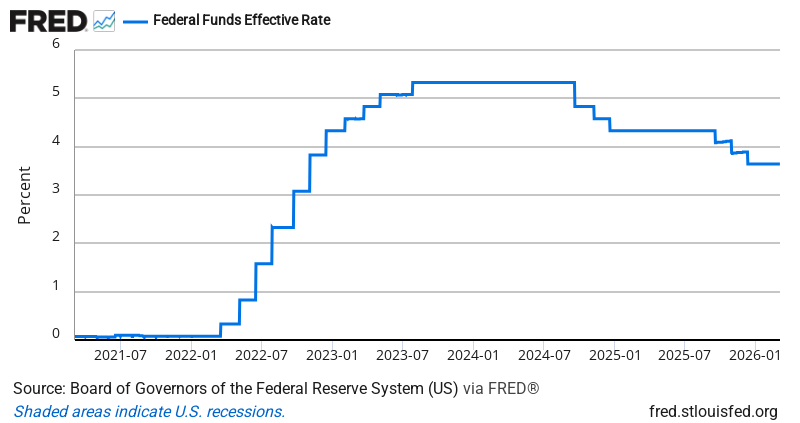
The effective federal funds rate held steady at 3.64% for the sixth consecutive trading day through March 4th, locked in a stability pattern that’s become the quiet story everyone’s missing.
This isn’t just Fed policy working as intended. It’s a reflection of a banking system so flush with reserves that overnight lending has become boring again. When banks aren’t scrambling for cash, the effective rate tracks the Fed’s target range with mechanical precision. That’s exactly what we’re seeing now.
But here’s what makes this interesting: this level of rate stability typically signals either a mature expansion or the calm before policy changes. The last time we saw this kind of multi-day precision was during the 2019 expansion peak, right before the Fed started cutting rates. Not because anything was broken, but because the economy had reached a new equilibrium.
The 3.64% level puts real rates at roughly 1.4% after stripping out core inflation. That’s restrictive enough to keep speculation in check but accommodative enough to support legitimate business investment. Historically, this is the sweet spot where productive capital allocation thrives while financial excess gets squeezed out.
Market positioning tells a different story than this stable rate suggests. Money is rotating hard into defensive sectors, with utilities up 12.4% relative to the S&P 500 over the past month. When rates are stable but investors are fleeing to safety, it usually means they’re pricing in something the Fed funds market isn’t seeing yet.
The disconnect between overnight funding markets (calm) and equity positioning (defensive) creates an interesting puzzle. Either the bond market is missing risks that equity investors see, or stock investors are overreacting to uncertainties that won’t actually disrupt the funding system.
Bottom Line: When overnight rates are this stable, the action is happening elsewhere in the system. Watch what money managers are buying, not what banks are lending to each other.
Source: Federal Reserve Economic Data (FRED)
ON1010.com provides economic education for investors. Nothing here is investment advice. Always consult a qualified financial advisor before making investment decisions.
Free Research
The economy moves fast. We make sure you move faster.
Economic data, policy shifts, and market signals — delivered to your inbox.
Subscribe Free