
The Fed’s Holding Pattern: What Six Straight Days at 3.63% Is Actually Telling You
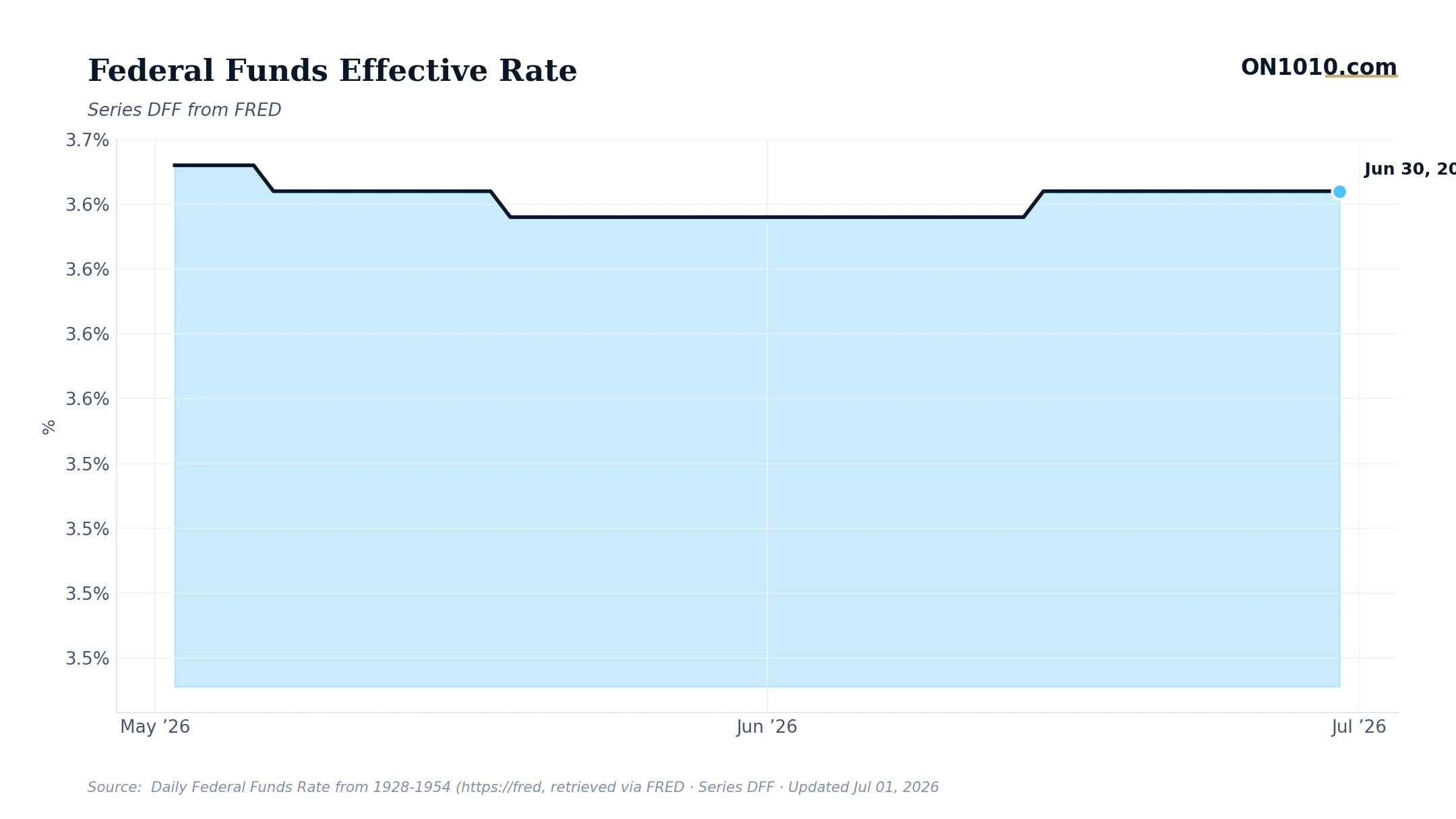
The effective federal funds rate has sat at exactly 3.63% for six consecutive days. No drift, no wobble. Just a number that hasn’t moved.
That kind of stability isn’t an accident, it’s a signal.
When the effective rate hugs its target this tightly, it means the Fed’s plumbing is working as intended. Banks aren’t scrambling for overnight cash (which would push the rate up), and there’s no excess liquidity sloshing around and driving it down. The system is in equilibrium. For an economy that spent the better part of 2022 and 2023 watching the Fed hike rates at the fastest pace in four decades, “equilibrium” is a word worth pausing on.
The bigger picture here is that we’re in a genuine pause. The Fed has moved rates down from their cycle peak, and the market is now waiting to see whether that’s the end of the easing cycle or just a rest stop. Sector rotation data offers a clue worth watching: health care and industrials have been quietly leading the market, while communication services has pulled back. That’s a setup that often reflects investors pricing in a “good enough” economy rather than an accelerating one.
Historically, extended periods of rate stability at this stage of a cycle have set the stage for two very different outcomes. If growth holds and inflation stays contained, the Fed stays put and borrowing costs stabilize, giving businesses a cleaner window to plan capital investments. If growth slows or inflation reaccelerates, the calculus changes quickly. The question worth asking right now: which signal arrives first?
Bottom Line: Six days of 3.63% tells you the Fed isn’t flinching, but the real story is what the next inflation and jobs print will force them to do next.
Source: Federal Reserve Economic Data (FRED)
ON1010 Research is an independent publisher of economic education and is not a registered investment adviser, broker-dealer, or investment company. This content is for educational and informational purposes only and is not investment advice or a recommendation to buy, sell, or hold any security. Published under the publisher exemption recognized by Section 202(a)(11)(D) of the Investment Advisers Act of 1940 (Lowe v. SEC). Always consult a qualified financial professional before making any financial decision.
Free Research
The economy moves fast. We make sure you move faster.
Economic data, policy shifts, and market signals — delivered to your inbox.
Subscribe Free