
The Fed’s Target Rate Is Working — Maybe Too Well
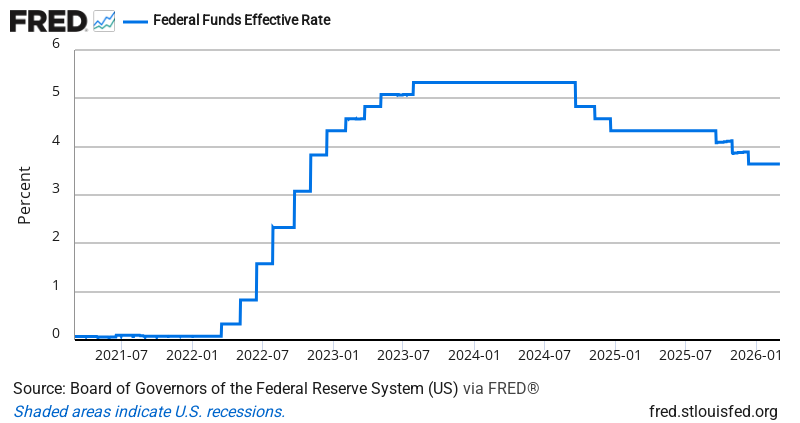
The effective federal funds rate held steady at 3.64% for the sixth straight day through March 3rd, showing remarkable stability that masks a more complex story about monetary policy transmission.
This isn’t just another boring “no change” data point. When the overnight lending market tracks this closely to the Fed’s target range (3.50% to 3.75%), it signals that monetary policy is transmitting smoothly through the banking system. But here’s what’s interesting: this level of precision in fed funds targeting is historically unusual and suggests banks are sitting on plenty of liquidity.
The stability tells us something important about capital allocation right now. Banks aren’t scrambling for overnight funding, which means they’re either flush with deposits or not seeing enough loan demand to stress their balance sheets. In previous cycles, you’d typically see more day-to-day volatility as banks competed for funds to meet lending demand.
This connects to the broader productivity story playing out across the economy. When banks have abundant liquidity but the fed funds rate stays anchored, it often means the transmission mechanism from monetary policy to real economic activity is working through other channels. Corporate borrowing costs, mortgage rates, and credit card rates all take their cues from this baseline rate.
The current 3.64% level puts real rates (after inflation) in positive territory for the first time in years, creating genuine incentives for saving over speculation. Historically, when real rates turn positive and stay there, capital starts flowing toward productive investments rather than financial engineering.
Professional managers are watching this stability closely because it suggests the Fed has achieved something rare: a neutral policy stance that’s neither stimulating nor restraining growth. The question now is whether this equilibrium can hold as economic conditions evolve.
Bottom Line: A boring fed funds rate might be exactly what the economy needs right now — but don’t mistake stability for permanence.
Source: Federal Reserve Economic Data (FRED)
ON1010.com provides economic education for investors. Nothing here is investment advice. Always consult a qualified financial advisor before making investment decisions.
Free Research
The economy moves fast. We make sure you move faster.
Economic data, policy shifts, and market signals — delivered to your inbox.
Subscribe Free