
THE HOOK
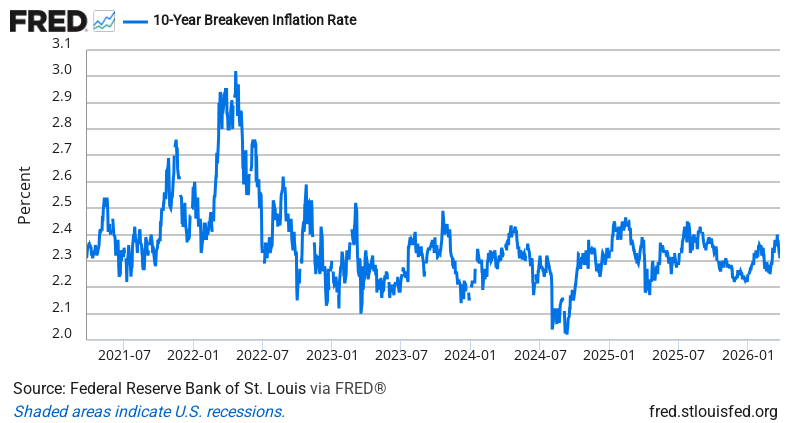
HEADLINE: Bond Markets Dial Back Inflation Fears as 10-Year Breakevens Cool to 2.31%
Long-term inflation expectations just hit a five-day low, dropping to 2.31% from 2.38% last week. That’s bond traders collectively exhaling — at least a little — about the inflation picture a decade out. The 0.07 percentage point decline might look small, but in the breakeven market, that’s real money moving.
THE BIGGER PICTURE
This cooling comes despite oil trading near $95 following the Strait of Hormuz closure — which tells you something important about how markets think this energy shock plays out. Bond investors aren’t panicking about 1970s-style embedded inflation. They’re betting the current energy crisis stays temporary, even as monthly CPI prints could hit the 1-handle in coming months. The 2.31% level sits just above the Fed’s 2% target, suggesting markets still see the central bank as credible on long-term price stability. That’s a vote of confidence in Fed policy tools, even with rate cuts now off the table.
WHAT THIS MEANS FOR YOUR PORTFOLIO
Many professional investors watch breakevens as a real-time gauge of inflation sentiment — and right now, that sentiment is cautious but not catastrophic. In environments where long-term inflation expectations remain anchored while short-term pressures build, portfolio managers historically have favored assets that benefit from temporary energy spikes (energy stocks, commodity funds) while maintaining exposure to long-duration assets that benefit if inflation expectations stay contained. The key question: does this 2.31% level hold if energy prices stay elevated through summer?
Bottom Line: Bond markets are drawing a line between today’s energy crisis and tomorrow’s inflation baseline. If they’re right, this oil shock stays temporary. If they’re wrong, that 2.31% number heads higher fast.
Source: Federal Reserve Economic Data (FRED)
ON1010.com provides economic education for investors. Nothing here is investment advice. Always consult a qualified financial advisor before making investment decisions.
Free Research
The economy moves fast. We make sure you move faster.
Economic data, policy shifts, and market signals — delivered to your inbox.
Subscribe Free