
The Market Just Blinked on Fed Rate Cuts
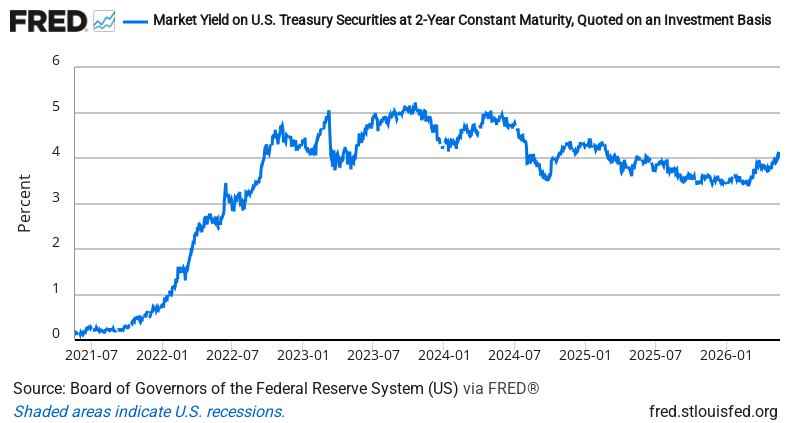
The 2-year Treasury yield jumped to 4.13% Monday, up from 4.07% Friday — a small move with big implications. Bond traders are quietly backing away from their earlier bets on aggressive Fed rate cuts this year.
Here’s why this matters: the 2-year yield is the market’s crystal ball for Fed policy. When it rises, traders are either expecting higher rates for longer, or they’re demanding extra compensation for inflation risk. Either way, it signals the “soft landing” story is getting more complicated. We’ve seen this pattern before — in early 2023, similar yield moves preceded months of economic uncertainty as markets recalibrated their Fed expectations.
The timing is telling. Just weeks ago, investors were pricing in multiple rate cuts by year-end. Now? That confidence is wavering. This shift often happens when economic data stays stubbornly strong — good for Main Street, but problematic for Wall Street’s rate cut timeline. Corporate profit margins, which have been surprisingly resilient, could face new pressure if borrowing costs stay elevated longer than expected.
In this environment, many professional investors start looking beyond rate-sensitive plays toward companies that can thrive regardless of the Fed’s next move. Historically, periods of rising 2-year yields have favored businesses with pricing power and minimal debt loads over those dependent on cheap capital. It’s also when dividend-paying stocks start looking more attractive relative to bonds — if you can get 4%+ risk-free, that 2.5% dividend yield becomes less compelling.
Bottom Line: The market’s Fed timeline is shifting in real time, and higher yields are the canary in the coal mine. The question isn’t whether rates will eventually fall — it’s whether the economy stays strong enough to make investors question if they need to.
Source: Federal Reserve Economic Data (FRED)
ON1010.com provides economic education for investors. Nothing here is investment advice. Always consult a qualified financial advisor before making investment decisions.
Free Research
The economy moves fast. We make sure you move faster.
Economic data, policy shifts, and market signals — delivered to your inbox.
Subscribe Free