
The Middle East Is Flaring Again. The Market Is Shrugging. Here Is Why That Split Matters.
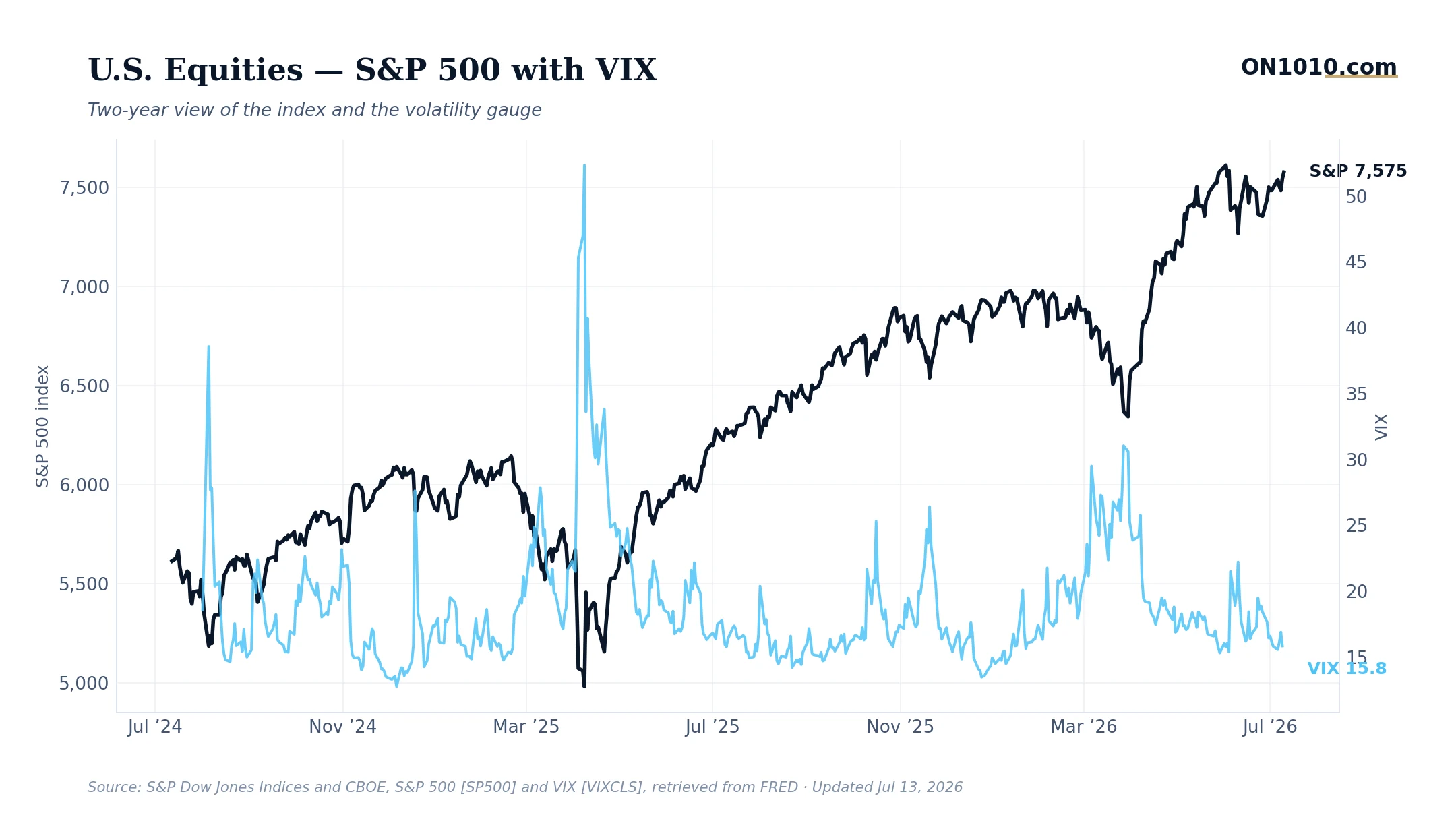
Stocks closed Friday at 7,575 on the S&P 500, oil nudged up to $72.79 a barrel, and the VIX ticked higher to 16.13. Those three numbers sitting side by side tell a story worth paying attention to this morning.
The twist is this: the VIX jumped 7.3% on Friday while large-cap indexes barely blinked. That is fear rising underneath a calm surface, and it is exactly the kind of divergence that rewards careful readers.
Reports of fresh U.S.-Iran strikes and a strained ceasefire sent oil up nearly 2% on Friday. But the bond market is treating this as background noise. The 10-year Treasury yield sits at 4.54%, the 2-year at 4.16%, giving a 35 basis point spread. Meanwhile, the 10-year breakeven inflation rate is at 2.24%, meaning bond investors are not yet pricing a serious inflation scare from the oil move. The market is betting this stays contained.
Small caps told a different story. The Russell 2000 fell 0.49% while large caps gained, a classic sign that investors are quietly shifting toward size and quality when uncertainty creeps in.
On deck today: investors are watching for any escalation in the Middle East and positioning ahead of core inflation data later this week. That print could reset the entire rate conversation.
Here is the framework to hold: geopolitical risk tends to matter for markets when it threatens to reignite inflation. Right now the bond market says it does not believe that is happening. Watch whether the data agrees.
The deeper read on what the labor market reset and the inflation setup mean heading into the second half of the year is in The Long View. It lands in your inbox every Sunday and it is free to subscribe.
ON1010 Research is an independent publisher of economic education and is not a registered investment adviser, broker-dealer, or investment company. This content is for educational and informational purposes only and is not investment advice or a recommendation to buy, sell, or hold any security. Published under the publisher exemption recognized by Section 202(a)(11)(D) of the Investment Advisers Act of 1940 (Lowe v. SEC). Always consult a qualified financial professional before making any financial decision.
Free Research
The economy moves fast. We make sure you move faster.
Economic data, policy shifts, and market signals — delivered to your inbox.
Subscribe Free