
The Yield Curve Is Healing, But Bond Traders Are Getting Nervous
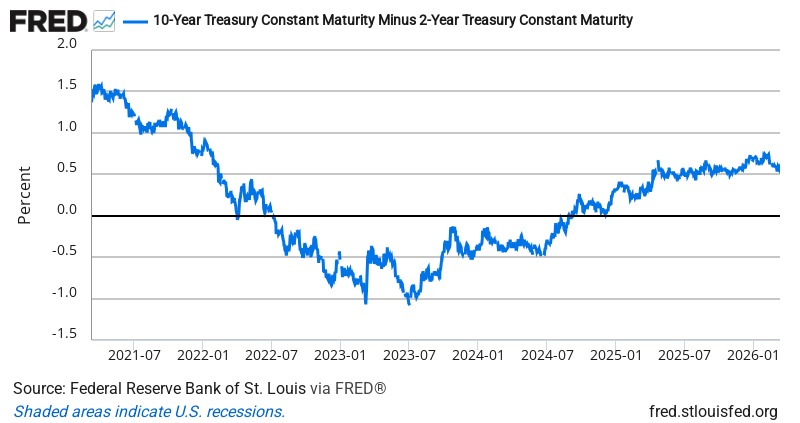
The 10-year-2-year Treasury spread narrowed to 0.51% yesterday, down from 0.57% the day before. That’s a 0.06 percentage point drop in a single session, the kind of move that makes bond desks pay attention.
The yield curve has been steadily normalizing since climbing out of inversion last year, but this recent flattening tells a different story than the healing narrative. When the spread compresses this quickly, it usually means one of two things: either long-term growth expectations are falling, or near-term rate cut bets are building. Given where we are in the cycle, it’s probably both.
Here’s what bond traders are seeing that equity investors might be missing. The curve has been in a sweet spot around 0.55-0.60% for weeks, reflecting an economy that’s growing but not overheating. That Goldilocks positioning is now under pressure. Yesterday’s move suggests either the Fed is closer to cutting than markets thought a week ago, or growth concerns are creeping into the long end.
The timing matters. We’re seeing defensive rotation in equities (utilities up 8.7% versus the S&P 500 over the past month) while the VIX sits elevated at 25. When risk assets get nervous and the yield curve flattens simultaneously, professional managers start asking whether the soft landing story is as solid as it looked in February.
Historically, investors have used curve flattening as an early warning system. Not for recession necessarily, but for changing Fed policy or growth downgrades. In environments like this, the bond market often moves ahead of both the equity market and the economic data.
Bottom Line: A normalizing yield curve is healthy, but rapid flattening when defensive assets are outperforming suggests bond traders see something worth hedging against.
Source: Federal Reserve Economic Data (FRED)
ON1010.com provides economic education for investors. Nothing here is investment advice. Always consult a qualified financial advisor before making investment decisions.
Free Research
The economy moves fast. We make sure you move faster.
Economic data, policy shifts, and market signals — delivered to your inbox.
Subscribe Free