
Treasury Curve Steepening Hits Pause as Markets Digest Energy Shock
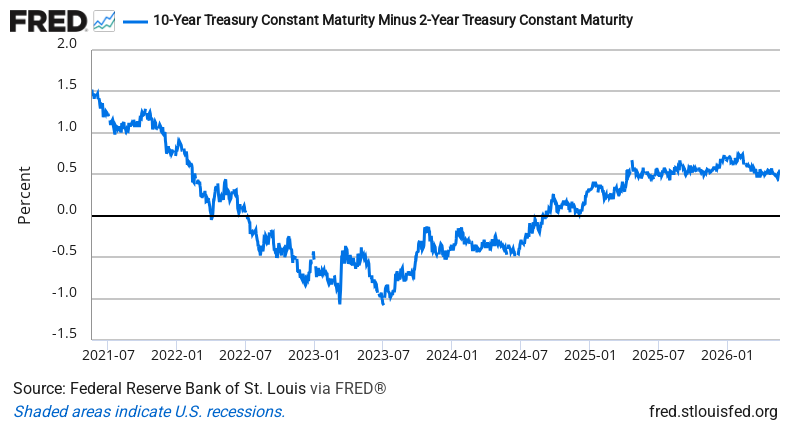
The 10-year minus 2-year Treasury spread held steady at 0.54% on Monday, unchanged from Friday’s close after a week of gradual steepening. That’s a far cry from the inverted curve that dominated 2022-2023, when this same spread spent months in negative territory — historically a reliable recession warning. The curve has now been positive for several months, suggesting the economy dodged that particular bullet.
But this pause comes at an interesting moment. The spread has been climbing steadily from 0.46% just a week ago, as longer-term rates rise faster than short-term ones. That typically happens when investors expect stronger growth or higher inflation down the road. Given oil’s spike from $66 to $95 following the Strait of Hormuz closure, the inflation piece makes sense — energy shocks have a way of working through the entire price system over 12-18 months.
The curve steepening also reflects a shift in Fed expectations. When the central bank was cutting rates aggressively, short-term yields fell faster than long-term ones, flattening the curve. Now that rate cuts are off the table due to energy-driven inflation fears, that dynamic has reversed. A steeper curve generally signals that credit is flowing more freely — banks make money on the spread between what they pay depositors (short rates) and charge borrowers (long rates).
Many professional investors view curve steepening as a green light for financial stocks, which tend to benefit from wider net interest margins. Historically, this type of shift has also led investors to look at sectors that benefit from easier credit conditions — like small-cap growth companies and real estate. The challenge now is whether energy-driven inflation will squeeze those very sectors through higher input costs.
Bottom Line: The yield curve is telling a growth story again, but energy inflation could complicate that narrative. The real test is whether this steepening reflects optimism about the economy or just fear about prices.
Source: Federal Reserve Economic Data (FRED)
ON1010.com provides economic education for investors. Nothing here is investment advice. Always consult a qualified financial advisor before making investment decisions.
Free Research
The economy moves fast. We make sure you move faster.
Economic data, policy shifts, and market signals — delivered to your inbox.
Subscribe Free