
Treasury Curve Steepens as Markets Digest Energy Shock Reality
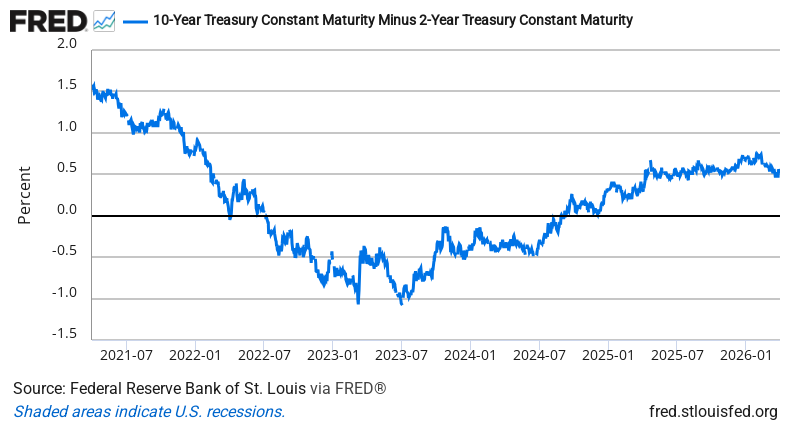
The yield curve is quietly telling a different story than equity markets. The 10-year minus 2-year Treasury spread ticked up to 0.52% yesterday — its highest level in a week — as bond traders parsed through what a $95 oil environment means for growth and inflation.
This isn’t dramatic steepening, but it’s the direction that matters. When longer-term yields rise faster than short-term ones, it typically signals either growth optimism or inflation concerns. Right now, with the Strait of Hormuz crisis pushing energy prices 44% higher since February, it’s clearly the latter. Bond markets are pricing in a stickier inflation environment where the Fed stays on hold longer than previously expected. The curve had been grinding toward inversion territory earlier this year when oil was trading in the $60s — that conversation is over for now.
Here’s what’s interesting: the steepening suggests markets aren’t pricing in recession risk despite the energy shock. A flattening or inverting curve would signal growth fears. Instead, this gradual steepening reflects the messy middle scenario the expert analysis points to — asset price moderation from higher inflation rather than an outright downturn. The U.S. benefits from being a net energy exporter, which complicates the traditional “oil shock equals recession” playbook.
Historically, this type of environment has led many professional investors to consider shorter-duration bonds and inflation-protected securities. When the curve steepens on inflation concerns rather than growth optimism, sectors that can pass through higher costs — like energy and certain industrials — often come into focus while interest-sensitive areas face headwinds.
Bottom Line: The curve is pricing in higher-for-longer Fed policy, not recession. The real question is whether this gradual steepening continues as markets fully digest what $95 oil means for the next six months.
Source: Federal Reserve Economic Data (FRED)
ON1010.com provides economic education for investors. Nothing here is investment advice. Always consult a qualified financial advisor before making investment decisions.
Free Research
The economy moves fast. We make sure you move faster.
Economic data, policy shifts, and market signals — delivered to your inbox.
Subscribe Free