
Treasury Curve Steepens as Rate Cut Bets Fade
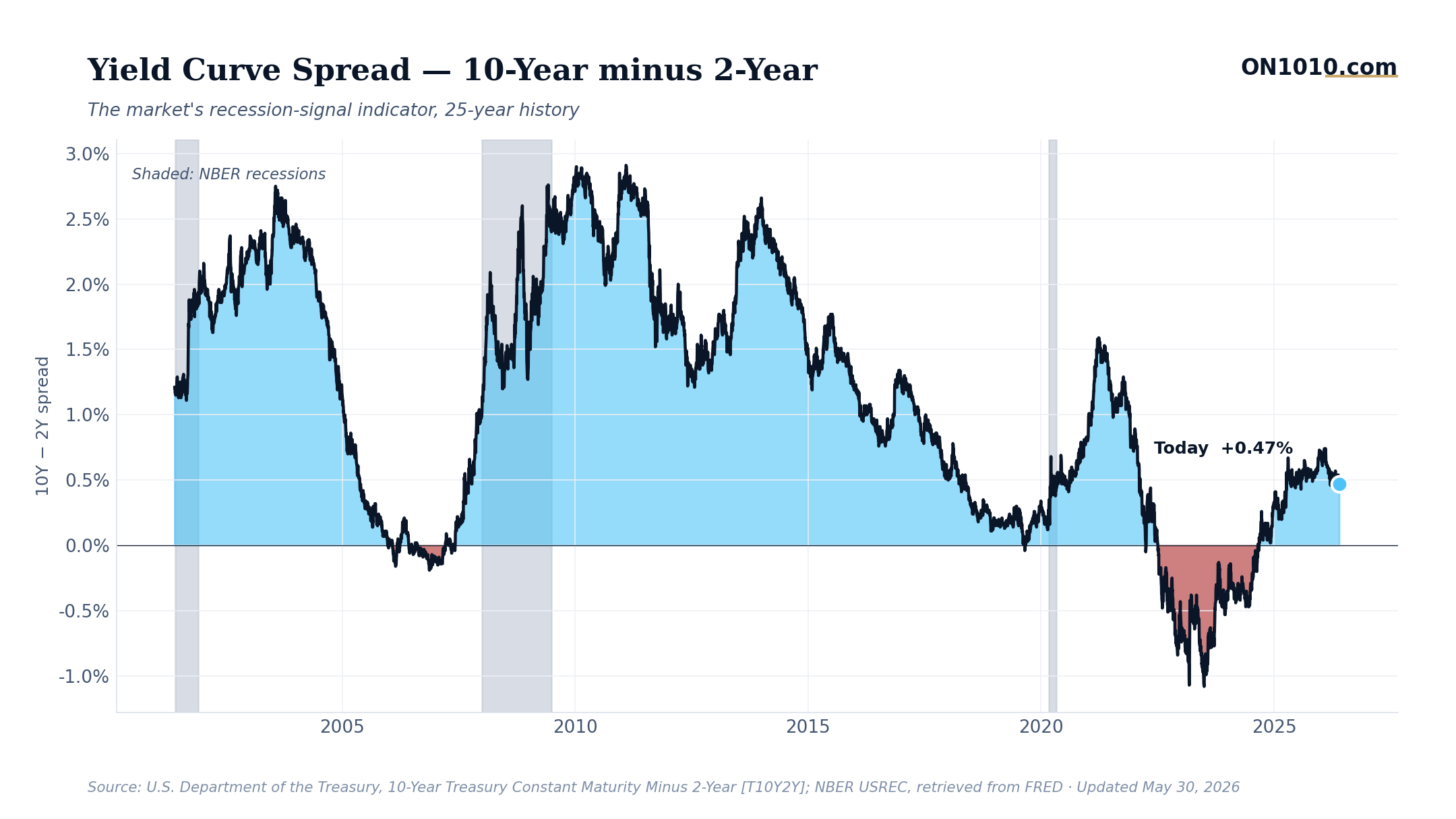
The 10-year minus 2-year Treasury spread widened to 0.47% Thursday, its highest level in nearly a week, as bond traders continue pricing out Federal Reserve rate cuts. The spread has been grinding higher from the 0.43% low hit last week, reflecting a subtle but persistent shift in how markets view the interest rate outlook.
This steepening tells a story about growth expectations versus inflation fears. When the curve steepens, it typically means investors expect either stronger economic growth ahead (pushing long-term rates up) or higher inflation (same effect). Given the ongoing Strait of Hormuz crisis and oil prices near $95, the inflation narrative seems more likely. The Fed has already paused its easing cycle as energy costs threaten to reignite price pressures that were finally settling around 2.5% annually before the oil shock hit.
What makes this particularly noteworthy is where we came from. Just over a year ago, this same spread was deeply negative, the classic recession warning signal. Now we’re in positive territory, suggesting recession fears have largely faded even as new inflation concerns emerge. The curve is normalizing, but for reasons that create different challenges for both policymakers and investors.
Historically, this type of environment, positive but steepening curve driven by inflation concerns rather than growth optimism, has led many professional investors to favor real assets and sectors that benefit from pricing power. Energy, materials, and financial stocks often outperform when curves steepen on inflation fears, while long-duration bonds and growth stocks face headwinds.
Bottom Line: The curve is telling us recession risks are behind us, but the inflation story isn’t over. Watch whether this steepening accelerates if energy prices stay elevated.
Source: Federal Reserve Economic Data (FRED)
ON1010.com provides economic education for investors. Nothing here is investment advice. Always consult a qualified financial advisor before making investment decisions.
Free Research
The economy moves fast. We make sure you move faster.
Economic data, policy shifts, and market signals — delivered to your inbox.
Subscribe Free