
Treasury Markets Hold Their Breath as 2-Year Yields Flatline
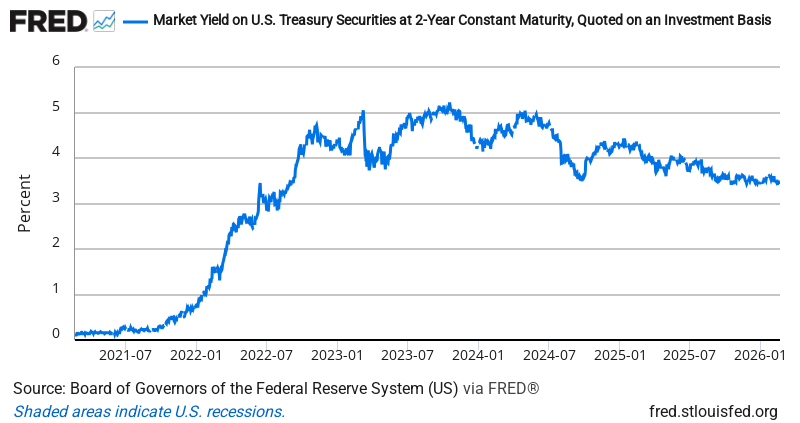
The 2-year Treasury yield held steady at 3.47% yesterday after a week of subtle but telling movement. What’s interesting isn’t the pause — it’s that yields have been quietly grinding higher over the past week, from 3.40% to current levels, before suddenly going flat.
This matters because the 2-year yield is essentially the bond market’s best guess about where Fed policy is headed over the next 18-24 months. When it moves, it’s usually because traders are repricing their expectations about rate cuts or hikes. The recent uptick suggests the market is becoming less convinced that aggressive rate cuts are coming — or at least, less convinced they’re coming as quickly as previously thought. Bond traders are notorious for front-running Fed policy shifts, and they’re clearly recalibrating something.
The bigger picture here is about Fed credibility and market expectations. If yields continue to drift higher from here, it signals that markets think either inflation is proving stickier than expected, or the economy is running hotter than the Fed anticipated. Either scenario would force the Fed to keep rates elevated longer than markets were pricing in just weeks ago.
For investors, this type of environment historically creates opportunities in shorter-duration assets. Many professional money managers use rising 2-year yields as a signal to lock in higher rates on cash equivalents like money market funds or short-term CDs. At the same time, longer-term bond prices become more vulnerable when the yield curve is steepening from the front end.
Bottom Line: When the bond market’s Fed crystal ball starts clouding up, it usually means something fundamental is shifting beneath the surface. The question isn’t whether yields moved today — it’s what changed their minds this week.
Source: Federal Reserve Economic Data (FRED)
ON1010.com provides economic education for investors. Nothing here is investment advice. Always consult a qualified financial advisor before making investment decisions.
Free Research
The economy moves fast. We make sure you move faster.
Economic data, policy shifts, and market signals — delivered to your inbox.
Subscribe Free