
Treasury Markets Signal Shifting Fed Expectations
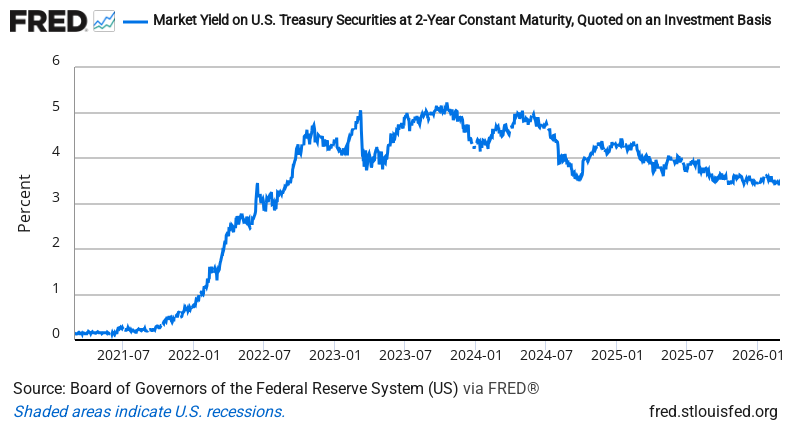
The 2-year Treasury yield dropped to 3.42% Wednesday, down from 3.45% the day before — a small move that reflects a much bigger shift in how bond traders are reading the Fed’s next moves. When the 2-year moves, it’s the market’s way of voting on where short-term rates are headed.
This decline continues a subtle but persistent trend over the past week, with yields drifting down from 3.48% last Thursday. Here’s why that matters: the 2-year yield is essentially a bet on the Fed’s policy path over the next 24 months. When it falls, traders are either expecting rate cuts sooner than previously thought, or they’re growing more confident that inflation pressures are cooling enough to give the Fed room to maneuver. Either way, it suggests the market is pricing in a less aggressive monetary stance ahead.
The timing is telling. Corporate profit margins hit historic highs in Q4 — up 9.2% annualized — while productivity gains from AI investment continue to act as a natural brake on inflation. This combination gives the Fed flexibility that wasn’t there during previous tightening cycles. Bond traders appear to be recognizing that the central bank may not need to stay as restrictive for as long as initially feared.
For portfolios, this environment has historically favored a barbell approach. Many professional investors consider rotating toward longer-duration assets when 2-year yields start declining, as it often signals the beginning of a broader yield curve shift. Defensive sectors have already been outperforming by 7.2 percentage points over the past month, suggesting institutional money is positioning for this transition.
Bottom Line: When the 2-year Treasury speaks, smart money listens — and right now it’s whispering that the Fed’s hawkish chapter may be closer to ending than the headlines suggest.
Source: Federal Reserve Economic Data (FRED)
ON1010.com provides economic education for investors. Nothing here is investment advice. Always consult a qualified financial advisor before making investment decisions.
Free Research
The economy moves fast. We make sure you move faster.
Economic data, policy shifts, and market signals — delivered to your inbox.
Subscribe Free