
Treasury Yields Take a Breather as Markets Digest Mixed Signals
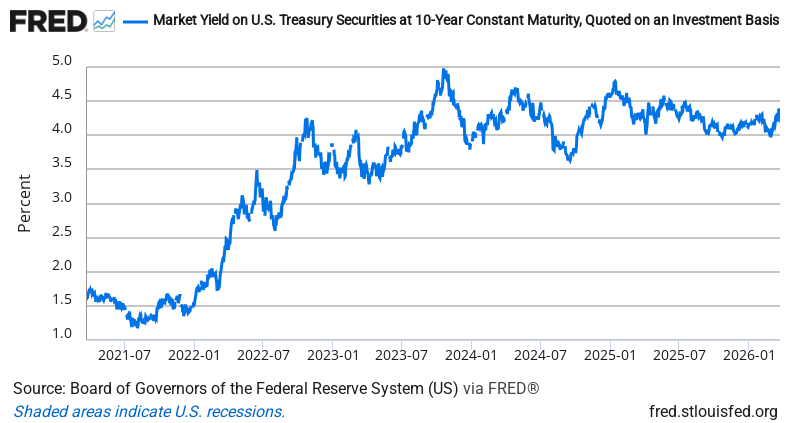
The 10-year Treasury yield dropped to 4.34% on March 23rd, down from 4.39% just three days earlier — a modest decline that masks some serious volatility underneath. Over the past week, yields have bounced between 4.20% and 4.39%, suggesting bond traders are genuinely uncertain about where rates are headed next.
This choppiness tells us something important: the market is still figuring out the new normal. We’re in that tricky phase where economic data is strong enough to keep inflation concerns alive, but not so strong that the Fed feels compelled to turn more aggressive. When Treasury yields ping-pong like this, it’s usually because investors are getting conflicting signals about growth, inflation, or both. The fact that we’re holding above 4.30% shows the bond market isn’t betting on rate cuts anytime soon — but the recent dip suggests it’s not pricing in much more tightening either.
This environment creates interesting crosscurrents for portfolios. Historically, when yields hover in this range with high volatility, many professional investors start looking more carefully at shorter-duration bonds and dividend-paying stocks that can weather rate uncertainty. The key insight: steady yields around 4.30% would actually be good news for most assets, but this current volatility keeps everyone guessing. Companies with strong cash flows and manageable debt loads tend to outperform when the rate environment is unstable, while highly leveraged businesses face continued pressure.
Bottom Line: The Treasury market is in “wait and see” mode — which means investors should be too. This level of rate volatility usually resolves itself within a few weeks, but until it does, the smart money is playing defense.
Source: Federal Reserve Economic Data (FRED)
ON1010.com provides economic education for investors. Nothing here is investment advice. Always consult a qualified financial advisor before making investment decisions.
Free Research
The economy moves fast. We make sure you move faster.
Economic data, policy shifts, and market signals — delivered to your inbox.
Subscribe Free