
USMCA Is Dead. Here Is What That Means for the Housing Market Nobody Is Talking About.
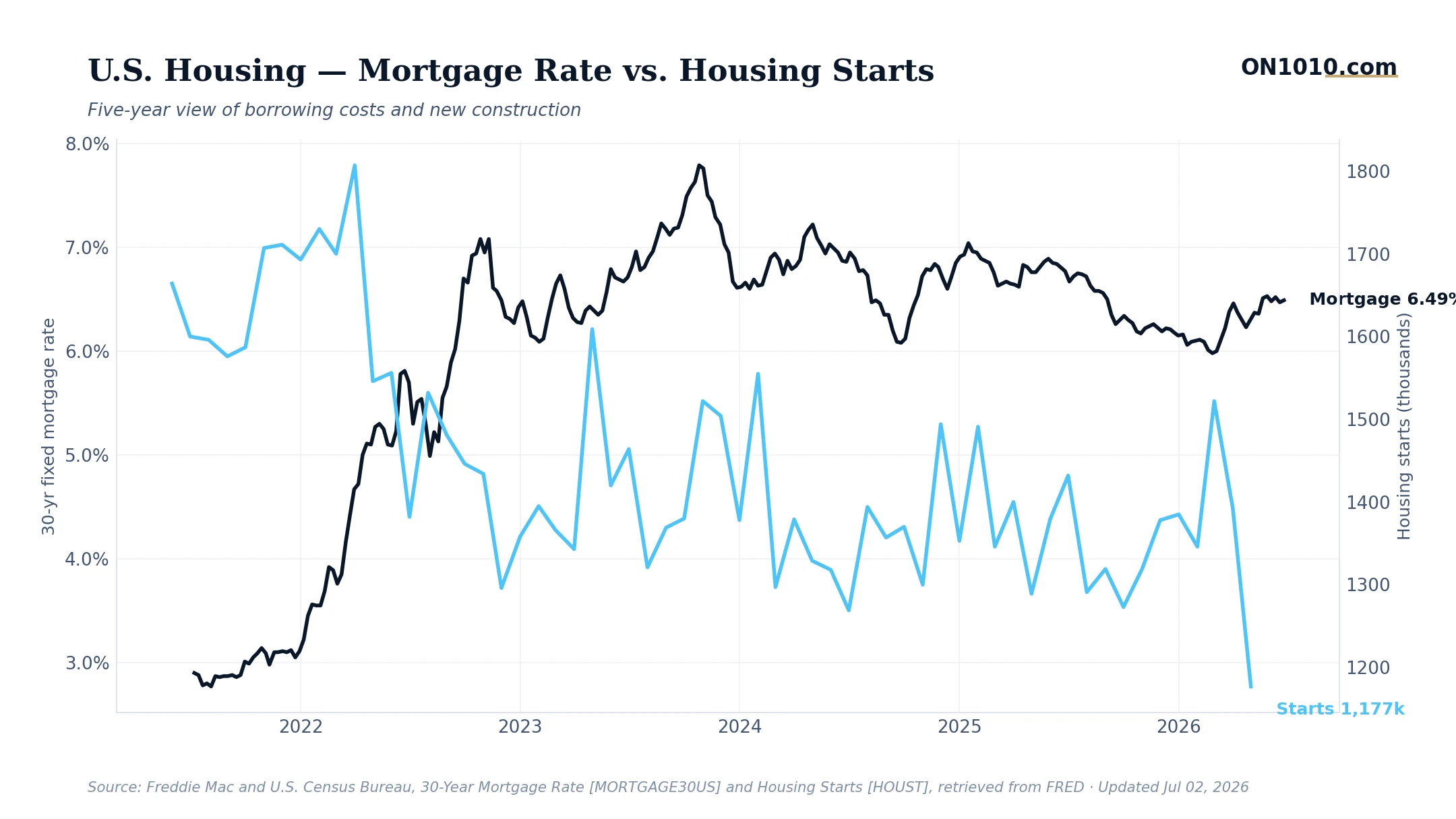
The Trump administration just walked away from the trade agreement that governs commerce with America’s two largest trading partners. Most headlines are focused on Mexico. The housing angle is getting almost no attention, and it probably should.
Canada is a major supplier of softwood lumber to the United States, and lumber is the backbone of new home construction. When trade agreements break down, tariff risk rises. When tariff risk rises, builders face input cost uncertainty that is hard to price into a project budget. That uncertainty alone can slow decisions before any actual tariff ever lands.
Here is the market backdrop: oil slipped to $67.52 per barrel, which keeps energy costs from adding to build costs. The 10-year Treasury yield sits at 4.44%, with the 10-year breakeven inflation rate at 2.23%, which means real borrowing costs are still meaningful for developers. The S&P 500 dipped 0.22% to 7,483, with tech and communication services lagging while real estate and health care held up, a sign that institutional money is quietly favoring defensive and yield-sensitive corners of the market.
On deck today: weekly jobless claims print this morning, giving the first labor market read of the week ahead of Friday’s June payrolls report, which Goldman Sachs estimates could show a World Cup-related bump of roughly 40,000 jobs.
When trade policy shifts input costs for builders, the ripple runs through housing starts, then permits, then new home prices over months, not days.
That is the five-minute version. The fuller picture on what trade uncertainty means for the construction cycle lands Sunday in The Long View, and it is free to join.
ON1010 Research is an independent publisher of economic education and is not a registered investment adviser, broker-dealer, or investment company. This content is for educational and informational purposes only and is not investment advice or a recommendation to buy, sell, or hold any security. Published under the publisher exemption recognized by Section 202(a)(11)(D) of the Investment Advisers Act of 1940 (Lowe v. SEC). Always consult a qualified financial professional before making any financial decision.
Free Research
The economy moves fast. We make sure you move faster.
Economic data, policy shifts, and market signals — delivered to your inbox.
Subscribe Free