
Volatility Spikes 11% as Markets Price in Growing Uncertainty
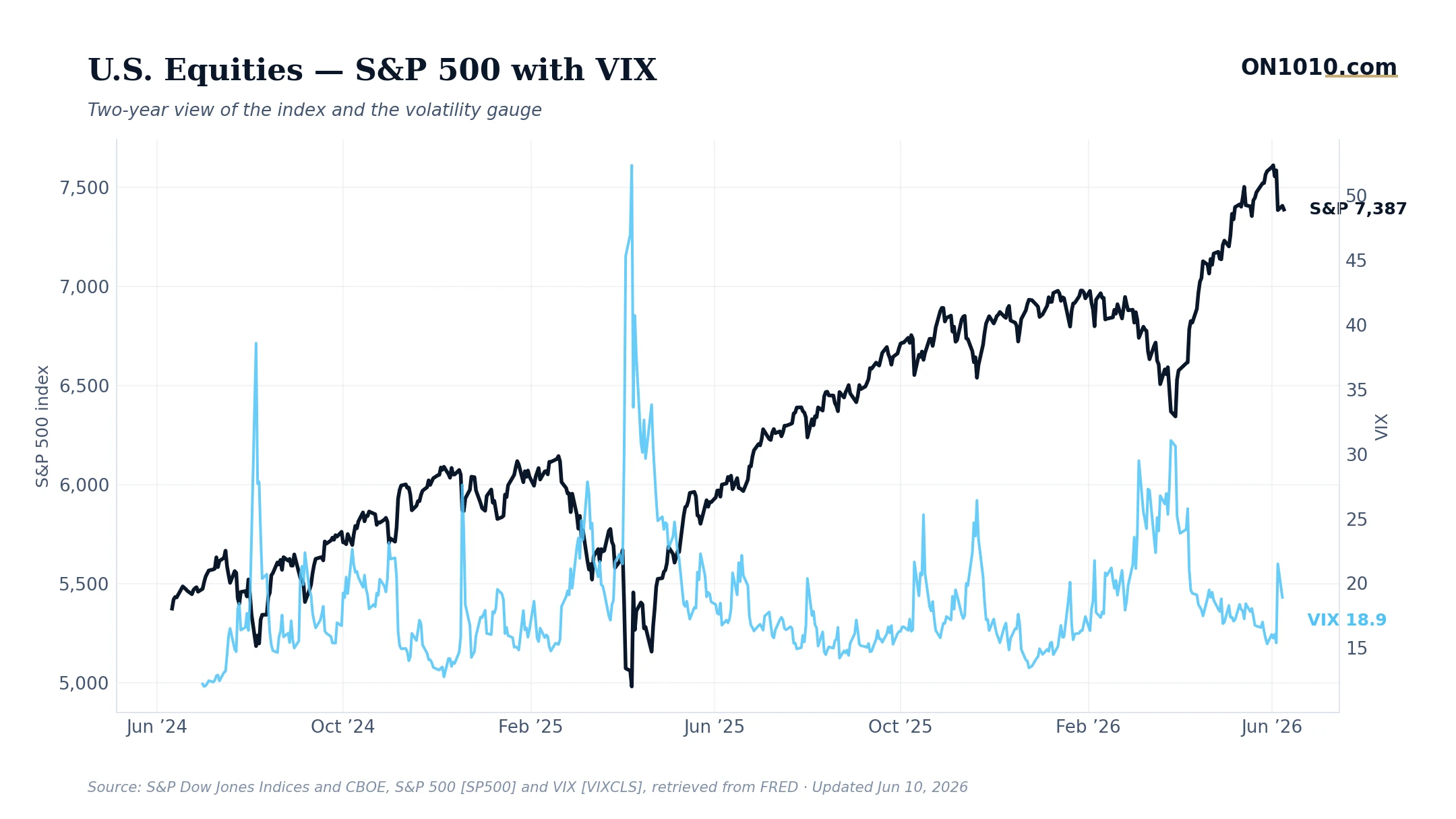
The VIX jumped 11.4% to 21.08 yesterday, signaling that traders are suddenly pricing in more risk ahead of today’s inflation data. While stocks ended mixed, the fear gauge tells a different story about what’s really happening beneath the surface.
Markets showed their split personality Tuesday. The NASDAQ surged 0.86% on tech strength, but the Dow fell 80 points. Small caps in the Russell 2000 gained 0.77%, suggesting some appetite for risk, even as volatility measures flashed warning signs. The 10-year Treasury yield edged up to 4.56%, continuing its climb from 4.46% five trading days ago.
Today brings the May Consumer Price Index, with Wall Street expecting inflation to run at 4.2% annually. That reading could shift the entire conversation about Fed policy, especially with energy prices still elevated from the ongoing Strait of Hormuz crisis.
The volatility spike matters because it shows institutional money managers hedging ahead of key data. When the VIX moves this sharply, it often signals that the market consensus is about to get tested. The question is whether today’s inflation number validates those concerns or sends volatility back down.
This is the quick take. The deeper weekly analysis of what volatility spikes mean for your planning decisions arrives Sunday in The Long View, and it’s completely free.
ON1010 Research is an independent publisher of economic education and is not a registered investment adviser, broker-dealer, or investment company. This content is for educational and informational purposes only and is not investment advice or a recommendation to buy, sell, or hold any security. Published under the publisher exemption recognized by Section 202(a)(11)(D) of the Investment Advisers Act of 1940 (Lowe v. SEC). Always consult a qualified financial professional before making any financial decision.
Free Research
The economy moves fast. We make sure you move faster.
Economic data, policy shifts, and market signals — delivered to your inbox.
Subscribe Free