
Wage Growth Hits a Sweet Spot as Workers See Real Gains
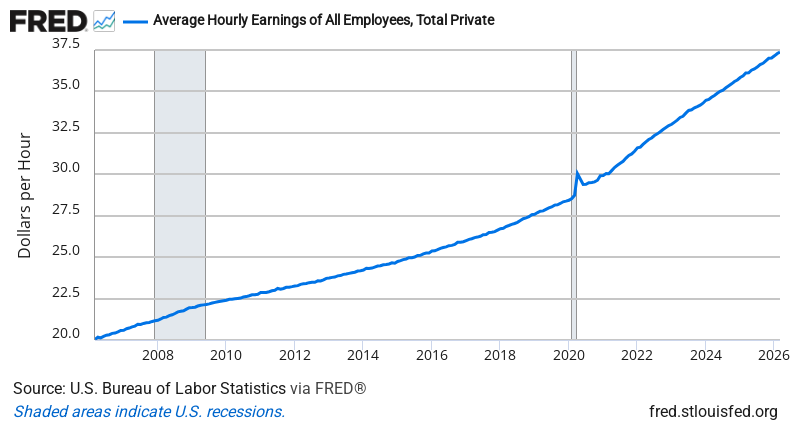
Average hourly earnings climbed 0.24% in March to $37.38, bringing the annual pace to a steady 3.03% — exactly where economists like to see it when inflation is running around 2.5%.
Here’s what’s interesting: workers are finally getting ahead of the price curve again. With inflation cooling but wage growth holding steady, real purchasing power is expanding for the first time in over two years. That $1.10 annual increase might not sound like much, but multiply it across 160 million workers and you’re talking about serious consumer firepower flowing into the economy.
This wage trajectory tells a story about business confidence. Companies don’t hand out raises when they’re worried about demand — they do it when they’re competing for talent to meet growing orders. The gradual acceleration we’ve seen since October (from $36.85 to $37.38) suggests employers are betting on sustained growth, not just riding out a temporary bump.
Many professional investors view this type of wage environment as a Goldilocks scenario — hot enough to support consumer spending and corporate revenues, but cool enough to avoid triggering aggressive Fed action. Historically, periods of steady 3% wage growth have coincided with expanding profit margins across consumer discretionary sectors, as companies can raise prices while workers can afford to pay them.
The key question now: can businesses absorb these wage increases through productivity gains, or will they start passing costs along more aggressively? March productivity data, due next week, should provide that answer.
Bottom Line: Workers are winning the inflation fight, and that’s usually good news for everyone — as long as it doesn’t accelerate from here.
Source: Federal Reserve Economic Data (FRED)
ON1010.com provides economic education for investors. Nothing here is investment advice. Always consult a qualified financial advisor before making investment decisions.
Free Research
The economy moves fast. We make sure you move faster.
Economic data, policy shifts, and market signals — delivered to your inbox.
Subscribe Free