
Wage Growth Stalls as Labor Market Cools
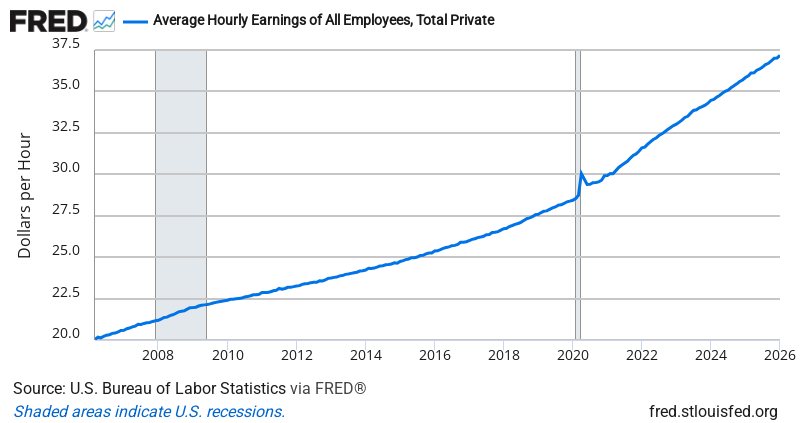
Workers saw their paychecks grow by just 0.41% last month, bringing average hourly earnings to $37.17 — the smallest monthly gain since August and a sign that the red-hot labor market is finally downshifting.
The 2.94% annual wage growth rate sits well below the 4-5% peaks we saw in 2021-2022, when businesses were desperately bidding for scarce workers. This cooling matters because wage growth has been one of the last stubborn pieces of the inflation puzzle. When workers get big raises, companies either absorb the cost (squeezing profit margins) or pass it along to customers (keeping inflation sticky). Neither scenario thrills investors.
What’s particularly interesting is the trend: monthly wage gains have been decelerating steadily since summer, suggesting this isn’t just statistical noise. We’re seeing the mirror image of 2021 — back then, wages accelerated month after month as the economy reopened. Now they’re decelerating as the Federal Reserve’s higher interest rates cool demand for workers. This looks less like a soft landing and more like a controlled descent.
Historically, this type of wage deceleration has given the Fed room to cut interest rates without worrying about reigniting inflation. Many professional investors view cooling wage growth as a green light for rate-sensitive assets like bonds and dividend-paying stocks. Growth stocks also tend to benefit when the Fed shifts from fighting inflation to supporting growth.
Bottom Line: The labor market is giving the Fed exactly what it wants to see — cooling without breaking. The question now is whether this gradual wage deceleration continues or accelerates into something more worrying.
Source: Federal Reserve Economic Data (FRED)
ON1010.com provides economic education for investors. Nothing here is investment advice. Always consult a qualified financial advisor before making investment decisions.
Free Research
The economy moves fast. We make sure you move faster.
Economic data, policy shifts, and market signals — delivered to your inbox.
Subscribe Free