
Wages Are Rising, But Barely Beating Historical Averages
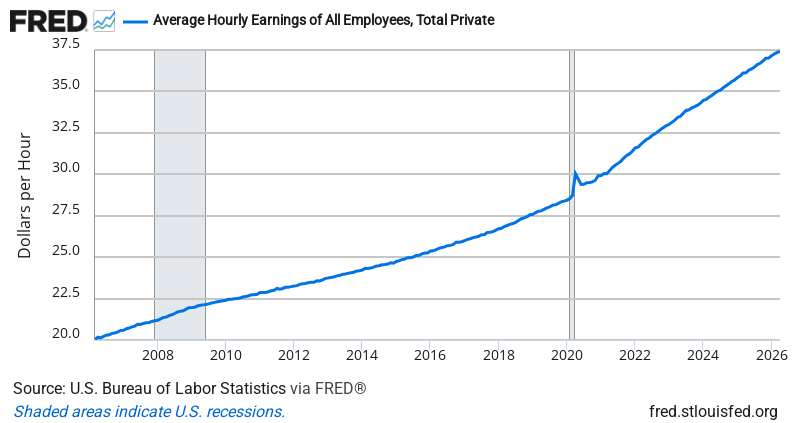
The puzzle: Average hourly earnings climbed 0.16% in April to $37.41, marking the fourth straight month of steady but unspectacular wage growth. The annual pace of 2.89% sits right in that sweet spot where workers see modest raises without triggering inflation alarm bells.
Here’s what’s interesting about this number: wage growth is tracking almost exactly where it was in 2018-2019, before the pandemic scrambled everything. After two years of wild swings — wages spiking above 5% in 2021-2022, then cooling sharply — we’re back to what economists used to call “normal.” The trend has been remarkably consistent since November, with monthly gains hovering between 0.11% and 0.27%. That consistency matters more than any single month’s reading.
This wage trajectory suggests the labor market has found its post-pandemic equilibrium. Companies are still competing for workers, but the desperation hiring of 2021-2022 is over. The steady 2.9% pace means real wage growth is positive but modest — workers are gaining purchasing power, just not dramatically. Historically, this type of wage environment has coincided with Goldilocks economic conditions: growth without overheating.
Many professional investors view stable wage growth around 3% as a green light for risk assets. It’s fast enough to support consumer spending (which drives corporate revenues) but slow enough that the Fed doesn’t need to slam the brakes. In this type of environment, investors traditionally focus on companies with pricing power — those that can grow earnings without relying on massive labor cost savings.
Bottom Line: The wage story has gotten boring in the best possible way — steady, predictable, and right where policymakers want it. Sometimes boring is exactly what markets need to keep climbing.
Source: Federal Reserve Economic Data (FRED)
ON1010.com provides economic education for investors. Nothing here is investment advice. Always consult a qualified financial advisor before making investment decisions.
Free Research
The economy moves fast. We make sure you move faster.
Economic data, policy shifts, and market signals — delivered to your inbox.
Subscribe Free