
Yields Still Drifting Higher Despite Monday’s Pause
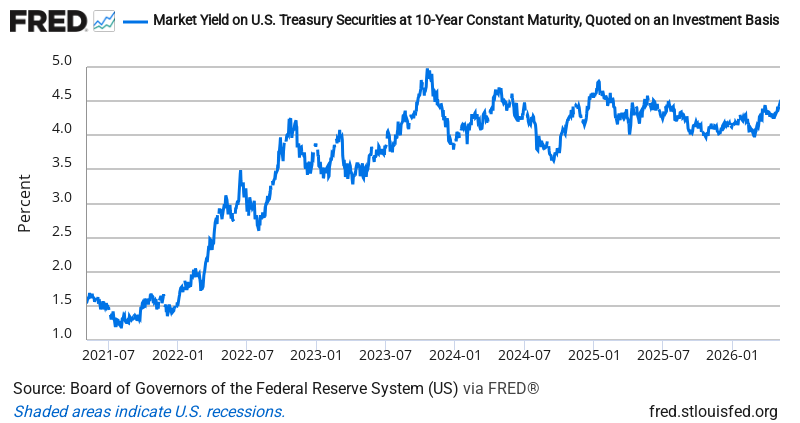
The 10-year Treasury yield dropped 2 basis points to 4.43% on Monday after hovering near recent highs last week. But zoom out and the pattern is clear: yields have been grinding steadily higher since late April, climbing from 4.36% just a week ago.
This isn’t panic selling in bonds — it’s a methodical repricing. When yields rise this persistently but gradually, it usually signals investors are adjusting to a different economic reality rather than reacting to crisis. The question is what reality they’re pricing in. Higher growth expectations? Stickier inflation? Both would justify demanding more compensation to lend money for a decade.
The 4.40%+ zone is becoming significant. We haven’t seen sustained 10-year yields above this level since late 2023, and back then it was driven by Fed tightening fears. This time feels different — more about economic resilience than monetary tightening. When bond investors demand higher returns without obvious policy catalysts, they’re often seeing something in the growth data before it shows up elsewhere.
Many professional investors view rising yields in this context as a rotation signal rather than an alarm bell. Historically, when yields climb on growth optimism rather than inflation scares, it often benefits sectors like financials and industrials while pressuring rate-sensitive plays like utilities and REITs. The key is watching why yields are moving, not just that they’re moving.
Bottom Line: Bond investors are quietly repricing the economy higher, one basis point at a time. If they’re right about stronger growth ahead, this gradual yield climb could be laying groundwork for the next phase of the cycle.
Source: Federal Reserve Economic Data (FRED)
ON1010.com provides economic education for investors. Nothing here is investment advice. Always consult a qualified financial advisor before making investment decisions.
Free Research
The economy moves fast. We make sure you move faster.
Economic data, policy shifts, and market signals — delivered to your inbox.
Subscribe Free