
When Oil Falls on Peace Talks, Watch What the Economy Is Actually Telling You
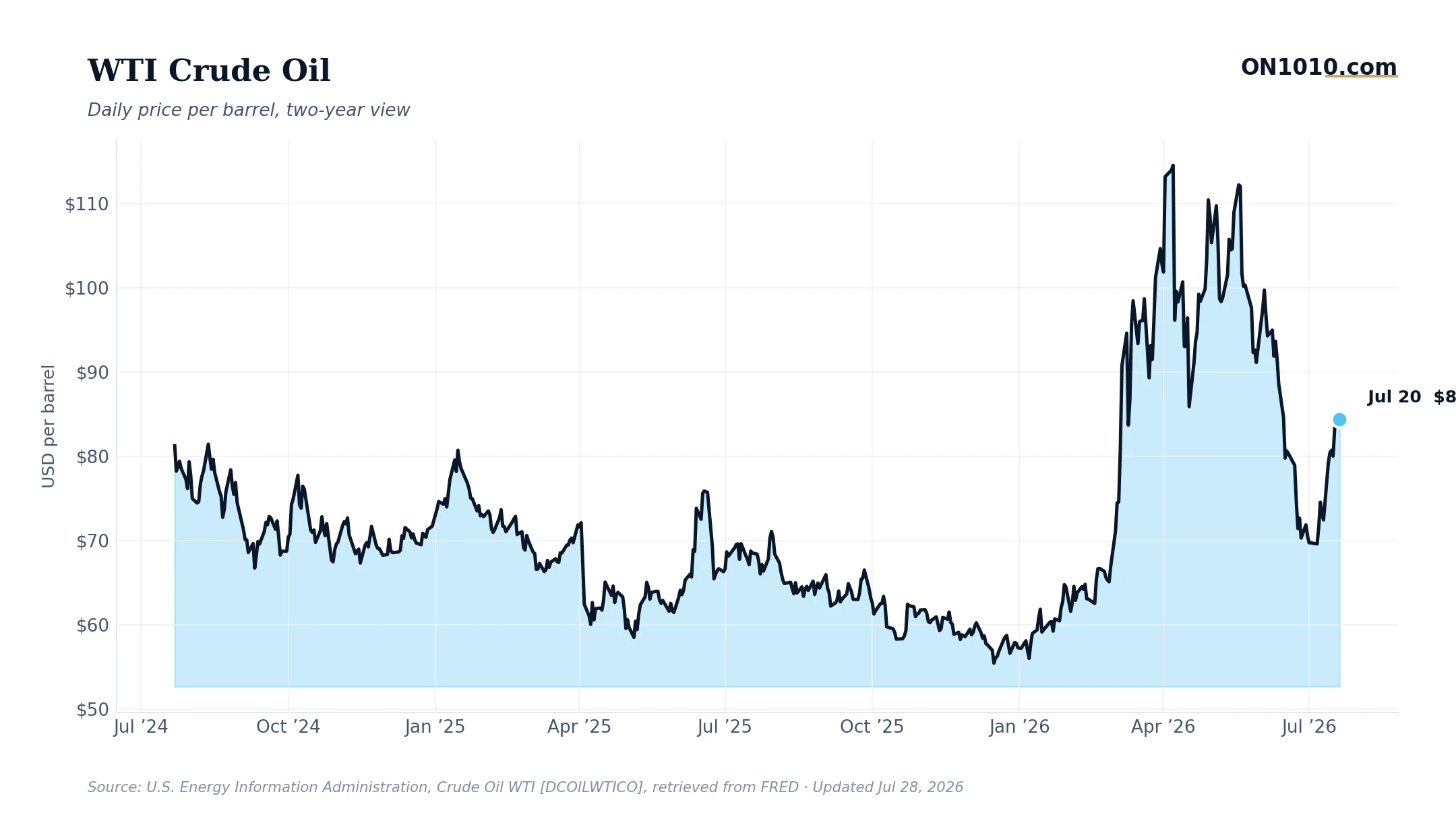
According to CNBC, U.S. crude oil has slipped below $80 as Iran opens diplomatic conversations with Saudi Arabia and Oman about the Strait of Hormuz, the narrow waterway through which roughly 20% of the world’s traded oil passes every day. On the surface, that looks like good news. But the more interesting question is whether falling oil prices are being driven by easing geopolitical tension or by something softer happening in global demand.
The distinction matters enormously for the economic picture. When oil falls because a crisis de-escalates, that is genuinely constructive. It reduces input costs for manufacturers, lowers transportation expenses across supply chains, and gives consumers a little more breathing room at the pump. All of that flows through to corporate margins, which are the leading indicator most worth watching right now. But when oil falls because global growth is losing altitude and demand is pulling back, the same price drop tells a very different story.
Context makes this harder to read cleanly. The inflation gauge currently sits at the 92nd percentile historically and is still rising, meaning price pressure remains unusually hot relative to any period in the modern data. Long-term interest rates are elevated at the 73rd percentile, tightening financial conditions at the same moment energy costs are easing. Consumer sentiment is at its weakest level in the entire historical record. These do not look like the ingredients of a demand-driven boom that would ordinarily send oil prices higher.
Historically, energy price declines during periods of high inflation have been one of the few mechanisms that gave central banks room to breathe without raising rates further. That dynamic is worth watching closely now. The question worth sitting with is whether eased energy costs show up in core inflation readings over the next few months, and whether that changes the trajectory of monetary policy.
Bottom Line: Oil falling on diplomacy is a different animal than oil falling on recession fears, and right now, the broader data is mixed enough that the market deserves the benefit of the doubt before drawing conclusions either way.
Read more: CNBC Top News
ON1010 Research is an independent publisher of economic education and is not a registered investment adviser, broker-dealer, or investment company. This content is for educational and informational purposes only and is not investment advice or a recommendation to buy, sell, or hold any security. Published under the publisher exemption recognized by Section 202(a)(11)(D) of the Investment Advisers Act of 1940 (Lowe v. SEC). Always consult a qualified financial professional before making any financial decision.
Free Research
The economy moves fast. We make sure you move faster.
Economic data, policy shifts, and market signals — delivered to your inbox.
Subscribe Free