
The Fed Is on Pause. The Real Question Is What It’s Waiting For.
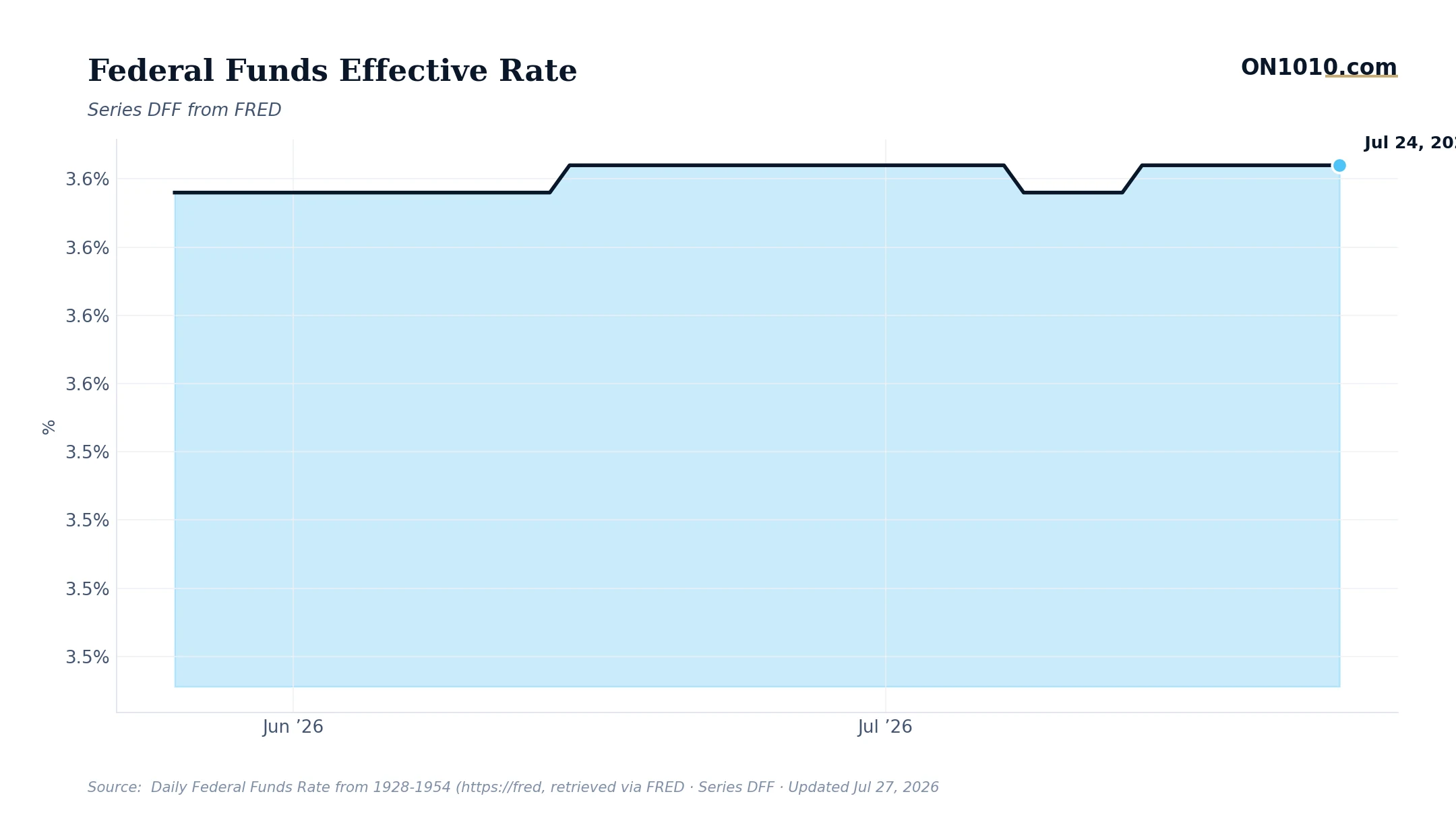
The effective federal funds rate has sat at 3.63% every single day this week. No drift. No surprise. The overnight market is moving in perfect lockstep with the Fed’s target, which tells you something important: this is deliberate stillness, not drift.
That kind of precision means the Fed’s plumbing is working exactly as designed. But “working as designed” doesn’t mean the design is right for the moment. The real story here is what that 3.63% is sitting next to.
The broader gauge picture makes this rate harder to read as simply neutral. Inflation is at the 92nd percentile of its historical range and still rising. Long-term interest rates are high versus history, sitting at the 74th percentile. And yet credit spreads remain tight, near the bottom of their historical range, suggesting credit markets are calm and not pricing in stress. The Fed is holding rates steady while those signals pull in different directions.
Historically, when short-term rates were locked in a holding pattern against a backdrop of high and rising inflation, the conversation eventually turned to whether policy was tight enough in real terms. Real rates matter more than nominal ones: if inflation is running well above the Fed funds rate, money is still cheap after you adjust for it.
In past cycles, business operators and capital allocators have watched this gap carefully. A Fed that holds steady while inflation runs hot creates a different incentive structure than one holding steady while inflation cools. The first keeps the cost of waiting low. The second raises the cost of inaction.
Consumer sentiment is at its weakest level in the entire historical record here. Credit is calm. Inflation is hot. The Fed is frozen. Those four facts, together, are the puzzle worth sitting with.
Bottom Line: The Fed isn’t moving, but the economy around it is. The question to keep asking is whether 3.63% is tight enough to slow inflation, or just stable enough to feel comfortable while the problem persists.
Source: Federal Reserve Economic Data (FRED)
ON1010 Research is an independent publisher of economic education and is not a registered investment adviser, broker-dealer, or investment company. This content is for educational and informational purposes only and is not investment advice or a recommendation to buy, sell, or hold any security. Published under the publisher exemption recognized by Section 202(a)(11)(D) of the Investment Advisers Act of 1940 (Lowe v. SEC). Always consult a qualified financial professional before making any financial decision.
Free Research
The economy moves fast. We make sure you move faster.
Economic data, policy shifts, and market signals — delivered to your inbox.
Subscribe Free