
The Fed Is Holding Steady at 3.5%. The Real Story Is What’s Happening Around It.
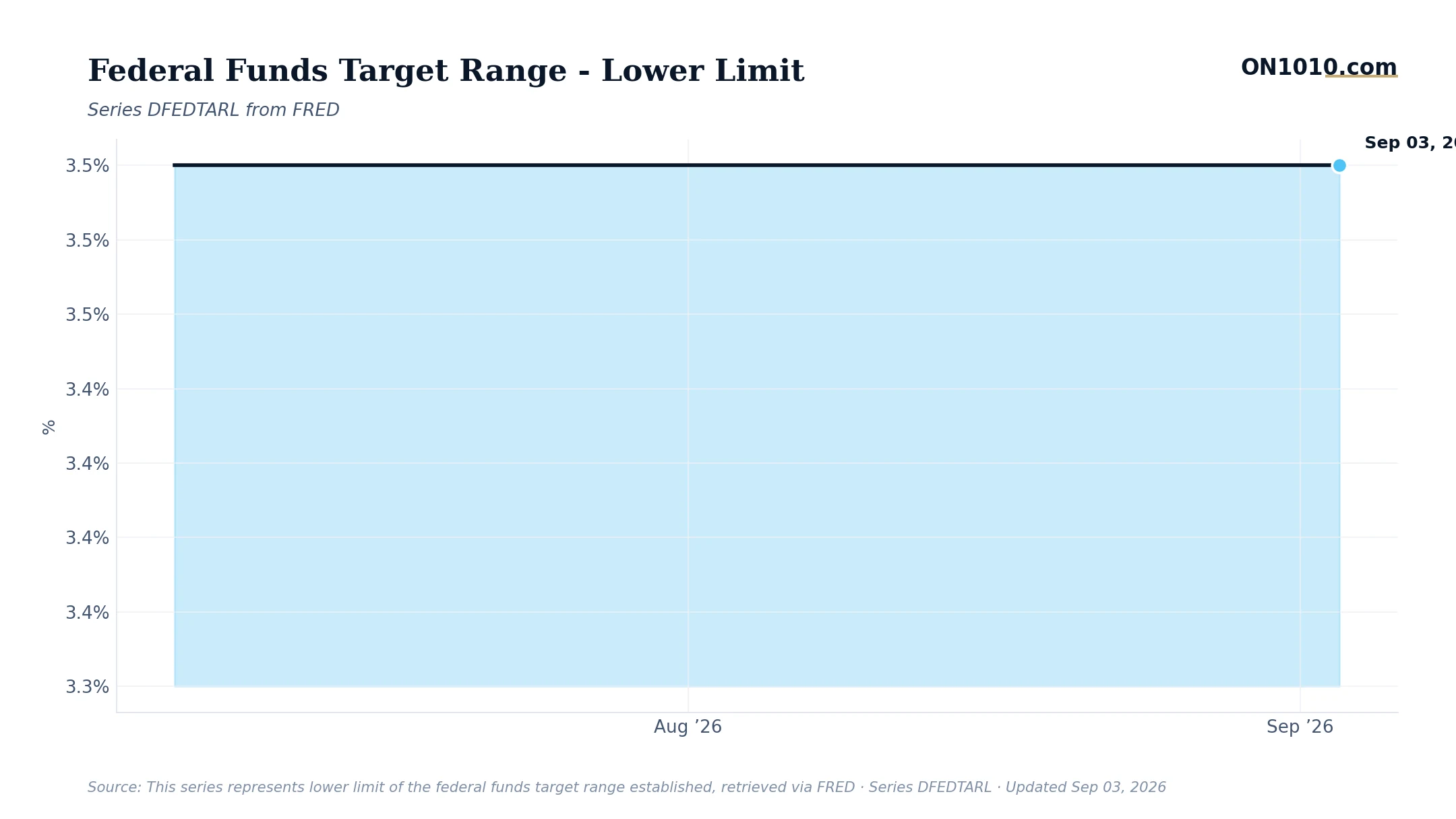
The federal funds rate has sat at a target floor of 3.5% without moving. That’s not the interesting part. The interesting part is what the rest of the economy is doing while the Fed stays put.
The Fed’s target range lower bound has been unchanged, and that deliberate stillness tells its own story. The central bank is threading a needle: core inflation is running historically hot, sitting higher than roughly nine of every ten months on record, while growth is right near its historical midpoint and consumer sentiment remains deeply depressed by historical standards. In past tightening cycles, the Fed held rates steady at elevated levels when it believed it had done enough but wasn’t confident enough to start cutting. That waiting game can last longer than markets expect.
Here’s the wrinkle worth watching: long-term interest rates are elevated and still drifting higher, even as the Fed holds its short-term target flat. When short rates are anchored by policy and long rates keep climbing, borrowing gets more expensive across the economy regardless of what the Fed does. Mortgages, corporate debt, auto loans, all of those price off longer-term rates. The Fed controls one end of the curve; the bond market controls the other.
Historically, the combination of a steady short-term rate alongside rising long-term rates has created real pressure on credit-sensitive parts of the economy. In past cycles, business owners and capital allocators have paid close attention to this spread because it affects the actual cost of refinancing, expanding, or carrying debt. With credit spreads currently near historically tight levels, the market isn’t pricing in much stress, but the gap between that calm credit pricing and persistently high long rates is a tension worth understanding. Historical base rates show that from similar monetary policy environments, a recession began within the following year about 10% of the time. That is not a forecast; it is the arithmetic of prior cycles.
Bottom Line: The Fed is holding, but the bond market isn’t. The real question isn’t when the Fed moves next, it’s whether rising long-term rates will do the tightening work for them.
Source: Federal Reserve Economic Data (FRED)
ON1010 Research is an independent publisher of economic education and is not a registered investment adviser, broker-dealer, or investment company. This content is for educational and informational purposes only and is not investment advice or a recommendation to buy, sell, or hold any security. Published under the publisher exemption recognized by Section 202(a)(11)(D) of the Investment Advisers Act of 1940 (Lowe v. SEC). Always consult a qualified financial professional before making any financial decision.
Free Research
The economy moves fast. We make sure you move faster.
Economic data, policy shifts, and market signals — delivered to your inbox.
Subscribe Free