
Bond Market to Fed: “We Believe You.”
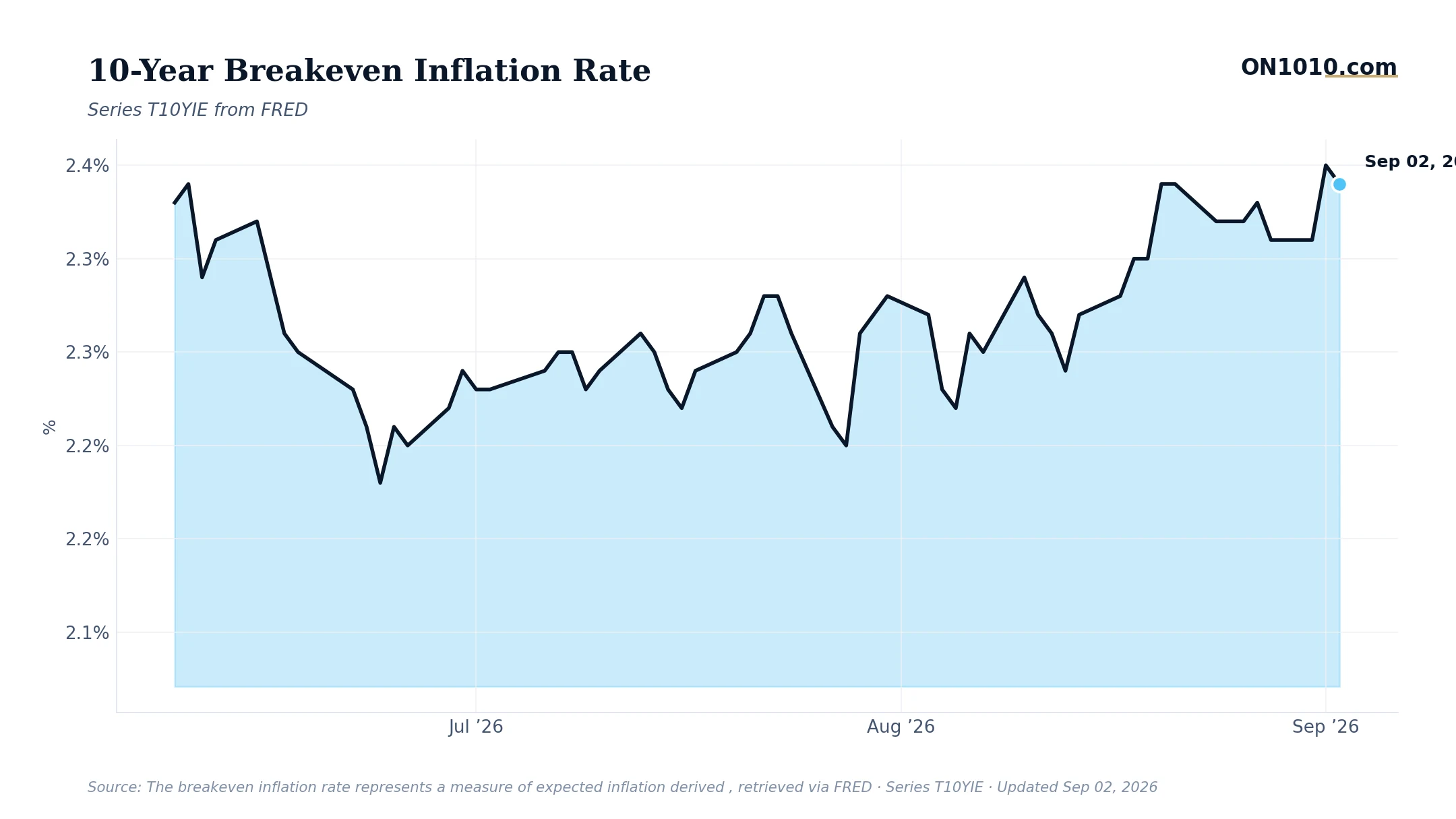
The 10-year breakeven inflation rate slipped from 2.35% to 2.34% on Tuesday, holding in a tight range it has occupied all week. That single basis point move is barely a rounding error. But the pattern it is part of tells a more interesting story.
Markets are pricing average inflation at 2.34% over the next decade. That is within a whisker of the Fed’s 2% target, and it has barely moved. After years of post-pandemic inflation chaos, the bond market is quietly signaling that it thinks the Fed has done its job.
Here is why that matters more than the number itself. The breakeven rate is essentially a bet placed by real money investors: Treasury buyers versus TIPS buyers, both trying to price future inflation correctly. When that bet stabilizes near 2.3% to 2.4%, it suggests the professional money community sees the current inflation environment as manageable over the long run. That is notable given that our broader inflation gauge sits higher than roughly nine of every ten months on record. The bond market is telling us that today’s hot readings are expected to fade, not embed.
Historically, when long-run inflation expectations stay anchored near the Fed’s target, it has given the central bank more flexibility to respond to growth concerns without triggering a spiral in rates. In past cycles, a sustained breakeven near 2.3% has coincided with periods where businesses could plan capital expenditures with more confidence, because the cost environment becomes more predictable. In contrast, when breakevens drift toward 3% or above, that planning horizon shrinks fast.
The tension worth watching: long-term interest rates sit high by historical norms, even as inflation expectations look tame. That gap raises a real question about what is driving rate levels if inflation is well-anchored.
Bottom Line: When the bond market says inflation is under control and rates are still elevated, the story shifts to growth and credit quality. Which of those two forces is telling the truth about what comes next?
Source: Federal Reserve Economic Data (FRED)
ON1010 Research is an independent publisher of economic education and is not a registered investment adviser, broker-dealer, or investment company. This content is for educational and informational purposes only and is not investment advice or a recommendation to buy, sell, or hold any security. Published under the publisher exemption recognized by Section 202(a)(11)(D) of the Investment Advisers Act of 1940 (Lowe v. SEC). Always consult a qualified financial professional before making any financial decision.
Free Research
The economy moves fast. We make sure you move faster.
Economic data, policy shifts, and market signals — delivered to your inbox.
Subscribe Free