
Economic Wire: U.S. Strategic Petroleum Reserve faces stress as emergency r
America’s Emergency Oil Cushion Has an Infrastructure Problem
According to CNBC, the U.S. Strategic Petroleum Reserve, which holds up to 714 million barrels of crude in salt caverns along the Gulf Coast, is showing signs of physical stress after repeated emergency releases have pushed aging infrastructure toward its operational limits.
The SPR was designed in the 1970s to be a geopolitical insurance policy. The problem is the infrastructure is roughly 50 years old, and insurance policies don’t work well when the machinery is worn out. Repeated drawdowns, most notably the record release in 2022 to fight gasoline prices, didn’t just deplete the reserve. They strained the caverns, pipes, and pumping systems that make rapid release physically possible. The authorization on paper is 714 million barrels. The practical, operational ceiling is a different number, and the gap between those two figures is exactly where risk hides.
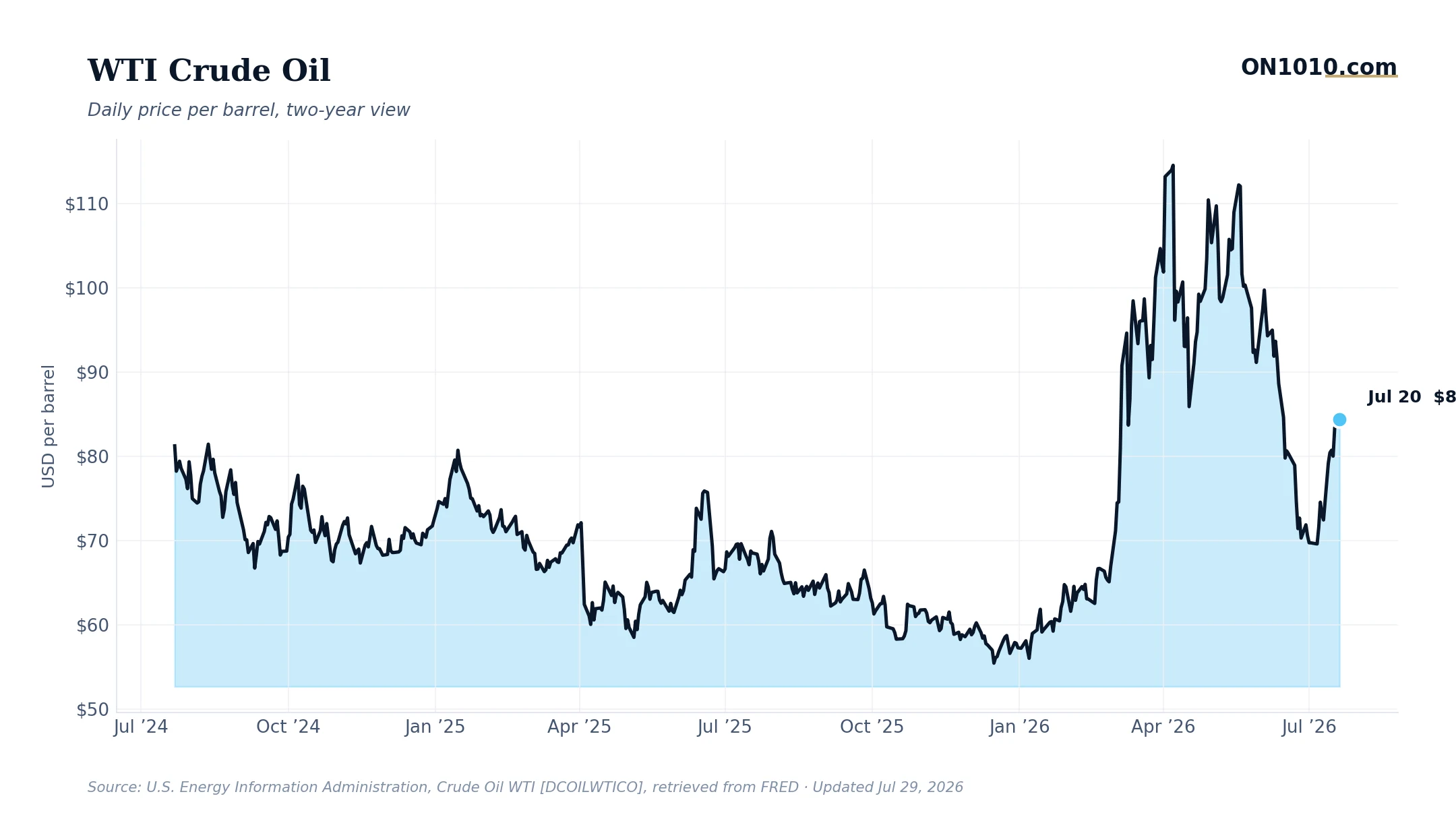
This matters in today’s macro environment more than it would in calmer times. Inflation is running near the 92nd percentile of its historical range, which means any supply shock that pushes energy prices sharply higher doesn’t just hurt consumers at the pump. It hits corporate margins directly through transportation and input costs, arriving at a moment when businesses are already navigating high interest rates. The SPR’s entire purpose is to dampen that kind of shock, and a structurally impaired reserve is a weaker shock absorber precisely when a strong one is most needed.
Historically, investors in energy-sensitive sectors, and really any business with meaningful logistics or input cost exposure, have treated SPR capacity as a background assumption about U.S. energy security. When that assumption gets quietly undermined by deferred maintenance rather than a dramatic headline, it rarely moves markets immediately. But the second-order question worth sitting with is what a degraded emergency capacity means for the floor under energy price volatility if a genuine supply disruption emerges.
Bottom Line: The SPR’s headline number is 714 million barrels. The operational reality may be considerably smaller, and in a high-inflation environment, the difference between those two figures is an unpriced risk worth understanding.
Read more: CNBC Top News
ON1010 Research is an independent publisher of economic education and is not a registered investment adviser, broker-dealer, or investment company. This content is for educational and informational purposes only and is not investment advice or a recommendation to buy, sell, or hold any security. Published under the publisher exemption recognized by Section 202(a)(11)(D) of the Investment Advisers Act of 1940 (Lowe v. SEC). Always consult a qualified financial professional before making any financial decision.
Free Research
The economy moves fast. We make sure you move faster.
Economic data, policy shifts, and market signals — delivered to your inbox.
Subscribe Free