
When Oil Crosses $90, the Real Question Is What Stays Broken After the Shooting Stops
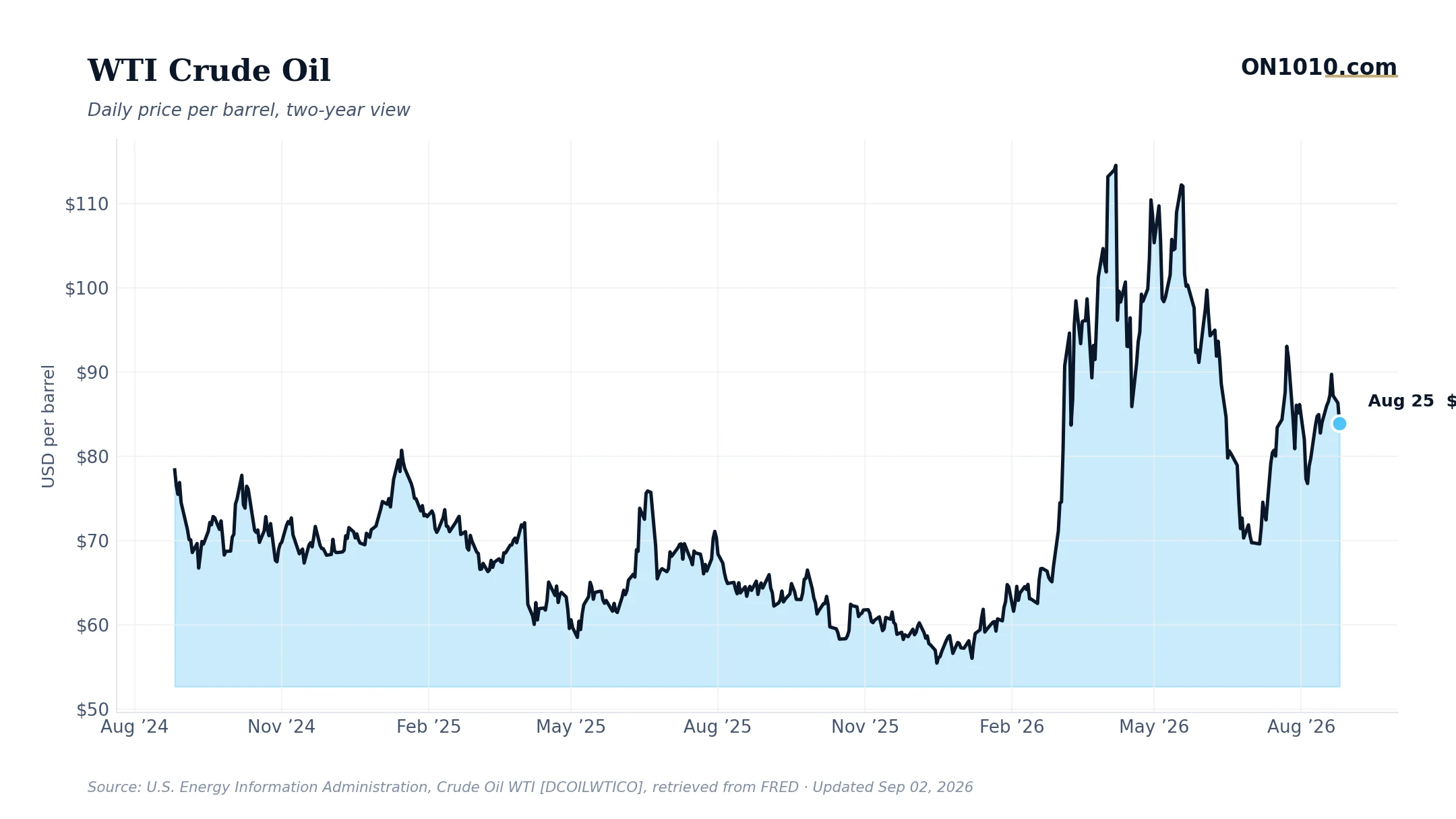
According to CNBC, U.S. crude topped $90 a barrel Wednesday after Iran struck U.S. allies Kuwait, Jordan, and Bahrain in retaliation for a prior American attack on Iranian targets. The headline move is jarring. The more important question is how long it lasts, and what it does to the economy while it does.
Oil at $90 is not a curiosity. It is a tax. Every dollar added to a barrel of crude eventually shows up in transportation costs, manufacturing inputs, and heating bills. For an economy already running with inflation historically hot by almost any measure, an energy spike does not arrive in a vacuum. It lands on top of core prices that are already elevated, which means the Fed has almost no room to look past it the way it might during a period of low baseline inflation.
The real margin story is what matters most here. Companies that were just beginning to absorb prior cost pressures now face another input cost wave. Energy is not a line item that stays contained. It spreads through freight, chemicals, plastics, and food production before most earnings reports even register the move. Historically, sustained oil price jumps above the $80-to-$90 range have shown up in corporate margin compression within two to three quarters, with capital spending plans often following downward shortly after. That is the mechanism worth watching, not the day-to-day price volatility.
There is a counterargument worth taking seriously. Credit spreads remain historically tight, which suggests the credit market is not yet pricing a hard landing. The broader market trend, with SPY trading above both its 50-day and 200-day moving averages, reflects a system that has not broken down despite the shock. In past geopolitical flare-ups, oil spikes that were rooted in genuine supply disruption rather than fear alone tended to be stickier. The question is which kind this is.
Historically, investors and operators have distinguished between a spike that reflects a temporary fear premium and one that reflects durable supply removal. The Strait of Hormuz moves roughly 20% of the world’s seaborne oil. Whether Gulf logistics actually get disrupted, or whether this remains a political shock with limited physical supply consequences, is the falsifiable question that determines whether $90 becomes a ceiling or a floor.
Bottom Line: Oil at $90 with inflation already running hot is a margin problem in slow motion. Watch unit costs, not just the price at the pump.
Read more: CNBC Top News
ON1010 Research is an independent publisher of economic education and is not a registered investment adviser, broker-dealer, or investment company. This content is for educational and informational purposes only and is not investment advice or a recommendation to buy, sell, or hold any security. Published under the publisher exemption recognized by Section 202(a)(11)(D) of the Investment Advisers Act of 1940 (Lowe v. SEC). Always consult a qualified financial professional before making any financial decision.
Free Research
The economy moves fast. We make sure you move faster.
Economic data, policy shifts, and market signals — delivered to your inbox.
Subscribe Free