
Inflation Expectations Tick Up. The Bond Market Might Be Sending a Message.
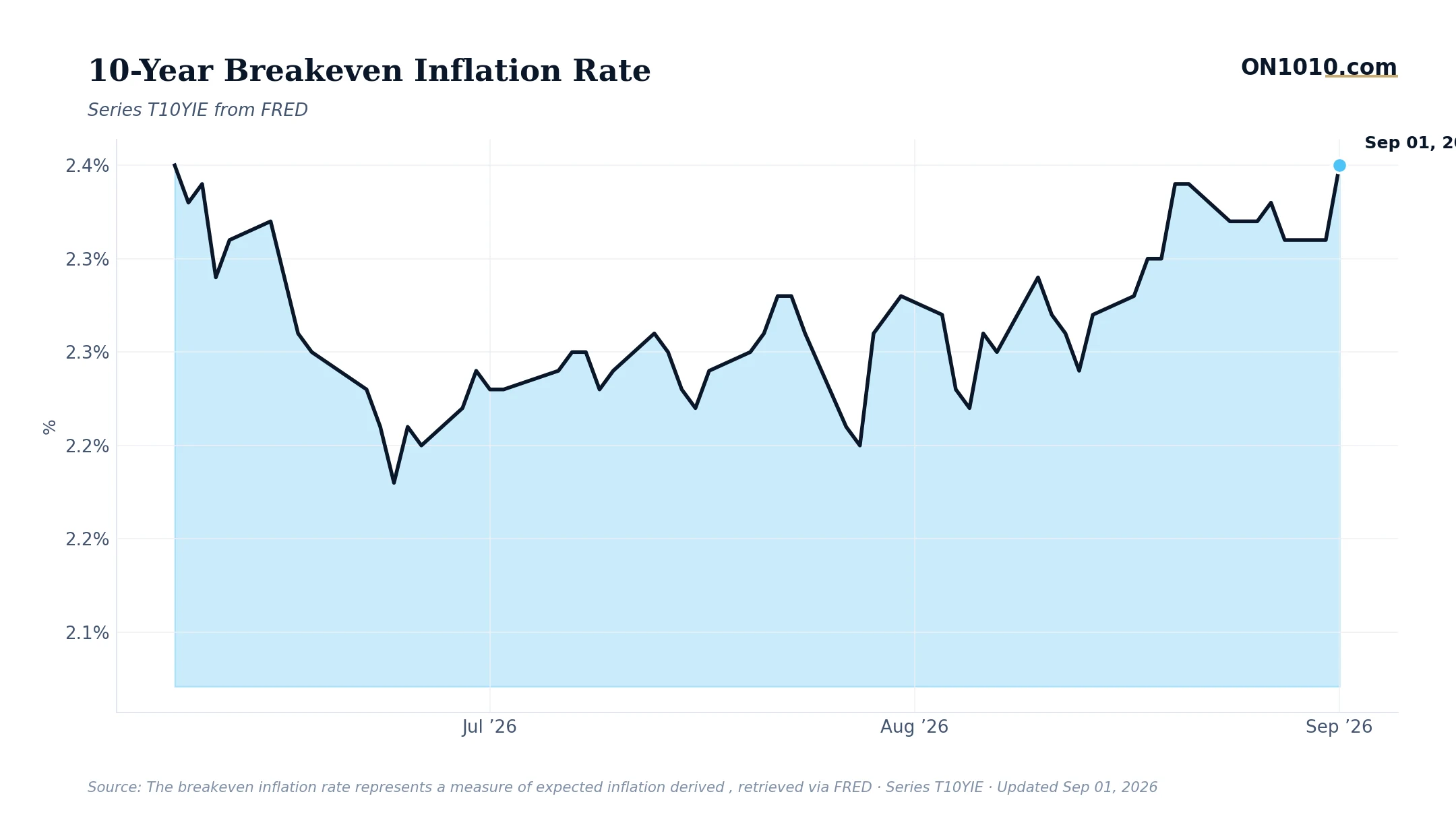
The 10-year breakeven inflation rate rose to 2.35% on September 1, up from 2.31% the day before. That 0.04-point move sounds tiny. But in a market where every basis point carries an argument about the future cost of money, the direction matters as much as the distance.
The breakeven rate is the bond market’s real-time vote on where inflation will average over the next decade. When it rises, it means investors are demanding more compensation for inflation risk. When it falls, the opposite. At 2.35%, the market is sitting just above the Fed’s 2% target, not alarming, but not dismissing the inflation conversation either.
Here’s the broader tension worth watching. Core inflation is running hot relative to its own history, yet the economy’s growth rate sits near its historical midpoint. That combination, elevated inflation with middling growth, is where policy gets complicated. The Fed wants to see inflation drift back toward 2%. Breakevens drifting higher, even modestly, push in the other direction. Meanwhile, long-term interest rates have moved from falling to rising, which adds a separate layer of pressure on financing costs for businesses and households.
Credit spreads remain historically tight, which signals the corporate credit market sees limited near-term default risk. But consumer sentiment is historically weak. Those two data points can coexist for a while. They don’t coexist forever.
In past cycles, a sustained rise in breakeven inflation alongside rising long-term rates has tended to be the combination that challenged equity valuations most directly, because it compresses the present value of future earnings. Historically, business leaders have watched this pairing when making decisions about long-duration capital commitments, because the real cost of borrowing is the nominal rate minus expected inflation, and that spread is shifting.
Bottom Line: At 2.35%, inflation expectations are contained but drifting in the wrong direction. The question worth sitting with: if breakevens continue climbing while long-term rates rise in parallel, what does that do to the real cost of capital for businesses planning their next three to five years?
Source: Federal Reserve Economic Data (FRED)
ON1010 Research is an independent publisher of economic education and is not a registered investment adviser, broker-dealer, or investment company. This content is for educational and informational purposes only and is not investment advice or a recommendation to buy, sell, or hold any security. Published under the publisher exemption recognized by Section 202(a)(11)(D) of the Investment Advisers Act of 1940 (Lowe v. SEC). Always consult a qualified financial professional before making any financial decision.
Free Research
The economy moves fast. We make sure you move faster.
Economic data, policy shifts, and market signals — delivered to your inbox.
Subscribe Free