
Bond Markets to the Fed: Inflation Isn’t Dead Yet
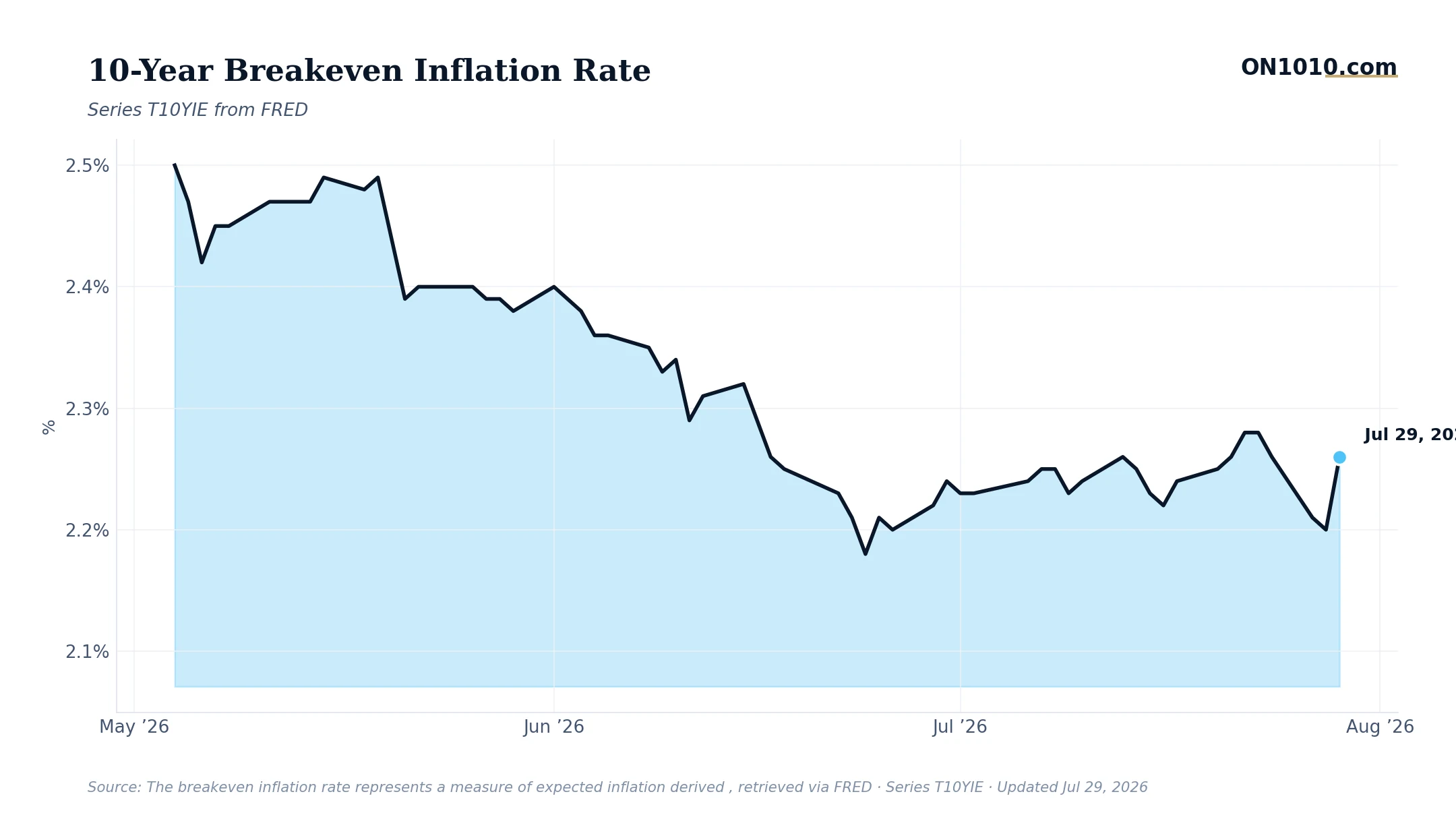
The 10-year breakeven inflation rate ticked up to 2.26% on July 29, rising 0.06 percentage points from 2.20% the day before. That’s a small daily move, but it lands in a context that makes it worth paying attention to.
The breakeven rate is essentially the bond market’s best guess at average inflation over the next decade, priced in real time by traders putting money on the line. When it rises, it means the market is quietly demanding more compensation for the risk that prices stay elevated. At 2.26%, that expectation sits just above the Fed’s 2% target, which isn’t alarming on its own. But it’s happening while core inflation already sits at the 92nd percentile of its own historical range, and it has barely moved off its recent lows. The trend is sideways to slightly higher, not cooling.
Here’s what makes the backdrop unusual. Consumer sentiment is at its weakest reading in the entire historical data set, credit spreads are tight (meaning corporate credit markets are calm), and long-term interest rates are running at the 72nd percentile of their historical range. That combination, nervous households and tight credit spreads alongside elevated rates and sticky inflation expectations, doesn’t fit a single clean narrative.
Historically, when breakeven inflation has held above 2.2% while actual inflation remained elevated, bond investors have required higher yields to hold long-duration paper, since a dollar of interest paid in 10 years is worth less if prices keep rising. In past cycles, business operators have used this kind of read to think about fixed-rate financing windows and long-duration cost commitments, asking whether locking in rates today prices in a more favorable or less favorable inflation path than the market implies. A qualified financial professional who knows your specific situation is the right sounding board for what that means for any specific decision.
Bottom Line: The bond market is telling us it doesn’t fully believe inflation comes back to 2% and stays there. The question worth sitting with is whether recent tariff dynamics, services stickiness, and fiscal policy are changing the equilibrium, or whether this is just noise around a genuine disinflationary trend.
Source: Federal Reserve Economic Data (FRED)
ON1010 Research is an independent publisher of economic education and is not a registered investment adviser, broker-dealer, or investment company. This content is for educational and informational purposes only and is not investment advice or a recommendation to buy, sell, or hold any security. Published under the publisher exemption recognized by Section 202(a)(11)(D) of the Investment Advisers Act of 1940 (Lowe v. SEC). Always consult a qualified financial professional before making any financial decision.
Free Research
The economy moves fast. We make sure you move faster.
Economic data, policy shifts, and market signals — delivered to your inbox.
Subscribe Free