
The Fed Is Splitting in Two. That’s the Signal Worth Watching.
According to CNBC Economy, Wall Street’s reading of this week’s Federal Reserve meeting is straightforward: a rate hike is likely coming. But the more important story isn’t the hike itself. It’s the fracture inside the institution deciding it.
A divided Fed is a fundamentally different animal than a unified one. When policymakers disagree openly, the market loses its anchor. Forward guidance, which is the mechanism through which the Fed shapes expectations before it acts, stops working. Businesses and investors can’t price a future they can’t read. The incentive to delay capital commitments goes up. That’s the real transmission risk here, and most coverage is glossing over it.
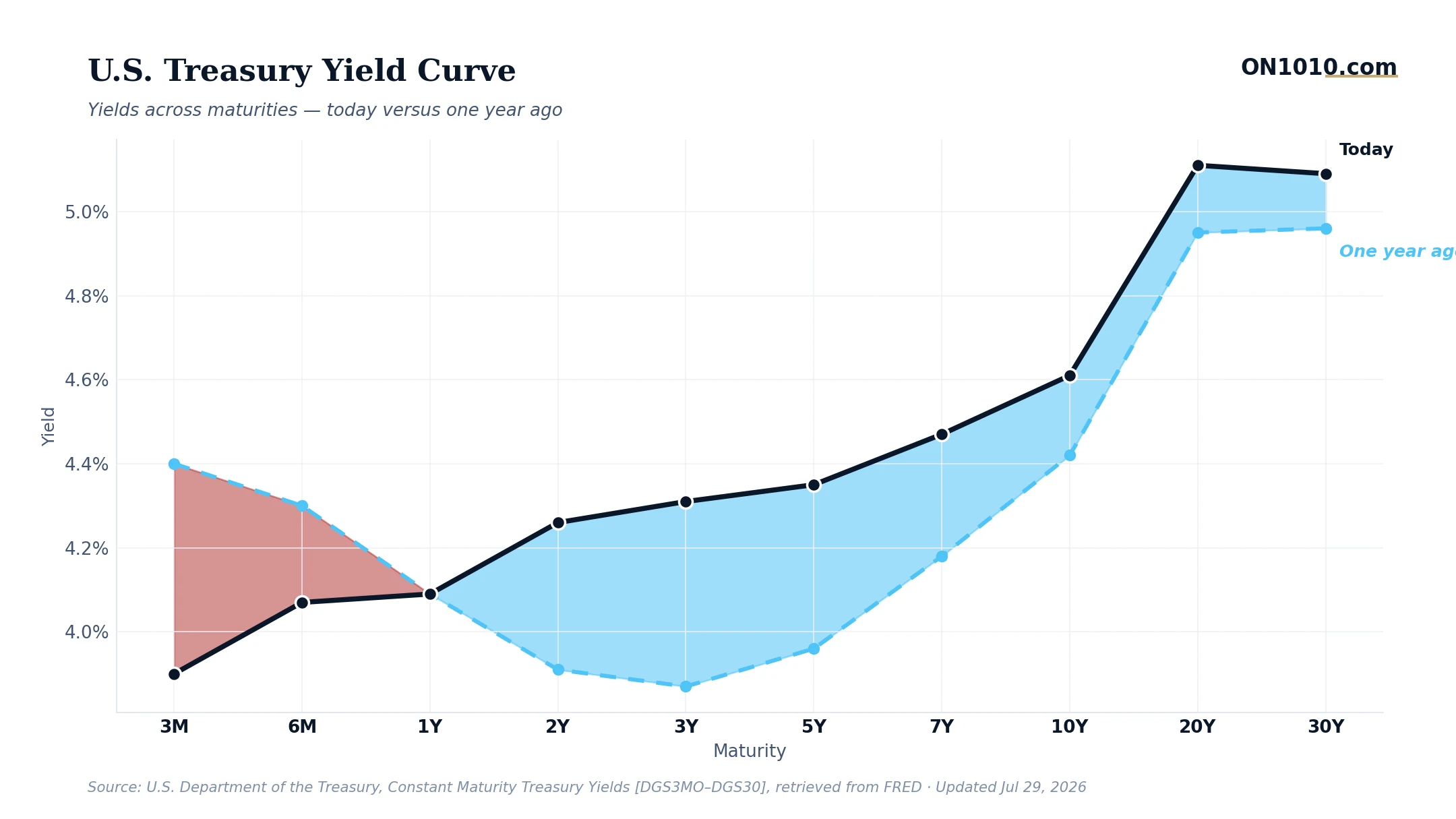
The economic backdrop makes the internal debate understandable. Core inflation sits at the 92nd percentile of its historical range and is still rising. Long-term interest rates are already elevated by historical standards, at the 72nd percentile. Yet credit spreads are tight, which means the bond market isn’t yet screaming distress. Growth is neutral, sitting near its historical median. Consumer sentiment is at rock bottom, at the literal 0th percentile of its historical range. Those signals point in multiple directions at once, and that’s exactly what a divided Fed reflects.
Historically, investors have paid close attention to the distance between where the policy rate sits and where inflation is actually running, because that spread determines whether monetary policy is genuinely tight or just looks tight on paper. A rate hike into an already-elevated rate environment, with margins under pressure from persistent input costs, tends to widen that scrutiny considerably. The questions worth sitting with: how much more tightening can corporate margins absorb before investment plans get pulled, and are credit spreads staying calm because the economy is healthy, or because institutional capital hasn’t fully repriced the risk yet?
Bottom Line: A Fed divided on the next move isn’t a technicality. It means policy uncertainty is now a cost of doing business, and uncertainty always has a price.
Read more: CNBC Economy
ON1010 Research is an independent publisher of economic education and is not a registered investment adviser, broker-dealer, or investment company. This content is for educational and informational purposes only and is not investment advice or a recommendation to buy, sell, or hold any security. Published under the publisher exemption recognized by Section 202(a)(11)(D) of the Investment Advisers Act of 1940 (Lowe v. SEC). Always consult a qualified financial professional before making any financial decision.
Free Research
The economy moves fast. We make sure you move faster.
Economic data, policy shifts, and market signals — delivered to your inbox.
Subscribe Free