
The Fed’s Rate Is Frozen. The Story Is Everything Around It.
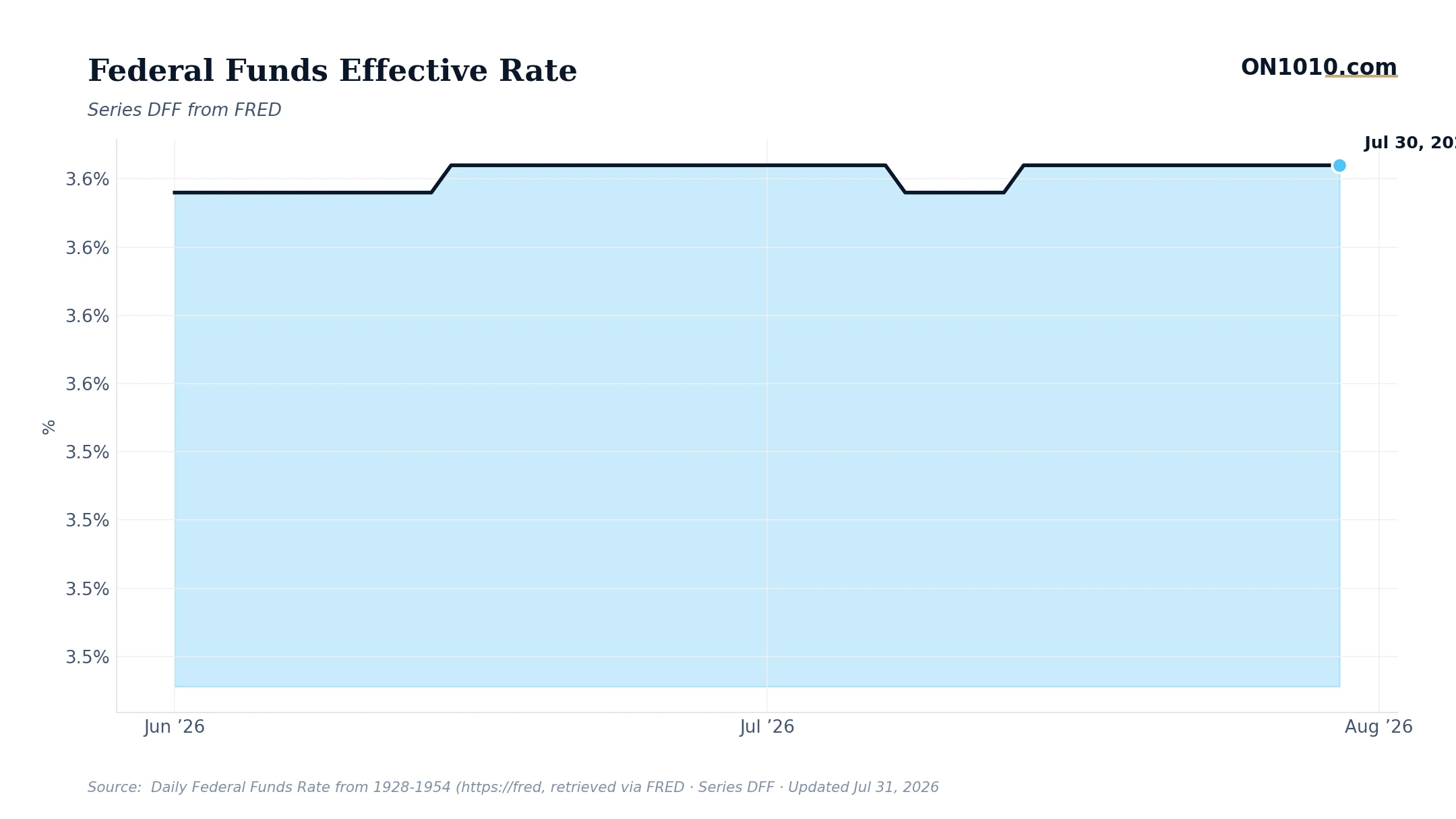
The effective federal funds rate has sat at 3.63% for six straight days. That flatline is not the news. The news is what it means to hold steady at 3.63% when the economy around it is anything but flat.
The Fed’s target range determines roughly where this rate lands each day, and right now it is sitting right in the middle of the range, exactly as intended. Banks are borrowing from each other at the expected cost. Monetary plumbing is working. But “working as designed” is a very different thing from “calibrated correctly for the moment.”
Here is the tension worth sitting with. Core inflation is running near the 91st percentile of its own historical range, meaning it is hotter than in roughly 91% of all months in the data. Long-term interest rates are at the 73rd percentile of their history. And yet monetary policy, as measured against that backdrop, registers at only the 59th percentile, right in the middle of its historical norm. That math raises an obvious question: if inflation is historically elevated, why does policy look average?
The answer is that the Fed is threading a needle. Credit spreads are tight, which means corporate borrowers are not yet stressed. Consumer sentiment is at its lowest percentile in the historical record, which sounds alarming, but historically, readings that weak have actually preceded recoveries more often than recessions. The recession base rate from this sentiment level: roughly 0% within 12 months.
In past cycles, investors and business operators have watched the gap between the policy rate and actual inflation closely. When that gap narrows, the real cost of borrowing shrinks, which tends to support capital investment and borrowing decisions. When it widens, it does the opposite.
One thing worth tracking: sector rotation in equities is showing money moving toward consumer staples, health care, and real estate over the past month, while technology has lagged. Markets often foreshadow economic shifts before the data confirms them. That rotation is a question mark, not a verdict.
Bottom Line: The rate itself is inert. The real story is whether 3.63% is actually tight enough to bring a 91st-percentile inflation reading back to earth, and what happens to growth and margins if the Fed has to push harder to find out.
Source: Federal Reserve Economic Data (FRED)
ON1010 Research is an independent publisher of economic education and is not a registered investment adviser, broker-dealer, or investment company. This content is for educational and informational purposes only and is not investment advice or a recommendation to buy, sell, or hold any security. Published under the publisher exemption recognized by Section 202(a)(11)(D) of the Investment Advisers Act of 1940 (Lowe v. SEC). Always consult a qualified financial professional before making any financial decision.
Free Research
The economy moves fast. We make sure you move faster.
Economic data, policy shifts, and market signals — delivered to your inbox.
Subscribe Free