
Economic Wire: Manufacturing survey shows inflation worries ‘worse than pan
When Purchasing Managers Sound Scarier Than 2020, the Fed Has a Problem
According to CNBC, a recent manufacturing survey found inflation worries among purchasing managers have grown “worse than pandemic era,” with commentary describing a highly volatile environment where procurement teams are struggling to stay ahead of costs. That framing deserves a pause. The pandemic era wasn’t a minor disruption. It featured supply chains seizing up globally, shipping costs going vertical, and input prices spiking across nearly every category. If manufacturers are saying today feels worse, that’s not a data point to skim past.
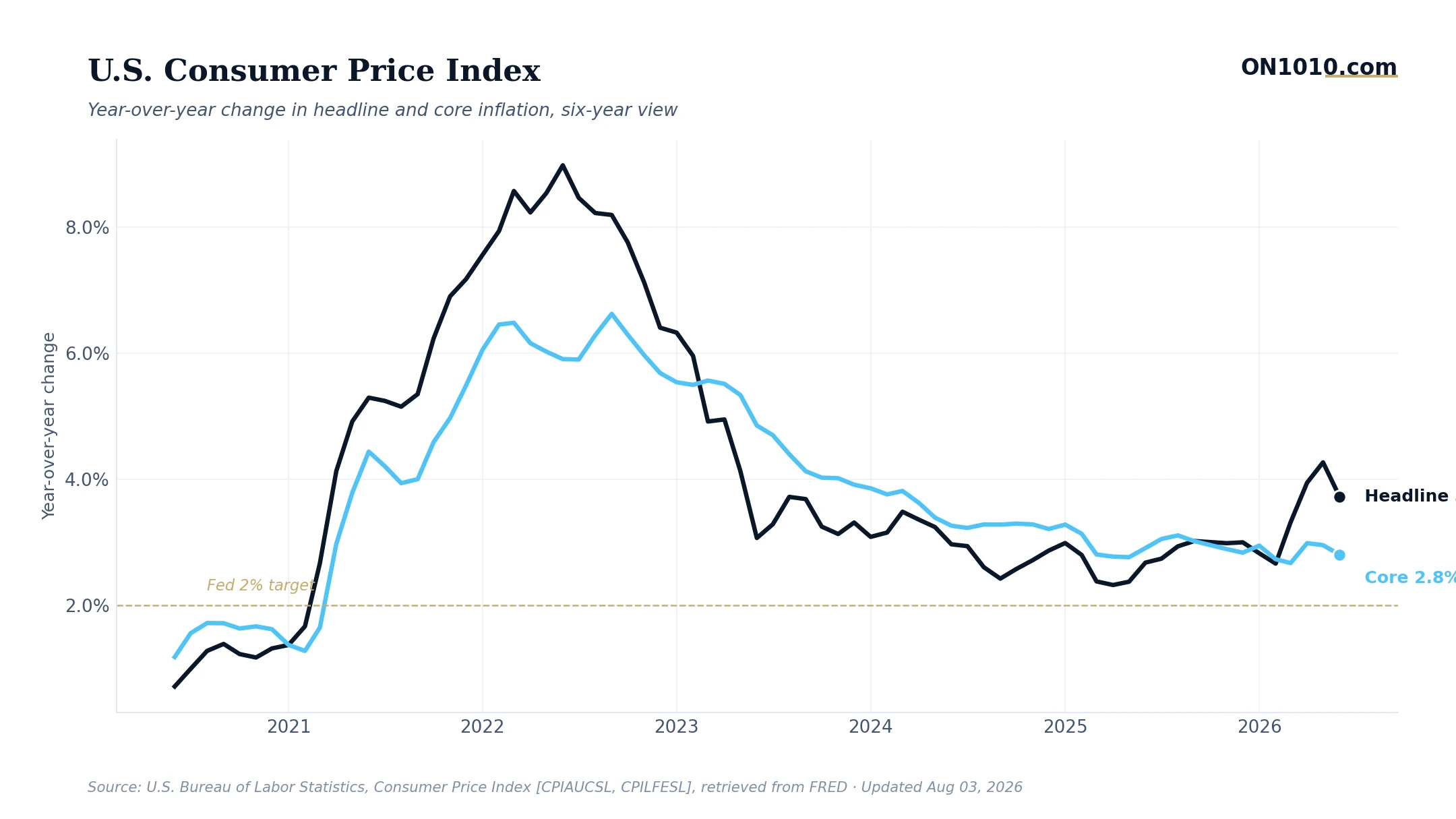
Here’s the mechanism that makes this consequential. When purchasing managers can’t reliably price inputs, they have two choices: absorb the volatility into margins, or pass it through to customers. Margin compression is the quiet killer of business investment. Companies that can’t forecast their cost structure stop making long-term capital commitments. Hiring slows. Projects get shelved. The inflation story and the growth story are the same story, running in opposite directions at once. Our inflation gauge is already sitting near the top of its historical range. Long-term interest rates are elevated versus history. That combination acts like a tax on every business decision that involves borrowed money or forward planning.
What makes this reading particularly tricky for the Fed is that manufacturing inflation worries aren’t being driven by the same forces as a demand boom. Tariff structures, reshoring timelines, and global supply fragmentation are structural features of the post-2020 economy, and monetary policy isn’t designed to fix any of them. Higher rates can cool demand, but they can’t unscramble a supply chain. Historically, investors have watched this kind of divergence between sentiment and traditional inflation drivers carefully, because it can signal that tightening policy carries more economic cost than the inflation models suggest.
Meanwhile, sector rotation data shows defensive sectors holding a modest edge over the broader market. Consumers are near historically low sentiment readings. Credit spreads remain tight. It’s a mixed picture: the financial system looks calm, but the operating environment for businesses is anything but.
Bottom Line: When the people actually buying raw materials say the uncertainty feels worse than 2020, the inflation story has moved beyond models and surveys into the lived reality of business planning, and that’s the kind of signal that tends to show up in margins and investment data before it shows up anywhere else.
Read more: CNBC Economy
ON1010 Research is an independent publisher of economic education and is not a registered investment adviser, broker-dealer, or investment company. This content is for educational and informational purposes only and is not investment advice or a recommendation to buy, sell, or hold any security. Published under the publisher exemption recognized by Section 202(a)(11)(D) of the Investment Advisers Act of 1940 (Lowe v. SEC). Always consult a qualified financial professional before making any financial decision.
Free Research
The economy moves fast. We make sure you move faster.
Economic data, policy shifts, and market signals — delivered to your inbox.
Subscribe Free