
Economic Wire: Trump says Exxon and Chevron made ‘too much money’ off high
When the President Calls Your Profits a Problem
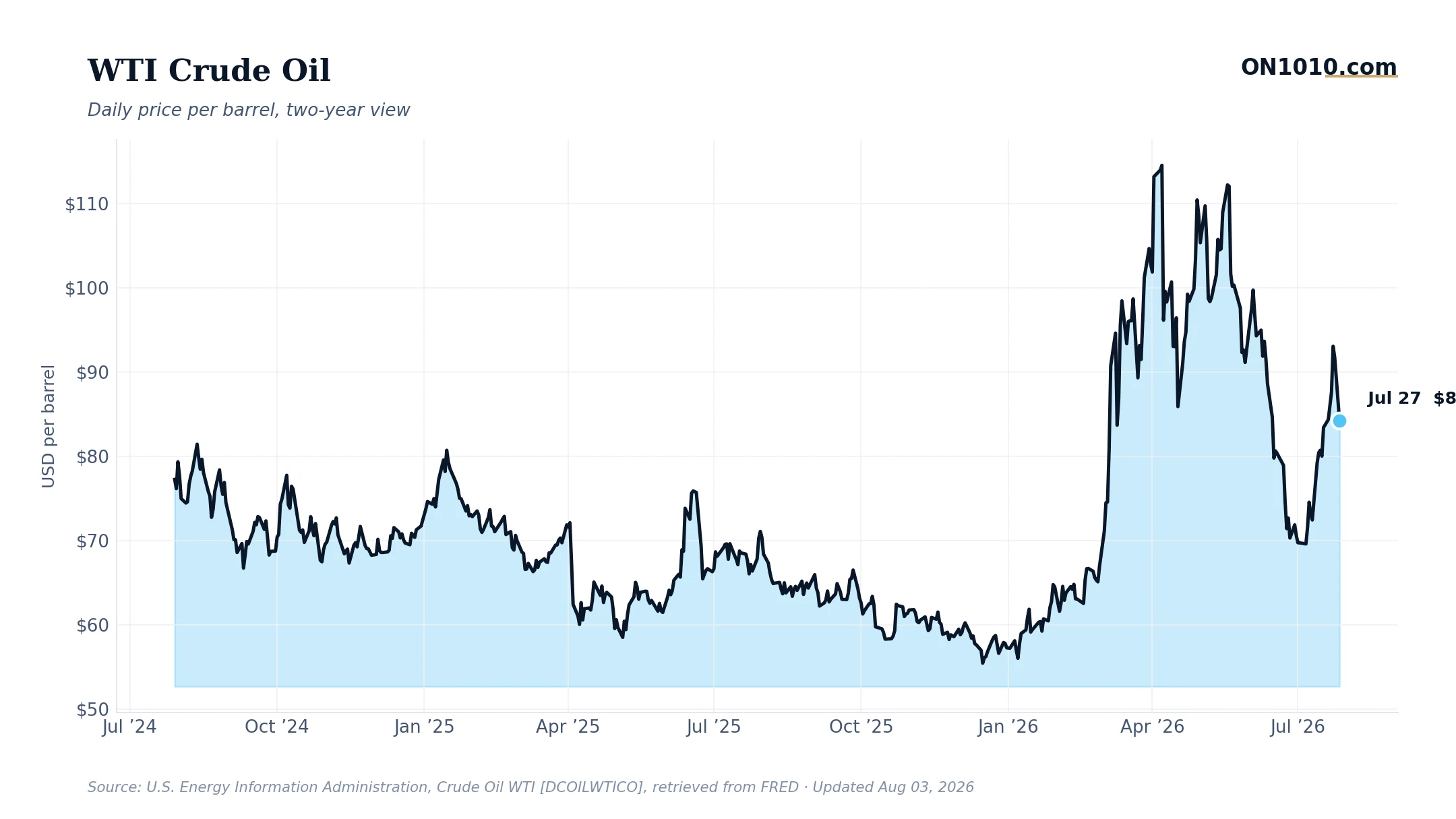
According to CNBC, President Trump publicly criticized Exxon and Chevron for profiting from the roughly 20% rise in U.S. crude prices since the U.S. and Israel attacked Iran on February 28, saying the companies made “too much money” and that he doesn’t like it. The real story here has almost nothing to do with oil prices.
When a government takes military action that tightens global energy supply, and then expresses displeasure at the private companies that benefit from the resulting price spike, it is sending a signal about the incentive environment for future capital investment. Energy companies make long-cycle decisions, meaning a new deepwater project or refinery expansion approved today might not produce a barrel for five to seven years. What shapes those decisions is the expected return on capital, and that calculation includes political risk at home, not just geology.
The oil majors have spent the past decade under pressure to limit capital spending on new production. Shareholders wanted returns, not barrels. That restraint is a big reason why supply has struggled to keep pace with demand during geopolitical shocks. If executives now have to factor in the possibility that a profitable quarter triggers presidential criticism, the incentive to add supply capacity gets even murkier. Lower expected returns on new investment mean less investment, which means tighter supply the next time a crisis arrives.
Historically, investors in energy and capital-intensive industries have treated political price pressure as a margin risk that gets priced into valuation multiples over time. The question worth sitting with is whether today’s rhetorical friction stays rhetorical or eventually shapes policy, because those two outcomes carry very different long-run implications for domestic energy capital allocation. With core inflation already running historically hot and long-term interest rates elevated, any additional disincentive to domestic production capacity is worth watching closely.
Bottom Line: Governments can create a geopolitical oil shock, or they can have thriving domestic energy investment, but the two are harder to have simultaneously when the profits that fund that investment become politically inconvenient.
Read more: CNBC Top News
ON1010 Research is an independent publisher of economic education and is not a registered investment adviser, broker-dealer, or investment company. This content is for educational and informational purposes only and is not investment advice or a recommendation to buy, sell, or hold any security. Published under the publisher exemption recognized by Section 202(a)(11)(D) of the Investment Advisers Act of 1940 (Lowe v. SEC). Always consult a qualified financial professional before making any financial decision.
Free Research
The economy moves fast. We make sure you move faster.
Economic data, policy shifts, and market signals — delivered to your inbox.
Subscribe Free