
Manufacturing Sees Inflation Worse Than the Pandemic. The Bond Market Might Already Know.
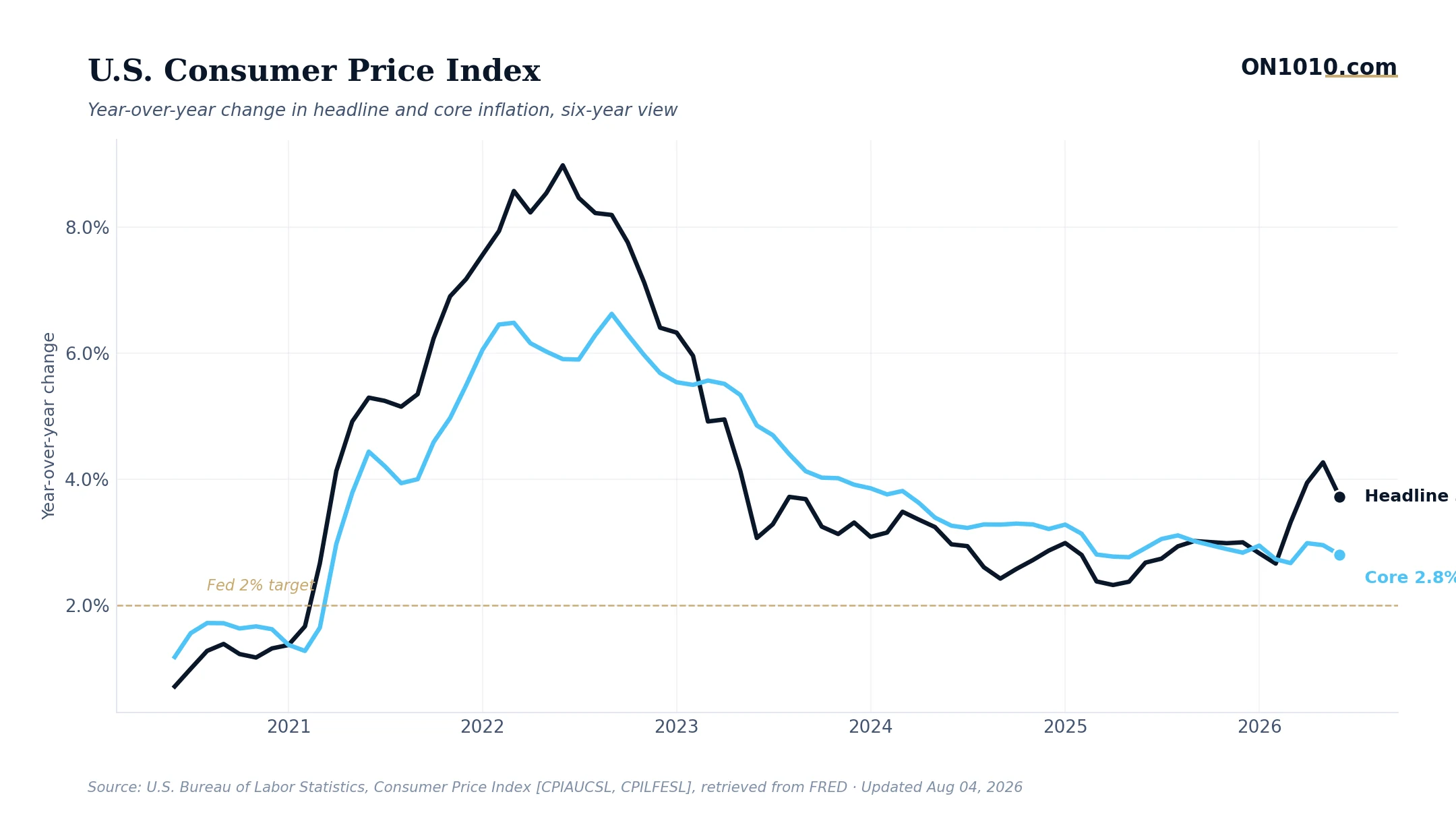
Here is the puzzle sitting in the data this morning. Core inflation is running hotter than roughly nine out of every ten months in the historical record, and a fresh manufacturing survey just said inflation worries among purchasing managers have grown “worse than pandemic era.” Yet the 10-year Treasury is sitting at 4.75% with a 10-year breakeven inflation rate of just 2.27%. The bond market is pricing a world where inflation fades. Purchasing managers are living a different world entirely.
What moved: The S&P 500 closed at 7,489.72 (+0.70%) and the Nasdaq at 25,374 (+1.00%), while small caps pulled back, with the Russell 2000 slipping 0.50% to 2,931.34. Gold rose 1.40% to $4,105.90, a signal that some investors are hedging something. The VIX fell to 15.75, suggesting markets are broadly calm. Oil dropped to $82.13, down 3.00% from the prior session, adding a wrinkle: falling energy prices can cool headline inflation even when the underlying manufacturing cost pressures are anything but cool.
On deck today: Watch for any Fed commentary or economic data that speaks to the inflation path. With the Fed funds rate still parked at 3.50% to 3.75% and long rates at 4.75%, the spread between where the Fed sits and where the bond market sits is the real story to track.
Why it matters: When survey data on inflation expectations diverges sharply from market-based inflation measures, one of them is wrong. Historically, business decisions on pricing and investment get made based on what managers expect, not what bond traders price.
Sunday’s Long View is already digging into the oil drop and what it means for the inflation picture. That is exactly where this manufacturing survey angle fits. It is free, and it lands Sunday.
ON1010 Research is an independent publisher of economic education and is not a registered investment adviser, broker-dealer, or investment company. This content is for educational and informational purposes only and is not investment advice or a recommendation to buy, sell, or hold any security. Published under the publisher exemption recognized by Section 202(a)(11)(D) of the Investment Advisers Act of 1940 (Lowe v. SEC). Always consult a qualified financial professional before making any financial decision.
Free Research
The economy moves fast. We make sure you move faster.
Economic data, policy shifts, and market signals — delivered to your inbox.
Subscribe Free