
The Jobs Report Bond Traders Were Waiting For Just Arrived. The Yield Move Tells You Something.
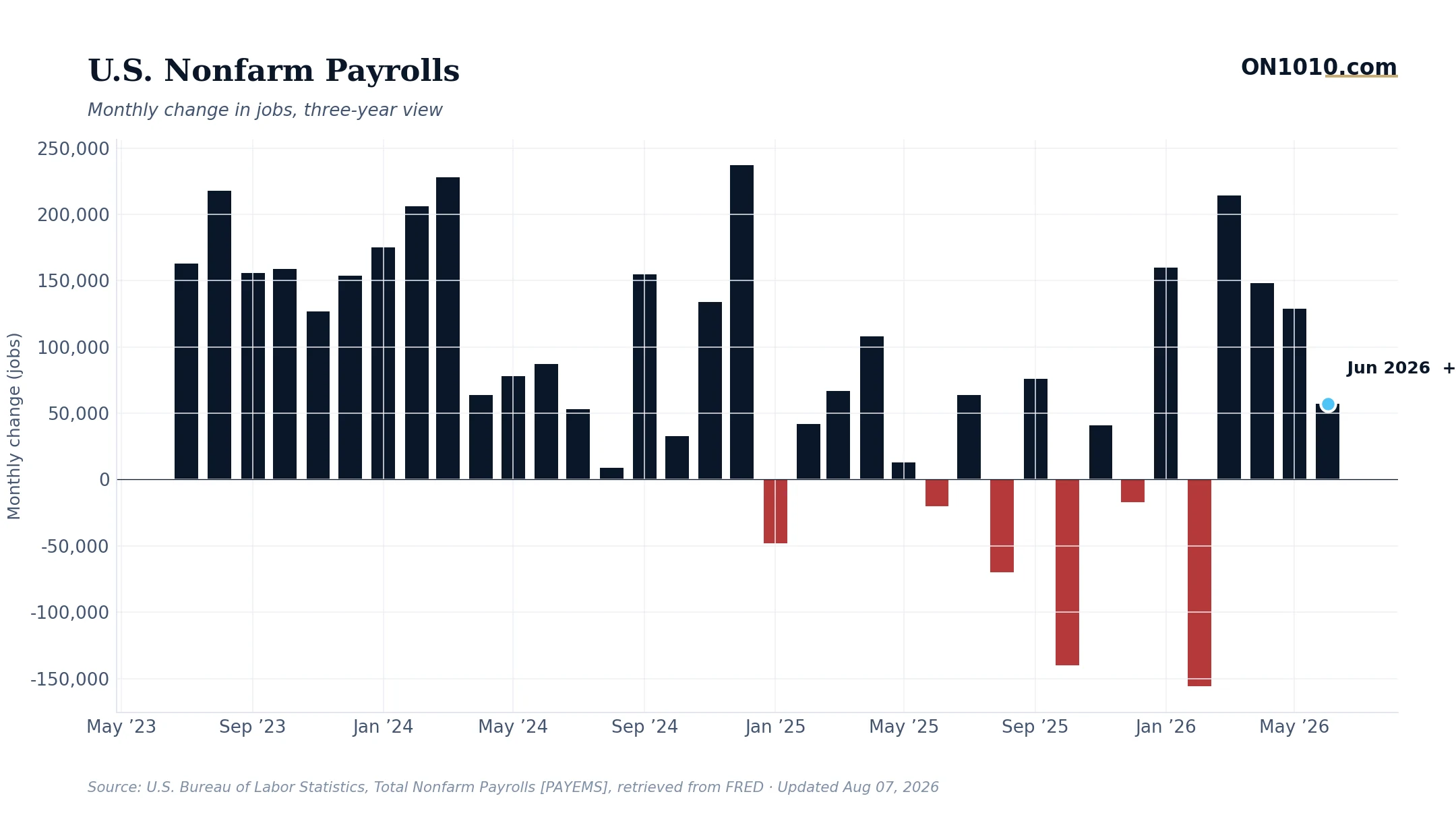
According to CNBC, Treasury yields fell Friday after July’s jobs report delivered a surprise net loss in payrolls, sending bond prices higher as traders rapidly repriced their expectations for Federal Reserve policy.
Here is what makes this worth slowing down on. A job loss print is the kind of number that cuts through noise. Yields on the 10-year Treasury had been sitting at 4.63% as recently as Tuesday, holding firm against a backdrop of hot inflation and a Fed still anchored in its current target range. One weak jobs number does not a trend make, and the Fed knows that better than anyone. But bond markets do not wait for confirmation. They reprice the moment the probability distribution shifts, and a surprise payroll decline shifted it.
The tension in this setup is real. Core inflation remains very high compared to historical norms, which is exactly the wrong environment for the Fed to cut in a hurry. At the same time, the labor market just blinked. If hiring is softening, unit labor cost pressure may ease on its own, giving the Fed a cleaner path than the data from earlier this year suggested. The question worth sitting with is whether this is one month of statistical noise, a lagged response to the rate environment, or the leading edge of something more structural in hiring decisions.
Credit spreads remain tight by historical standards, which means corporate debt markets are not flashing distress. That matters: when the credit market and the labor market tell different stories, the credit market often has better real-time information about corporate health. Historically, investors have watched this gap carefully, because credit tends to lead equity and employment when conditions are genuinely deteriorating. The fact that spreads are calm narrows the bear case, though it does not close it.
Bottom Line: One jobs number moves yields but rarely changes the trend. Watch whether this print repeats over the next two months before drawing conclusions about the cycle.
Read more: CNBC Top News
ON1010 Research is an independent publisher of economic education and is not a registered investment adviser, broker-dealer, or investment company. This content is for educational and informational purposes only and is not investment advice or a recommendation to buy, sell, or hold any security. Published under the publisher exemption recognized by Section 202(a)(11)(D) of the Investment Advisers Act of 1940 (Lowe v. SEC). Always consult a qualified financial professional before making any financial decision.
Free Research
The economy moves fast. We make sure you move faster.
Economic data, policy shifts, and market signals — delivered to your inbox.
Subscribe Free