
Wages Are Rising. But Are Workers Actually Getting Ahead?
American workers are earning more. The question worth asking is whether that’s enough.
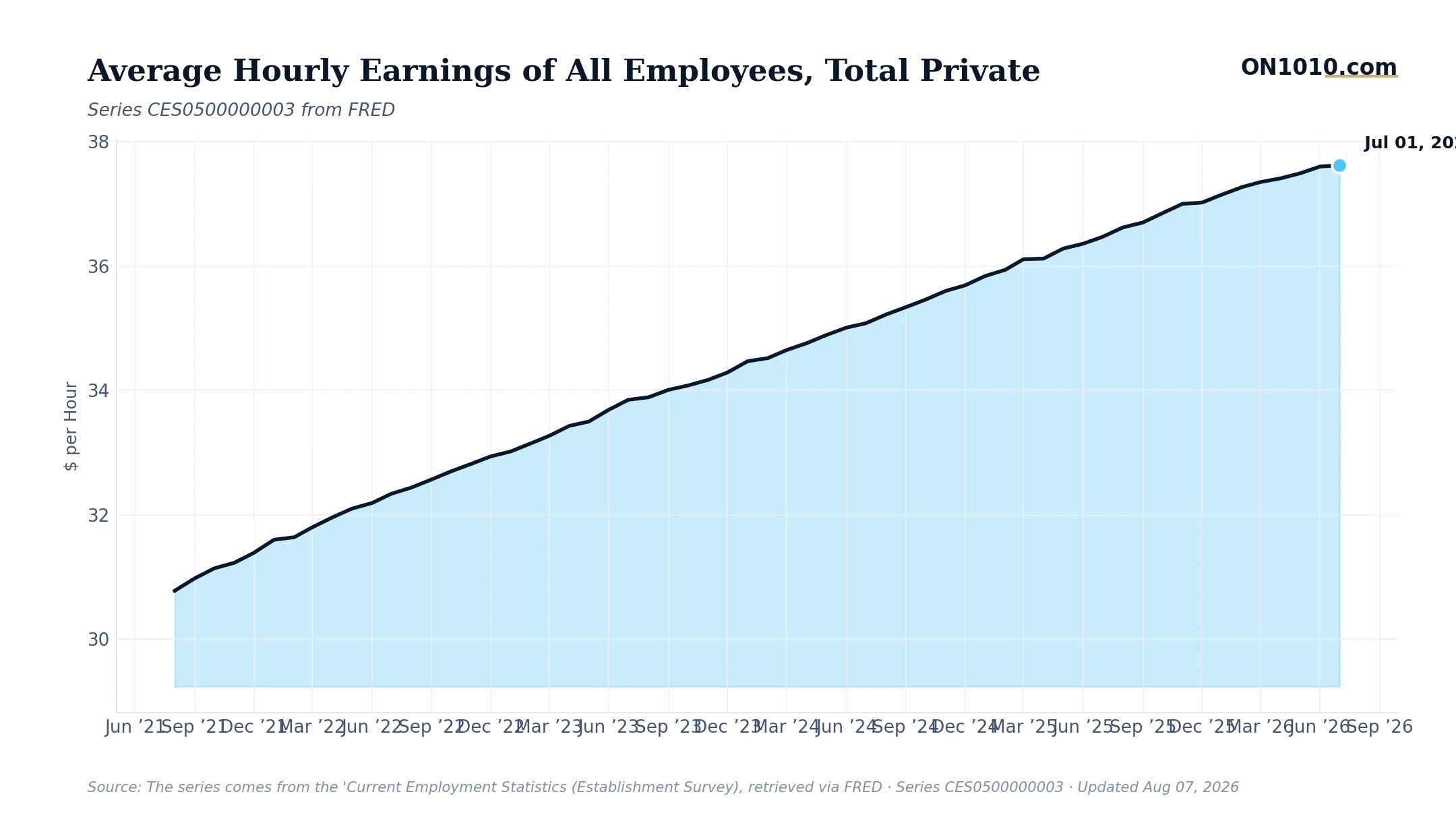
Average hourly earnings came in at $37.62 in July, up just $0.02 from June. That’s a 2.51% gain over the past year, a steady, unspectacular climb that has been grinding higher month after month since February.
The problem is that “rising wages” and “rising real wages” are two very different things. With core inflation still running historically hot, that 2.51% nominal gain may be delivering very little in the way of actual purchasing power. If inflation is running close to or above that wage growth figure, workers are essentially treading water. The pay stub looks bigger; the grocery receipt does too.
That distinction matters enormously for the broader economy right now. Consumer sentiment is sitting near the bottom of its historical range, which might seem puzzling when wages are rising. But it makes perfect sense once you separate nominal from real: people feel what’s in their wallets, not what’s in the headline. A worker earning 2.5% more but paying 2.5% more for everything has gained nothing, and they know it.
For businesses watching their cost structures, this is actually one of the more constructive wage environments in recent memory. Modest wage growth keeps labor costs from accelerating ahead of productivity gains, which matters for margins. In past cycles, when wage growth stayed below the pace of productivity improvement, corporate profits held up better, and capital investment tended to follow. The sustainability of that picture depends heavily on where inflation settles from here.
The big open question is whether this moderation in wage growth is a sign of a healthy, balanced labor market or an early signal that labor demand is cooling. Those two stories look identical in the data right now. What comes next will tell us which one we’re in.
Bottom Line: Nominal wages keep rising, but the real story is in the gap between that 2.51% gain and whatever inflation is doing to it. Watch real wage growth, not headline wage growth, and ask whether workers spending cautiously despite rising pay is a sentiment problem or a math problem.
Source: Federal Reserve Economic Data (FRED)
ON1010 Research is an independent publisher of economic education and is not a registered investment adviser, broker-dealer, or investment company. This content is for educational and informational purposes only and is not investment advice or a recommendation to buy, sell, or hold any security. Published under the publisher exemption recognized by Section 202(a)(11)(D) of the Investment Advisers Act of 1940 (Lowe v. SEC). Always consult a qualified financial professional before making any financial decision.
Free Research
The economy moves fast. We make sure you move faster.
Economic data, policy shifts, and market signals — delivered to your inbox.
Subscribe Free