
The 2-Year Yield Is Quietly Sending a Message About the Fed
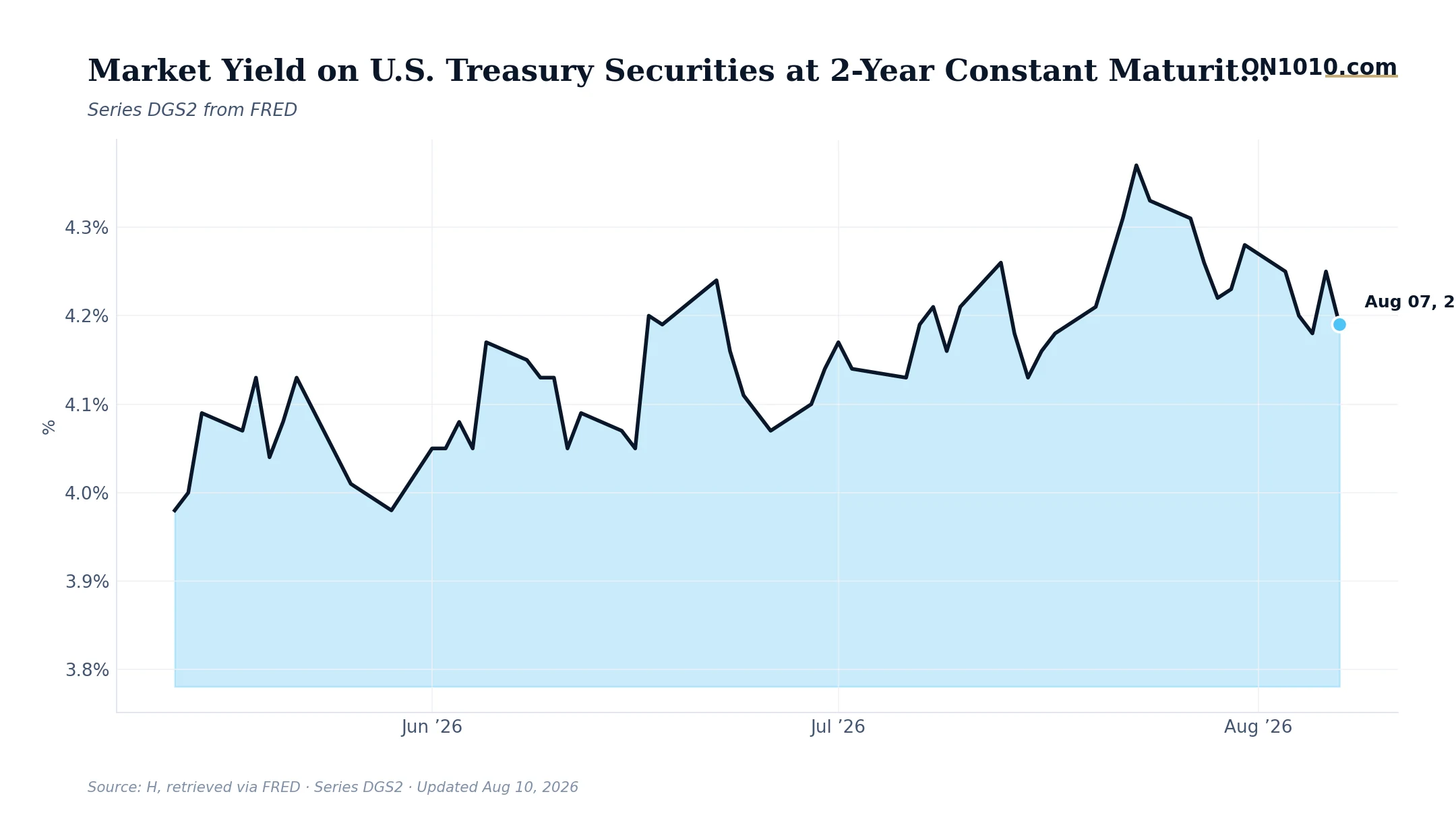
The 2-year Treasury yield slipped to 4.19% on August 7, down from 4.25% the day before. Six basis points in a single day. Small number, big signal.
The 2-year yield tracks Fed expectations more closely than almost anything else in the bond market. When it falls, it means the market is pricing in a Fed that stays on hold longer, or cuts sooner, or both. This week’s drift lower continues a pattern: the 2-year has edged from 4.28% at the end of July down to 4.19% in just over a week, a quiet but consistent move in one direction.
Here is where the broader picture gets interesting. Core inflation is running hot by historical standards, yet the bond market is nudging rates down. Credit spreads are tight, the VIX is calm, and the equity market is trading above both its 50-day and 200-day moving averages. That combination suggests financial conditions are not as tight as the rate level alone might imply. Historically, that kind of setup has kept margins supported even when nominal rates looked elevated.
In past cycles, when the 2-year yield drifted lower while credit conditions stayed calm, it often signaled a shift in the rate-path narrative before the Fed itself confirmed it. Businesses with floating-rate debt, refinancing decisions on the horizon, or capital allocation timing questions have historically watched the 2-year for early confirmation of where borrowing costs are headed. The rate you pay tomorrow depends heavily on where this yield settles, not where it was six months ago.
Bottom Line: The 2-year yield is telling a story that the headline rate doesn’t: the market thinks the Fed’s next move is easier, not tighter. The question worth sitting with is whether today’s still-hot inflation data eventually rewrites that script.
Source: Federal Reserve Economic Data (FRED)
ON1010 Research is an independent publisher of economic education and is not a registered investment adviser, broker-dealer, or investment company. This content is for educational and informational purposes only and is not investment advice or a recommendation to buy, sell, or hold any security. Published under the publisher exemption recognized by Section 202(a)(11)(D) of the Investment Advisers Act of 1940 (Lowe v. SEC). Always consult a qualified financial professional before making any financial decision.
Free Research
The economy moves fast. We make sure you move faster.
Economic data, policy shifts, and market signals — delivered to your inbox.
Subscribe Free