
When the Bond Market Speaks at a 19-Year High, the Economy Has to Listen
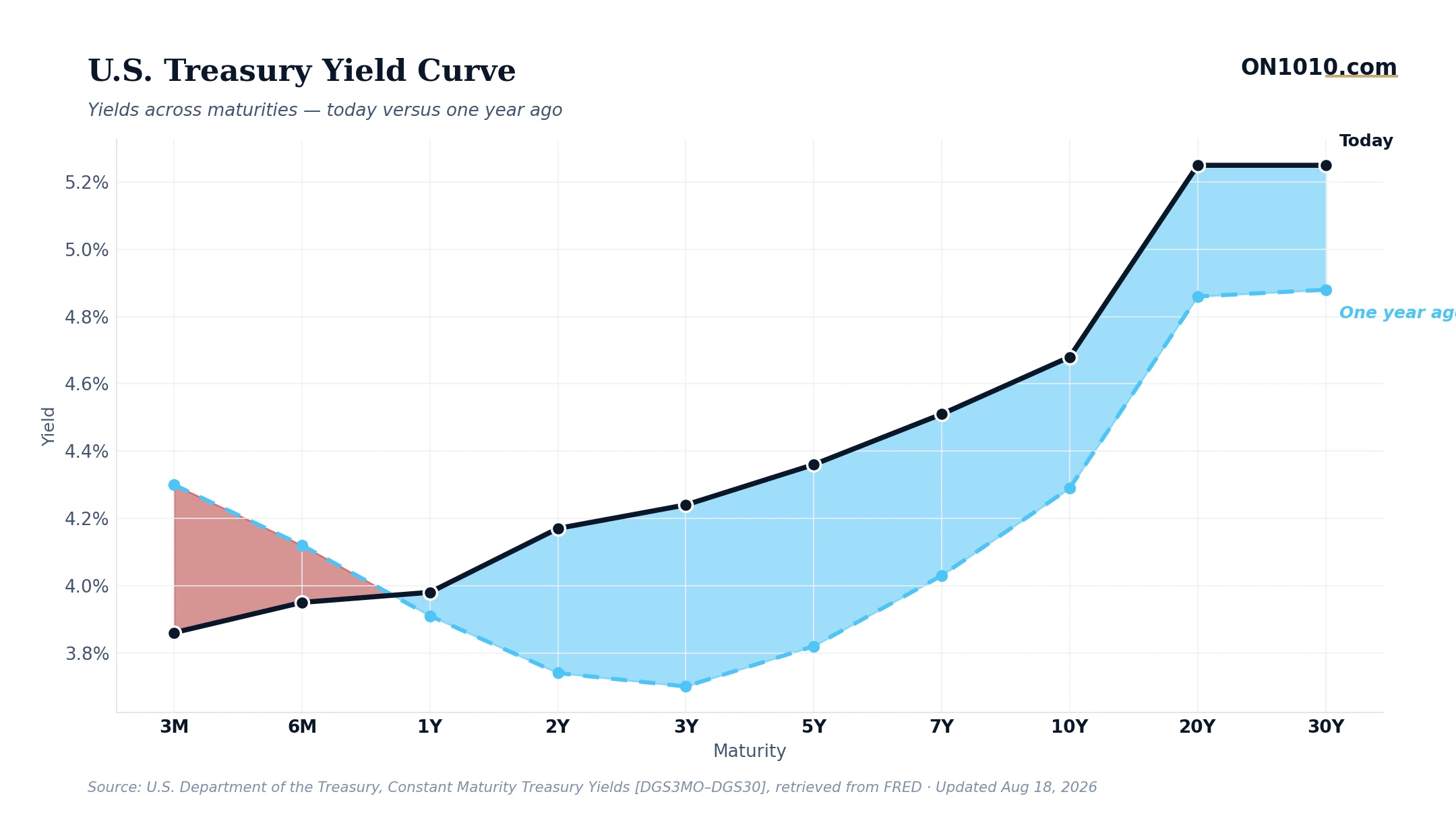
According to CNBC, the 30-year Treasury yield has climbed to its highest level in 19 years, with strategists arguing the move may have further to run. That’s the headline. Here’s what’s more interesting: the bond market is flashing this warning while credit spreads sit near their tightest levels on record and equity markets are pricing in calm. That kind of split doesn’t resolve quietly.
The 10-year Treasury yield sits at 4.68%, and the long end of the curve is pushing even higher. That matters because long yields aren’t just a Fed story, they reflect what the market demands to lend money to the U.S. government for decades. Three forces are doing the heavy lifting here: inflation that remains historically hot, a supply of Treasury debt that keeps growing as Washington runs large deficits, and a shrinking pool of natural buyers as foreign central banks diversify away from dollars. When demand falls and supply rises, prices drop and yields rise. That’s not a forecast; that’s arithmetic.
The deeper tension is what this does to the capital allocation engine. Long-term borrowing costs set the floor for corporate bonds, commercial real estate loans, and infrastructure financing. When the 30-year Treasury yield rises, every long-duration investment on every CFO’s spreadsheet gets repriced. Projects that penciled out at lower rates stop making sense. That’s the slow-burn channel through which high rates eventually cool business investment and squeeze profit margins, the very margins that lead hiring and stock prices.
Historically, investors and business planners have used the spread between long-term Treasury yields and expected returns on capital as a rough gauge of whether borrowing to invest makes sense. When that spread narrows significantly, capital deployment tends to slow. The question worth sitting with is whether the current earnings growth story is durable enough to absorb a sustained increase in the cost of long-term money, particularly when consumer sentiment is already near historic lows even as credit markets signal no concern.
Bottom Line: The bond market is sending a 19-year signal about the cost of long-term capital, and the gap between what bonds are saying and what credit spreads are pricing is one of the more interesting fault lines in the economy right now.
Read more: CNBC Top News
ON1010 Research is an independent publisher of economic education and is not a registered investment adviser, broker-dealer, or investment company. This content is for educational and informational purposes only and is not investment advice or a recommendation to buy, sell, or hold any security. Published under the publisher exemption recognized by Section 202(a)(11)(D) of the Investment Advisers Act of 1940 (Lowe v. SEC). Always consult a qualified financial professional before making any financial decision.
Free Research
The economy moves fast. We make sure you move faster.
Economic data, policy shifts, and market signals — delivered to your inbox.
Subscribe Free