
All Eyes on Warsh: What Jackson Hole Could Tell Us About the Next Rate Move
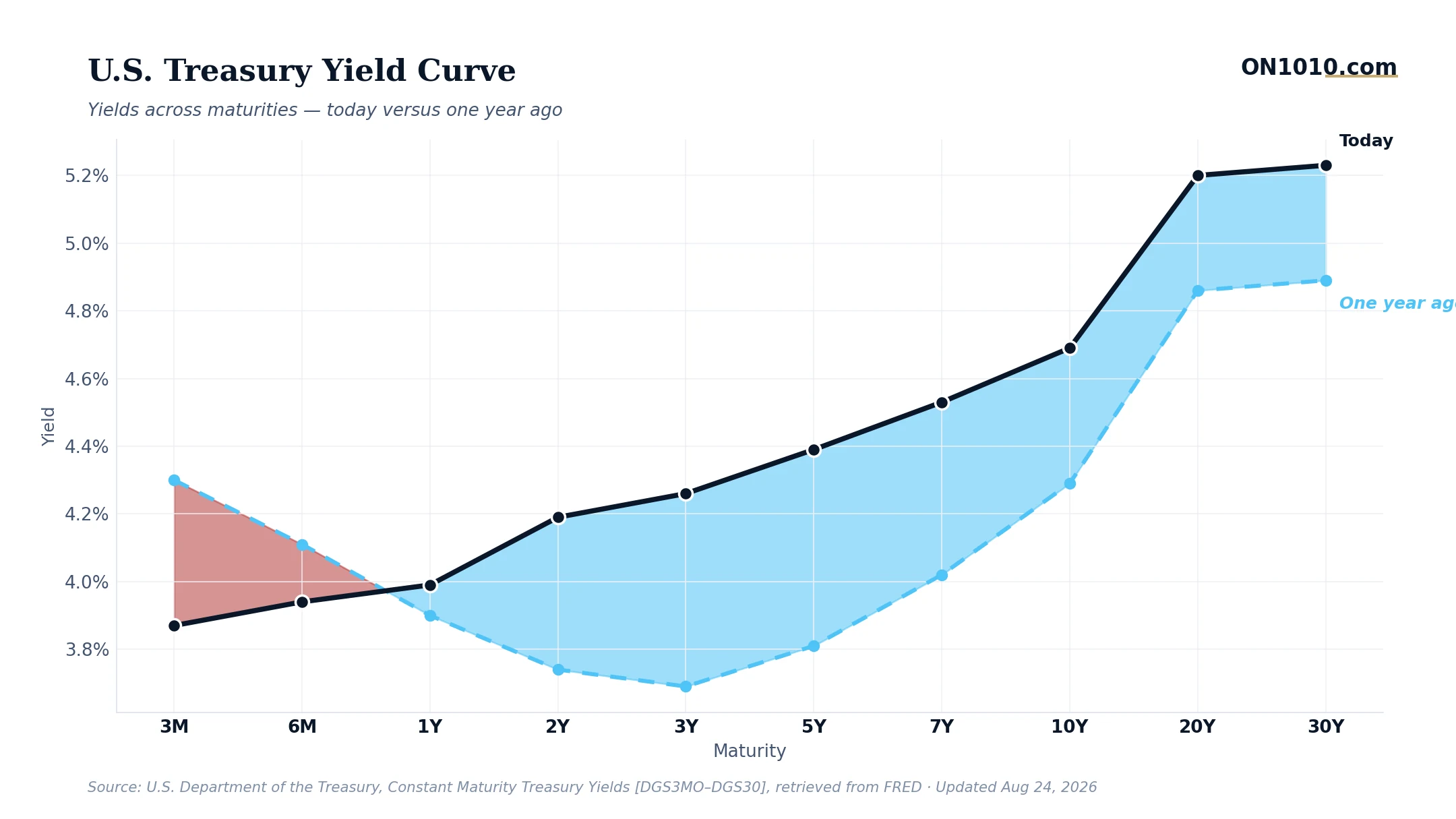
The Federal Reserve’s annual Jackson Hole conference is the one moment each year when central bankers speak frankly about where policy is headed. This year, incoming Fed Chair Kevin Warsh takes the keynote, and bond investors are already repositioning ahead of it.
Here is the twist most people will miss: the yield curve is actually sending a constructive signal. The 10-year Treasury sits at 4.69% while the 2-year sits at 4.19%, a positive spread of 50 basis points. That is a normal, upward-sloping curve. After years of inversion, the curve has un-kinked, and historically that shift has marked turning points in how the Fed communicates its next move.
Equities closed Friday in positive territory, with the S&P 500 at 7,674 and the Dow at 53,277. Gold reached $4,699.90, up 1.64%, a signal that some investors are hedging against uncertainty around the policy path. The VIX ticked up to 15.89, still in normal territory but worth watching heading into a high-stakes speech.
On deck today: Warsh’s Jackson Hole address is the event. Markets will parse every word for clues on whether the Fed is comfortable holding the fed funds rate at 3.5% to 3.75%, or whether the next move is closer than priced.
The 10-year breakeven inflation rate sits at 2.34%, meaning bond markets expect inflation to run slightly above the Fed’s 2% target. That is the number Warsh will have to address.
The deeper read on the rate cycle, and what the housing stress we covered Sunday could mean if rates stay elevated, is in The Long View. It publishes Sunday and it is free to subscribe.
ON1010 Research is an independent publisher of economic education and is not a registered investment adviser, broker-dealer, or investment company. This content is for educational and informational purposes only and is not investment advice or a recommendation to buy, sell, or hold any security. Published under the publisher exemption recognized by Section 202(a)(11)(D) of the Investment Advisers Act of 1940 (Lowe v. SEC). Always consult a qualified financial professional before making any financial decision.
Free Research
The economy moves fast. We make sure you move faster.
Economic data, policy shifts, and market signals — delivered to your inbox.
Subscribe Free