
Economic Wire: Stanley Druckenmiller leads doubters who think Bessent’s bon
When the Bond Market Doubts the Bond Manager
According to CNBC, Treasury Secretary Bessent’s efforts to push long-term yields lower through debt issuance strategy have produced only modest results, and drawn pointed skepticism from some of the most credible voices in macro investing, including Stanley Druckenmiller.
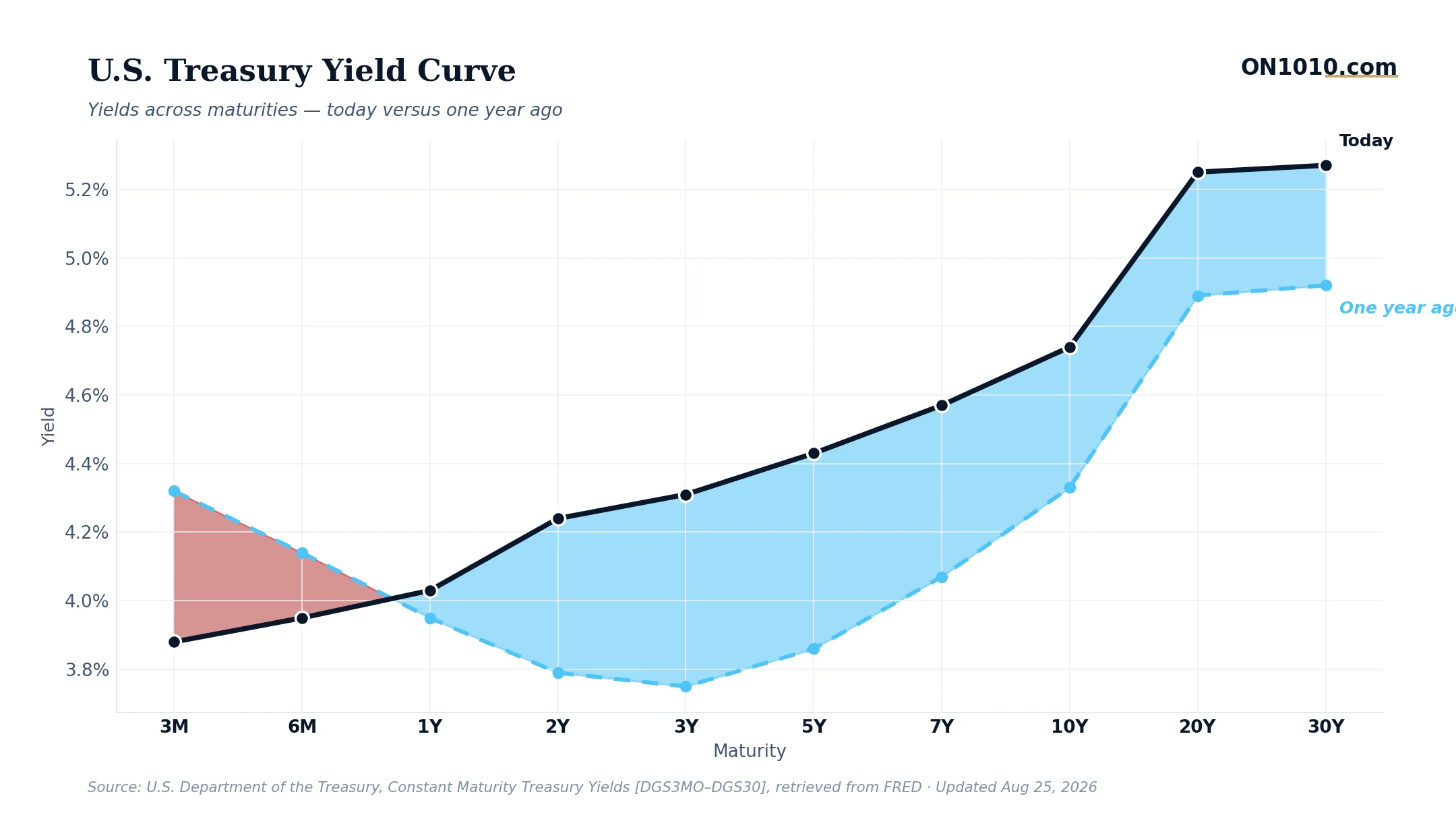
The criticism cuts to something deeper than a policy disagreement. Bessent’s approach appears to lean on managing the maturity profile of Treasury issuance, tilting toward shorter-duration debt, to reduce pressure on long-term yields without the Fed’s help. The logic is real: flood the front end, starve the long end, and 10-year yields drift down. The problem is that global bond investors are not passive observers. When they sense a government engineering its own borrowing costs rather than earning lower rates through fiscal discipline, they tend to demand a premium for the risk. That premium is called a term premium, and it works directly against what Bessent is trying to accomplish.
This is the economy-as-a-balance-sheet story playing out in real time. Long-term rates sitting high by historical standards, and recently reversing from a falling trend back to rising, suggest the market is not yet convinced. Credit spreads are historically tight, which tells you corporate credit is calm. But tight spreads alongside sticky long-term yields means the pressure is landing on government borrowing costs specifically, which is a message worth reading carefully.
Historically, investors have treated sustained gaps between policy intent and market outcomes as a signal to watch duration risk closely. When a government tries to administratively lower borrowing costs and the market pushes back, the question that matters is: who blinks first? Druckenmiller built his reputation answering exactly that question, and his skepticism carries weight precisely because he has been on the right side of sovereign bond trades before.
Bottom Line: The bond market does not grade on effort. If the fiscal math does not support lower long-term rates, the interventions are fighting the tide.
Read more: CNBC Economy
ON1010 Research is an independent publisher of economic education and is not a registered investment adviser, broker-dealer, or investment company. This content is for educational and informational purposes only and is not investment advice or a recommendation to buy, sell, or hold any security. Published under the publisher exemption recognized by Section 202(a)(11)(D) of the Investment Advisers Act of 1940 (Lowe v. SEC). Always consult a qualified financial professional before making any financial decision.
Free Research
The economy moves fast. We make sure you move faster.
Economic data, policy shifts, and market signals — delivered to your inbox.
Subscribe Free