
The Fed’s Favorite Inflation Gauge Is Still Running Too Hot
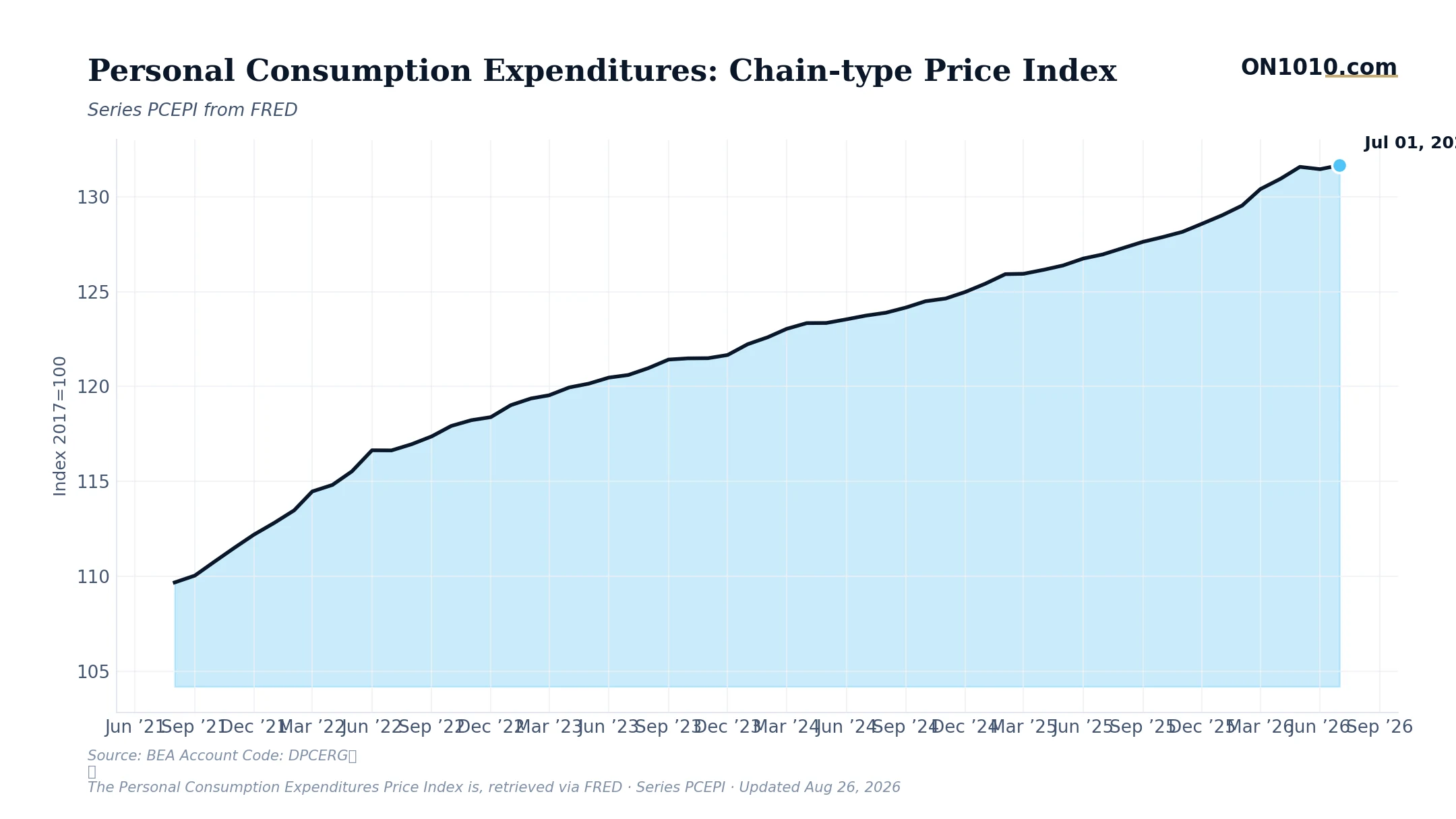
Inflation cooled slightly in July, but “slightly” is doing a lot of work in that sentence. The PCE Price Index rose 0.16% from June to July, bringing the year-over-year rate to 3.16%. That’s progress from where we were. It’s also still more than a full percentage point above the Fed’s 2% target, and the trend over the last six months tells a more complicated story.
Look at the monthly path: prices actually fell in May (from 131.576 to 131.454 in June), then crept back up in July. That’s three months of chop rather than a clean downward glide. February through April showed a steeper rise, suggesting the disinflationary momentum that markets hoped for hasn’t arrived in a straight line.
Context matters here. Inflation at this level is historically elevated, running higher than roughly nine out of every ten months in the modern data record. The good news is that from readings like this, recessions have been rare in the following year. The more nuanced news is that sticky inflation at 3%-plus changes the math for almost everyone: businesses borrowing to invest, households trying to maintain purchasing power, and a Fed that can’t declare victory yet.
In past cycles, sustained PCE above 3% has kept the Fed from pivoting even when other parts of the economy softened. That’s because the Fed’s credibility rests on hitting 2%, not on getting close. Long-term interest rates are already elevated by historical standards and rising, which means tighter financing conditions are still working their way through business balance sheets. Historically, business operators have treated this kind of environment as a reason to scrutinize cost structures and debt refinancing timelines carefully.
Bottom Line: The inflation story in 2026 is less about whether prices are rising fast and more about whether they’ll get all the way down. At 3.16%, the last mile to 2% remains the hardest stretch.
Source: Federal Reserve Economic Data (FRED)
ON1010 Research is an independent publisher of economic education and is not a registered investment adviser, broker-dealer, or investment company. This content is for educational and informational purposes only and is not investment advice or a recommendation to buy, sell, or hold any security. Published under the publisher exemption recognized by Section 202(a)(11)(D) of the Investment Advisers Act of 1940 (Lowe v. SEC). Always consult a qualified financial professional before making any financial decision.
Free Research
The economy moves fast. We make sure you move faster.
Economic data, policy shifts, and market signals — delivered to your inbox.
Subscribe Free