
Jobs Data Day: The Labor Market Is About to Either Confirm the Boom or Complicate It
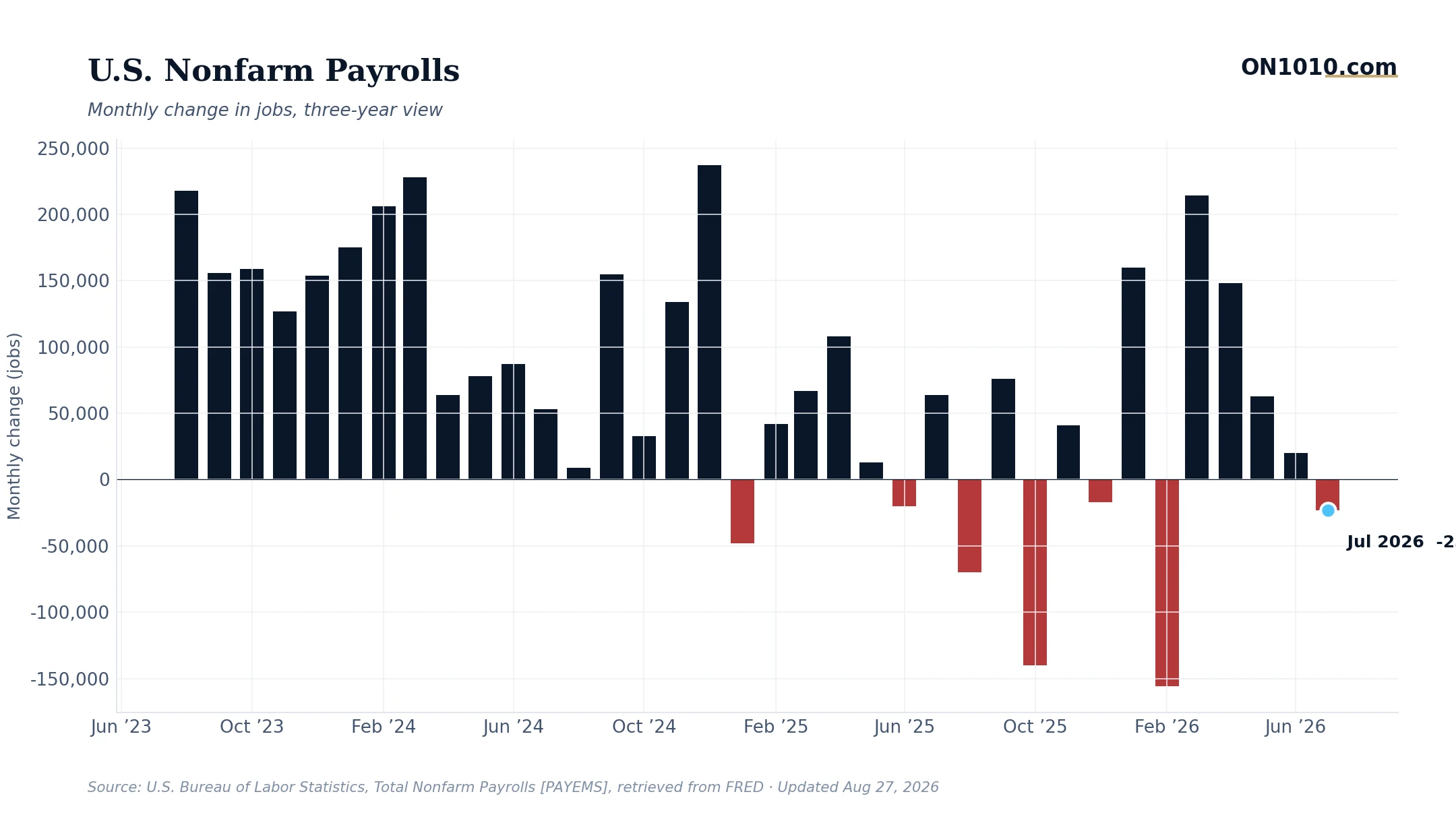
Weekly jobless claims print this morning, and for once the setup actually matters. Stocks are sitting near all-time highs, corporate profits just hit a record $4.3 trillion annualized, and the VIX dropped to 14.88. Everything looks calm. But the 10-year Treasury is yielding 4.64% while the Fed funds rate sits at 3.5%-3.75%, which means long-term investors are demanding a premium over short-term policy rates. Bond markets are pricing in something that equity markets are not fully reflecting yet.
What moved: The S&P 500 closed at 7,675.70, essentially flat. Gold climbed to $4,634.70, up 0.79%, continuing to attract buyers even as volatility falls. Oil sits at $82.11. The dollar ticked up slightly to 99.22. The 10-year yield stands at 4.64% against a 2-year at 4.17%, a spread of 47 basis points. Breakeven inflation, which is what bond traders expect inflation to average over the next decade, sits at 2.32%. That tells you the bond market thinks inflation stays above the Fed’s 2% target for a long time.
On deck: Weekly jobless claims land this morning. If claims stay low, it reinforces the strong-profits, strong-hiring story. A surprise jump would be the first real crack in the labor market picture worth paying attention to.
Why it matters: Corporate profits lead hiring and investment. When margins are expanding at the rate we just saw, historically that supports continued employment and business spending. The question is whether rates at these levels begin to slow that momentum before it fully runs.
That five-minute read is just the surface. Sunday’s Long View goes deeper on the rate cycle and what elevated rates could mean for the broader economy. It is free.
ON1010 Research is an independent publisher of economic education and is not a registered investment adviser, broker-dealer, or investment company. This content is for educational and informational purposes only and is not investment advice or a recommendation to buy, sell, or hold any security. Published under the publisher exemption recognized by Section 202(a)(11)(D) of the Investment Advisers Act of 1940 (Lowe v. SEC). Always consult a qualified financial professional before making any financial decision.
Free Research
The economy moves fast. We make sure you move faster.
Economic data, policy shifts, and market signals — delivered to your inbox.
Subscribe Free