
The Fed’s Rate Is Exactly Where It Was Yesterday. That’s the Story.
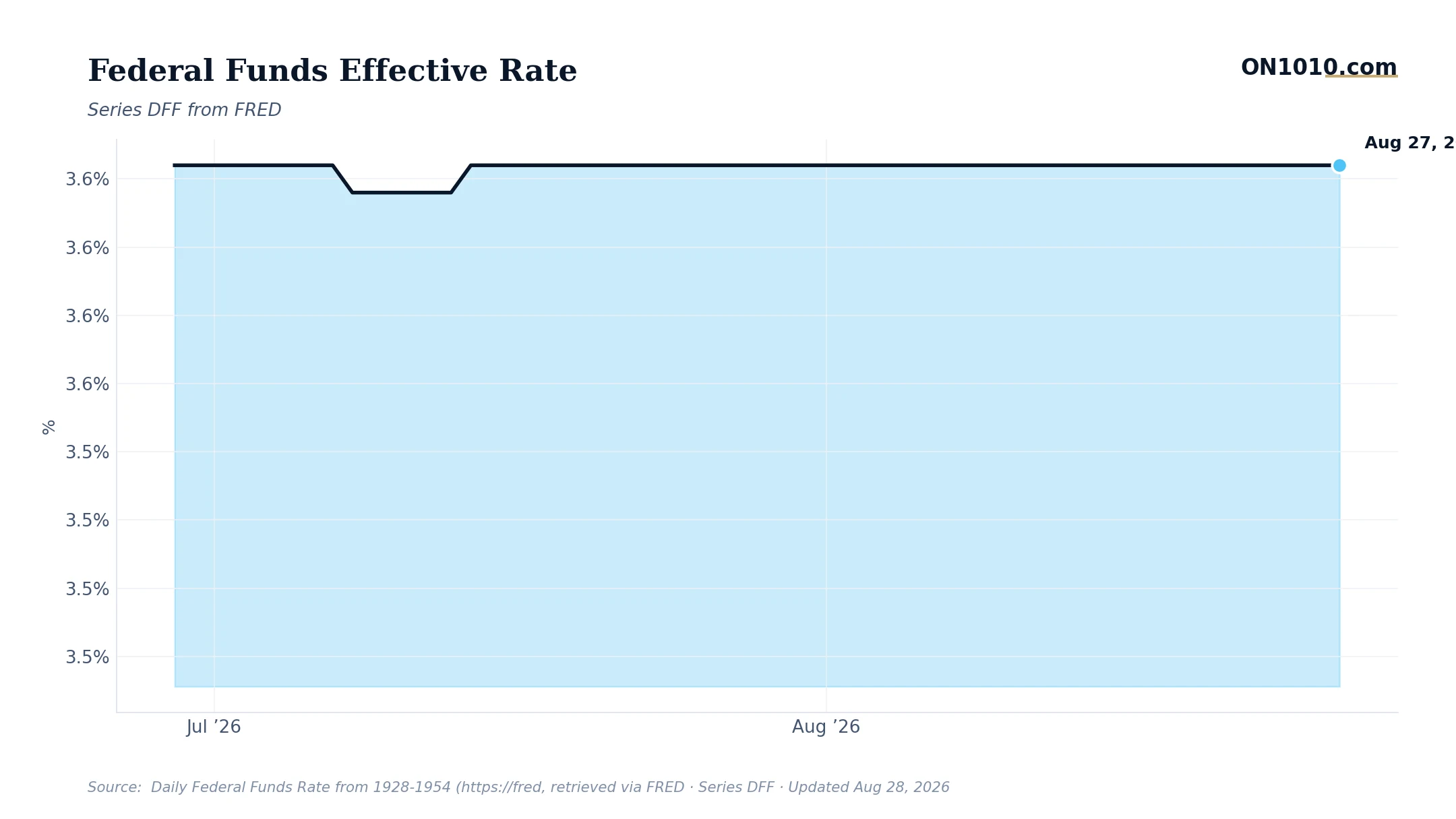
The effective federal funds rate has sat at 3.63% for six consecutive days. No drift. No noise. The overnight lending market is locked in, tracking the Fed’s target with near-mechanical precision. When the plumbing is this quiet, the story isn’t the number itself. The story is what that stability means in the context of everything else happening around it.
Here’s the tension worth sitting with. The monetary policy gauge sits near its historical midpoint, which sounds neutral enough. But long-term interest rates remain high by historical standards, even as they’ve been drifting lower. Core inflation is still running hotter than roughly nine out of every ten months on record. That combination, a steady short-term rate against stubborn inflation and elevated long-term yields, tells you the Fed is holding its position while the rest of the rate structure slowly adjusts around it.
That adjustment matters enormously for anyone financing a building, refinancing a loan, or thinking about capital allocation over the next 12 months. The effective funds rate sets the floor. Everything above it, mortgages, corporate bonds, auto loans, reflects how much extra yield lenders demand to take on duration and credit risk. Right now, credit spreads are historically tight, meaning lenders aren’t demanding much extra cushion. That’s a signal of calm in credit markets, even as the underlying rate environment stays elevated by any longer-run measure.
Historically, periods when the policy rate held steady while long-term rates gradually declined have often preceded a meaningful shift in borrowing conditions across the economy. That shift tends to show up in business investment first, then hiring. The question is whether this cycle follows that pattern, or whether inflation’s persistence keeps the Fed on hold longer than the calendar currently prices in.
Bottom Line: A frozen funds rate in a still-hot inflation environment is a patience signal from the Fed. The more interesting question is how long that patience holds.
Source: Federal Reserve Economic Data (FRED)
ON1010 Research is an independent publisher of economic education and is not a registered investment adviser, broker-dealer, or investment company. This content is for educational and informational purposes only and is not investment advice or a recommendation to buy, sell, or hold any security. Published under the publisher exemption recognized by Section 202(a)(11)(D) of the Investment Advisers Act of 1940 (Lowe v. SEC). Always consult a qualified financial professional before making any financial decision.
Free Research
The economy moves fast. We make sure you move faster.
Economic data, policy shifts, and market signals — delivered to your inbox.
Subscribe Free